A Comparison of the Top 12 online maze generation websites

Today I will take you thru the top results for online maze generation, compare them, and let you know what each is capable of. I used a few different search engines to find the top sites, then pared them down to the very best. This maze generator comparison includes the (1) shape of the overall mazes, (2) the cell types or shape of the cells that create the internal paths/walls, (3/4) the width and height sizes you can generate, (5/6) how the start/end are shown, (7) are the solutions given, and (8) how can you download the maze you have generated. I try to note what a website does best if something stands out.

To give them a good comparison I decided to generate a 20x20 maze with each website to compare how each generated the maze (where possible). I also tried to give an example of some of the advanced features if the maze generator website has them.

I have included a “best of” section at the end of the post if you are looking for a specific functionality from the website, like: Best Pre-Made Shapes, Best Custom Shapes and Best On-Screen Solving to name a few of the categories. These are not in order:

  1. mazegenerator

    Shapes: 4 : Rectangle, Circle, Triangular, Hexagonal

    Cell types: 3: Square, Hexagons, Triangles

    Width: 2 - 200 for rectangles, Diameter of 5 - 200 for Circles, Side length of 3 - 200 for Triangles , Sides 2 - 120 for Hexagonals

    Height: 2 - 200 for rectangles

    Start: 2 choices: Top, Bottom/Inner Room

    End: Same choices as start.

    Solution generated: Yes

    Downloads available: Yes, PDF in 6 different sizes, SVG, PNG

    What this site does best: Of all the sites I reviewed this is one of the few sites with hexagon maze generation and triangular maze generation. It also wins for the best download options once you have generated a maze with the site. The site allows you to create a large maze of 200x200, the second largest size of all the sites I have reviewed.

    Examples: On the Left is a 20 x 20 square maze and on the right is a 20 x 5 triangular maze. Left Below is a hexagonal sigma cell maze. Right below is an example of a circular maze with the solution.

Maze Generator  square shaped maze
Maze Generator triangle maze
Maze Generator  hexagonal shaped maze
Maze Generator circular maze with solution

2. CODEBOX

Shapes: 4+ (infinite) : Square, Circle, Triangular Grid, Hexagonal Grid. While there are 4 main types you can also create an infinite number of shapes using the mask feature !!

Cell types: 3: Square, Hexagons, Triangles

Width and Height: 2 - 50 for squares and hexagons, Triangles from 4-85 width to 2-50 height, and circles can have 30 layers

Start/end: 4 choices: None, Top to Bottom, Left to Right, Hardest entrance/exit

Solution generated: Yes

Downloads available: Yes, as an SVG file.

What this site does best: Of all the sites I reviewed this is one of only 2 sites with Circular maze generation. It is also the site with the most flexibility in creating shapes. You can create a distance map that shows how far the point is from the entrance. The generator offers a choice of 10 different algorithms to generate the maze. You can also solve these mazes on screen using your mouse and keyboard. You can also choose to watch the maze generate !

Examples: Starting in the top left corner a simple 20x20 maze, a hexagonal grid maze, a circular maze, and a shape I made myself using the mask feature. I also suggest you check out the examples given on the site.
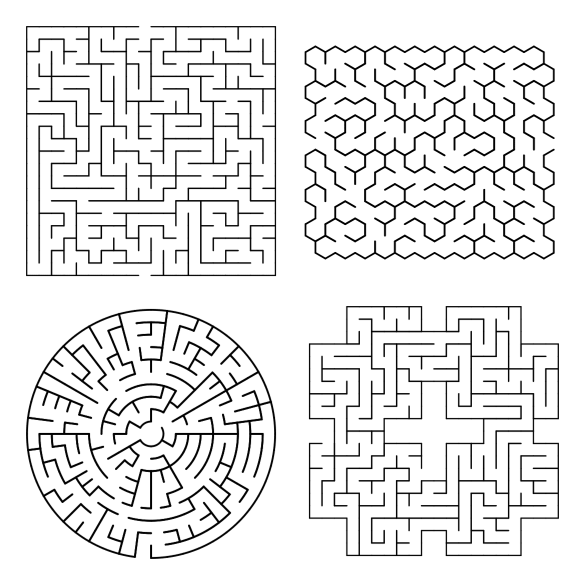
Codebox maze generation examples

3. Discovery Education Puzzlemaker

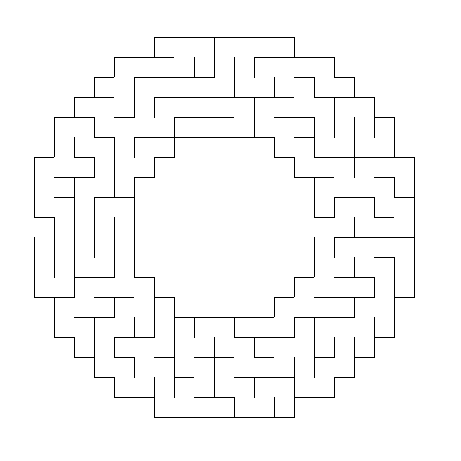
Shapes: 5 : Rectangle, Circle/Oval, Wheel, Escape from middle, Cut Out

Cell types: Square

Width: 2 - 100

Height: 2 - 100

Start: Entrance and exit are not specified, 1 of each. If internal option is not used they will be on the left and right.

End: 1

Advanced options: You can name your maze. It’s actually their step #1. You can chose the direction of the internal pathways (6 options, including random, mostly horizontal and mostly vertical).

Solution generated: Yes

Downloads available: Yes. They have added buttons to make Copying the Maze to your clipboard simple. Also includes a Print button directly on the page.

What this site does best: Allows the creation of a large size 100 x 100 maze.

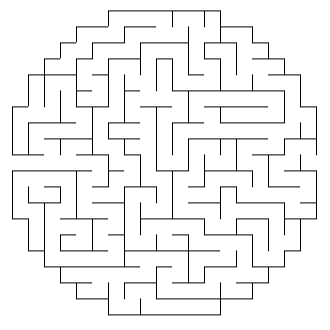
Examples: On the left is a 20 x 20 square maze. On the right is a ‘circular’ maze that is made using a square grid system (For a true circular maze see above). Bottom left is an example of a 20 x20 cutout and bottom right is the wheel version.

Additional Information: This is part of the Discovery Education Puzzlemaker page. You can generate 10 different puzzle types : Word Search, Criss Cross, Double Puzzles, Fallen Phrase, Math Squares, Mazes, Letter Tiles, Cryptograms, Number Blocks and Hidden Message puzzles. It is easy to see why this site is popular with such great content !

Discovery Education square maze
Discovery Education circular maze
Discovery Education cutout shape maze
Discovery Education donut shaped maze

4. ANGELIKA TYBORSKA

You can learn about Angelika and her projects here, including this maze generator she made ”just for fun”.

Shapes: 5+ : Square, Hexagon, Triangle, Circle, Star - which allows you to upload a mask to create your own shape

Cell types: Automatic based on shape of maze. Square, hexagonal, and triangular.

Width: 2 - 50

Height: 2 - 50

Note that for the circle and hexagon shapes you choose the radius (up to 30) and the triangle the side length (up to 30)

Start/Goal: Entrance and exit are not specified, but each is signified by internal dots.

Advanced options: You can choose the algorithm used to generate the pathways, of which there are 6 different options. You can generate a solution “heat map” showing the distance from the entrance of the maze.

Solution generated: Yes

Downloads available: Yes, in SVG format

What this site does best: It does a great job with custom shapes (you can upload your own mask), and with common shapes like the circle, hexagon, and triangle.

Examples: 20x20 Square using Recursive backtracker algorithm, 10 radius hexagonal with solution and “heat map”.

Angelika maze making examples

5. Mazesforfun

Shapes: 9 selectable shapes: including Square, Triangle and Round

Cell types: Automatic based on selected shape

Width: 10 - 40

Height: 10 - 40

Start: Unmarked but always the top left of the shape

End: Unmarked but always the bottom right of the maze

Advanced options: There are 4 levels of difficulty. You can also choose the size the maze generates in (3 possible).

Solution generated: Yes

Downloads available: Yes, in PDF, PNG, and SVG formats

What this site does best: The ability to mix and match internal shapes and external shapes. It also has 9 selectable pre-made shape templates.

Examples: First is a standard 20 x 20 square (difficulty hard); next is what generates for triangles - not the external shape but the CELL shape. The final 2 examples show a shape called Cairo and on called Squaretriangles.

mazesforfun square maze
mazesforfun maze example
mazesforfun maze example 2
mazesforfun maze example 3

6. billsgames.com

Shapes: 1 : Rectangle

Cell types: 1: Square

Width: 21 - 301

Height: 21 - 201

Start: Entrance and exit are not specified, and placement varies by maze.

End: 1. I think I have generated mazes with no exit !!! I could be wrong but it was difficult to find if it was there !

Advanced options: There are 3 options for mazes generation: Simplistic, Harder and Chaotic. Pictures are sometimes randomly inserted on the mazes. I have seen Griffins, a plane, a house, etc. Has a secondary playable option where you can play on screen and try to solve an invisible maze !

Solution generated: No

Downloads available: Only by right clicking to download directly from the browser

Examples: each maze is 21 x 21 (really? - well that is what the settings said !). The maze on the left generated extremely easy…. The maze on the right was generated using the chaotic setting. Unfortunately, each of these mazes are very easy to solve. Be sure to check to see if the generation you use is difficult enough.

Bills Games maze examples

7. mazepuzzlemaker

You’ll notice the controls of this website are very similar to Printable creative above with some additional options available. This is available to be used for commercial uses and is the PAID version of the site above.

Shapes: 55 selectable shapes, including letters A-Z, and many more; 4 geometric; 29 Fancy shapes

Cell types: Square

Width/Height: You can choose between 10-30 “cells”

Start: automatically generated at top and bottom of the maze shape

End: Start/end can be turned on, showing a green and red box to indicate the start/goal

Solution generated: Yes

Downloads available: Paid. Yes, PDF in multiple sizes, PNG and SVG

What this site does best: Creates puzzles for commercial use. Has a large amount of fancy shapes available. Gives more examples than any other website (by a wide margin).

Examples: The best way to check out is to view their page of examples, featuring 82 different examples !! Here is a snapshot of that page to give you a small sampling:
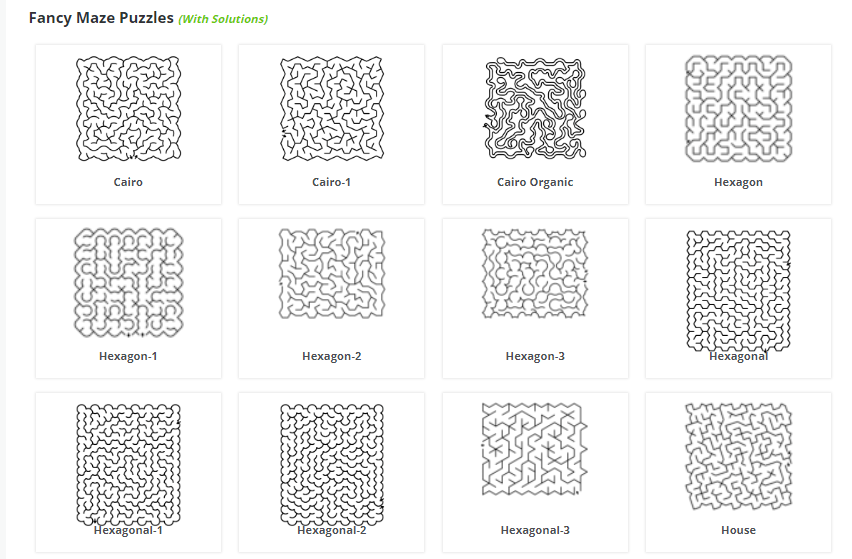
Mazepuzzlemaker maze examples

8. Glass Giant

Shapes: 1 : Square

Cell types: 1: Square

Width: 2 - 40

Height: 2 - 40

Start: Marked by a green diamond INSIDE the maze

End: Marked by a red square INSIDE the maze.

Advanced options: There are 5 levels of difficulty. You can choose the color of the maze walls and the background color (9 colors available). You can also choose the size the maze generates in.

Solution generated: No

Downloads available: Only by right clicking to download directly from the browser

Examples: Left is a standard 20 x 20 maze and on the right is a 20 x 20 maze with the options for Red walls on a Cyan background selected.

Glass Giant square maze
Glass Giant cyan colored square maze

9. printablecreative

Shapes: 11 : Box, Circle, Diamond, 4 Rooms, L, Moon, Square, Star, Strike Triangle, 2 Rooms

Cell types: 1: Square

Width/Height: You can choose between 10-30 “cells” for the free version

Start: automatically generated at top and bottom of the maze shape

End: Start/end can be turned on, showing a green and red box to indicate the start/goal

Solution generated: Yes

Downloads available: Yes, PDF in 2 different sizes, PNG

This maze generator also allows you to pick the size of the cell corridor (10-30) adjusting the scale of the maze you generate. It also has 3 difficulty levels (Easy, Normal, Hard).

What this site does best: They have their own page of maze examples featuring 19 options ! It also features 11 pre-made shapes.

Examples: The top 2 show the Start and Goal indicators. Shapes in the examples are Square, Two Rooms, Circle and L.

printablecreative  square maze
printablecreative 2 rooms maze example
printablecreative circle maze example
printablecreative L shaped maze

10. Here and above

Shapes: 1 : Rectangle

Cell types: 1: Square, Rectangle

Width: 2 - 500. Note that I made a 500 X 500 successfully, but at higher numbers you may get an error.

Height: 2 - 500

Start: Entrance and exit are not specified, and may be on any side of the maze.

End: 1

Advanced options: You can choose wall and path widths. You can generate a maze in many colors (basically every color) using the RGB system. That is one thing that sets this site apart from all others - every color is available to make a maze in.

Solution generated: No

Downloads available: Only by right clicking to download directly from the browser

What this site does best: Large sizes - this website generates the largest mazes that I have found ! And the ability to use any color you can think of using an RBG selector.

Examples:

Here and Above  square maze example
Here and Above red square maze example

11. KIDEV

Things are different here compared to the other websites. On this site the solving of the mazes happens ON SCREEN. If that is what you are looking for, this is the site for you ! Also includes sections of Puzzles, Learning (Letters and Numbers), Drawing and a Code game. The mazes all feature themes as you will see in the examples !

Shapes: 34+ : 34 different styles of maze are currently available to be generated, plus a 27 predefined shapes in the Shapes section that allows you to create your own shapes.

Cell types:: Many. The 34 shapes include some unique inner cell shapes that are best explored on your own !!

Width and Height: Varies, but you do not control the output size for the 33 styles generated. However, under the Create button you can control the X and Y to create a maze in the size you want.

Start: Pre-defined in Style mazes

End: Pre-defined in Style mazes, internal or external in the Create section

Solution generated: No

Downloads available: Mazes are both shareable and Printable

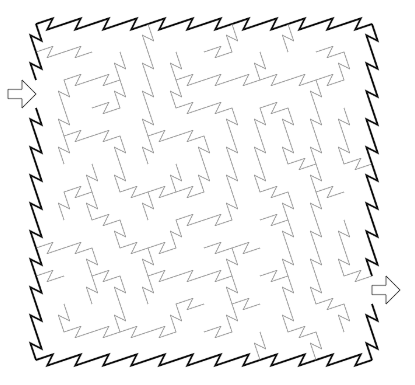
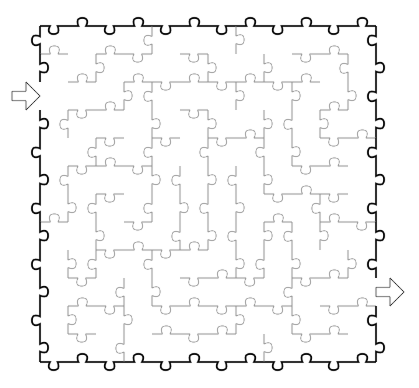
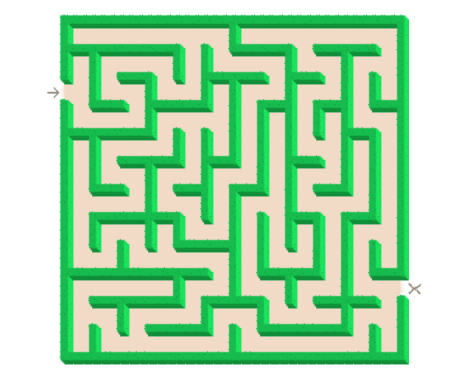
Examples: 4 of the 33 styles are shown below. Rail, SawBlade, Jigsaw, and Corn mazes.
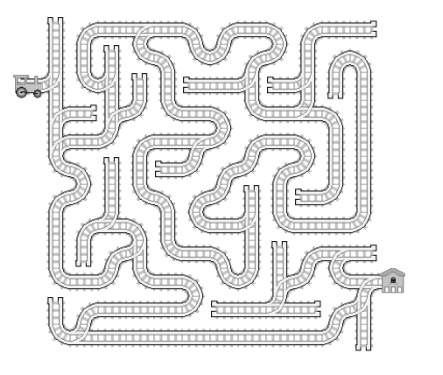
maze4u train track maze
maze4u sawblade maze example
maze4u puzzle shape maze example
maze4u hedges maze example

12. mazebrite

This is a custom maze message generator. You can make your name, or a message like “I love you”. Downloads are available for a fee.

Shapes: 1 : Rectangle

Cell types: 1: Square

Width: Based on the length of message.

Height: 13, 24, or 35 depending on the length of the message

Start / Finish : Are written and located inside the maze. Start in the bottom left corner, Finish in the bottom right

Solution generated: Yes. You may also select from 8 colors.

Downloads available: It costs 99 cents to email yourself 3 versions of the maze.

Example: Shows the three versions for the word “MAZE”, as labeled, the solution, with helpful arrows (Breadcrumbs), and with no clues.
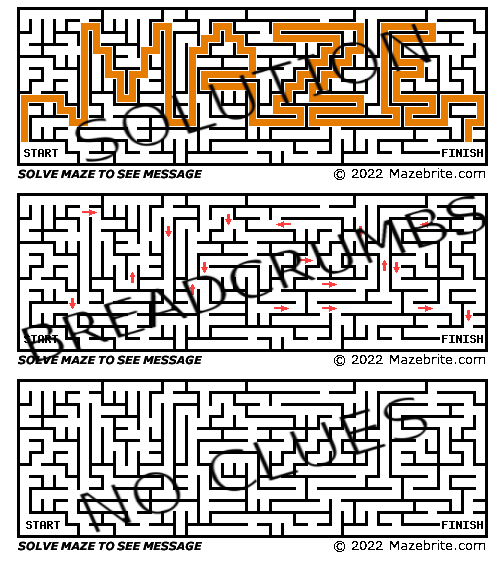
MazeBrite Maze examples

That concludes the reviews, but if you are interested in additional sites I have a second blog post about sites that did not make this list.

BEST MAZE GENERATORS FOR:

  • CATEGORY: SHAPES

Best pre-made shapes:

MAZEPUZZLEMAKER - features 55 selectable shapes, including letters A-Z; 4 geometric shapes; 29 fancy shapes

KIDEV - 35 variations come in many different unique forms

PRINTABLECREATIVE - drop down menu contains 11 options

MAZESFORFUN - 9 options that include unique internal pathways giving mazes a fresh look

Most unique pre-fabricated shapes:

KIDEV - you can find Rail, Pipe, Jigsaw, and Corn mazes among a large selection.

MAZEPUZZLEMAKER 29 fancy options - The best way to check out is to view their page of examples.

MAZESFORFUN the internal shapes that are generated are unique

Best custom shapes:

CODEBOX - Click on Create Mask button and make your own maze shape !

KIDEV - you can load shapes and customize them !

ANGELIKA TYBORSKA - click on the Star shape and you can upload a PNG file with a custom mask

Largest rectangular maze creation available:

  1. 500 x 500 HERE AND ABOVE

  2. 200 x 200 MAZEGENERATOR

  3. 120 x 120 ALL KIDS NETWORK (not reviewed above)

  4. 100 x 100 DISCOVERY EDUCATION PUZZLEMAKER

Best circular mazes:

MAZEGENERATOR

CODEBOX

ANGELIKA TYBORSKA

Best triangular shaped mazes:

MAZEGENERATOR

ANGELIKA TYBORSKA

Best hexagonal shaped mazes:

MAZEGENERATOR

ANGELIKA TYBORSKA

CODEBOX

OTHER CATEGORIES

Best on screen solving:

KIDEV - use a pencil on screen to solve a generated maze, or select from 40 other icons

CODEBOX - click the Play button after generating a maze to solve using your keyboard or mouse

BILLSGAMES.COM - specifically for the invisible option

Best colors available:

HERE AND ABOVE - you can choose the RBG for both the pathways and walls

GLASS GIANT - you can choose from 8 colors for the background and foreground

Best novelty mazes:

KIDEV - really interesting themes that kids would love !

Best hidden message maze generator:

MAZEBRITE

If you have a website you think I have missed and deserves a look, please drop me a note and I will evaluate it for possible inclusion !

Other popular posts you may like:
How to make a digital maze (40 different types)

The 18 Best Maze Movies

What I use to make my mazes

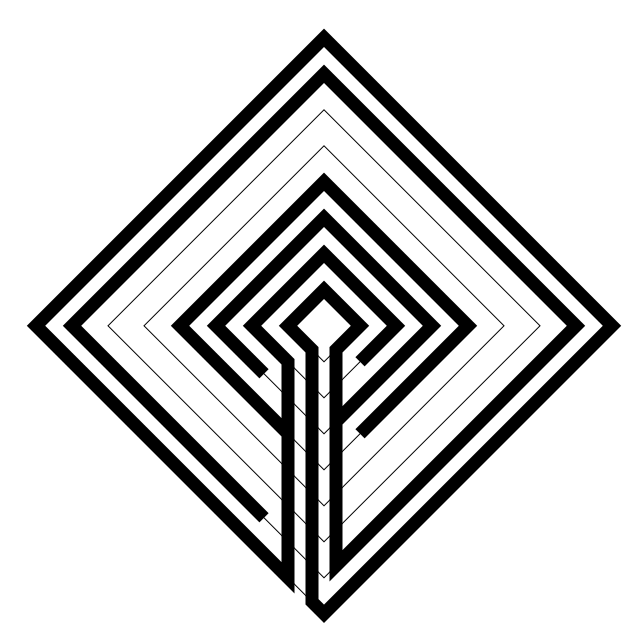
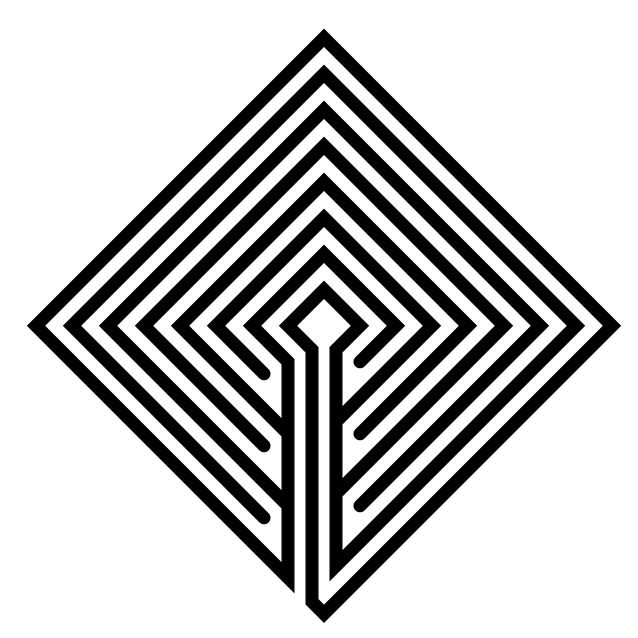
How to Make a 7 Circuit Diamond Labyrinth

In this post I will show you how to draw a 7 circuit diamond labyrinth.

How to Draw a 7 Circuit Diamond Labyrinth

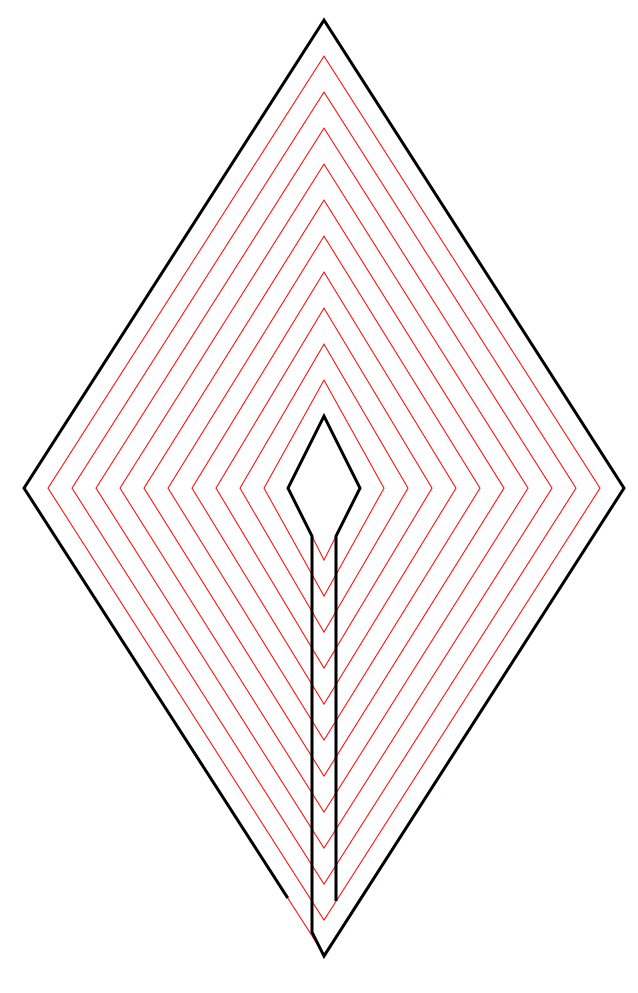
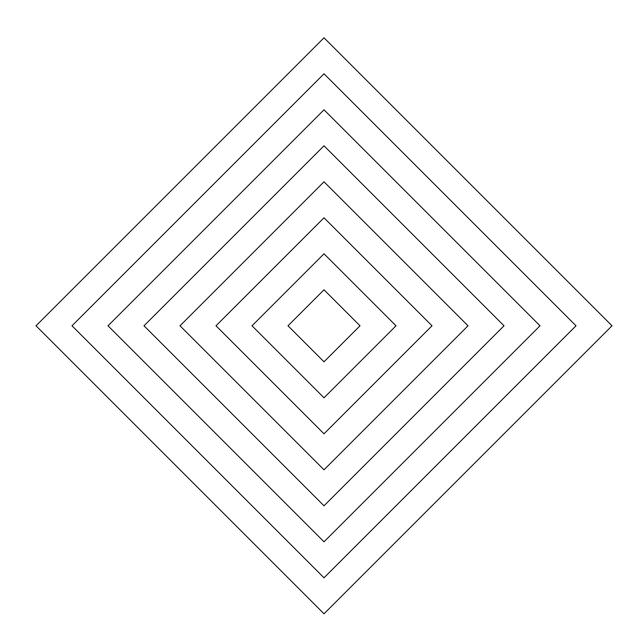
Step 1 Draw 8 concentric diamonds

These will become your guides for the drawing of the labyrinth. Note that the number of circuits you want add one and that is how many concentric layers you need for any labyrinth creation.

PROTIP: Start your drawing with the center goal so you do not run out of room ! This also allows you to pick the size the center goal will be.

AESTHETIC CHOICE: For this example my diamond uses a square turned by 45 degrees. The 11 circuit diamond labyrinth .was made using a 2/3 grid (2 over, 3 up) giving it a sharp angle.

8 concentric diamonds

Step 1 - Draw 8 concentric diamonds

Step 2 Draw the outer wall, and pathway to the goal

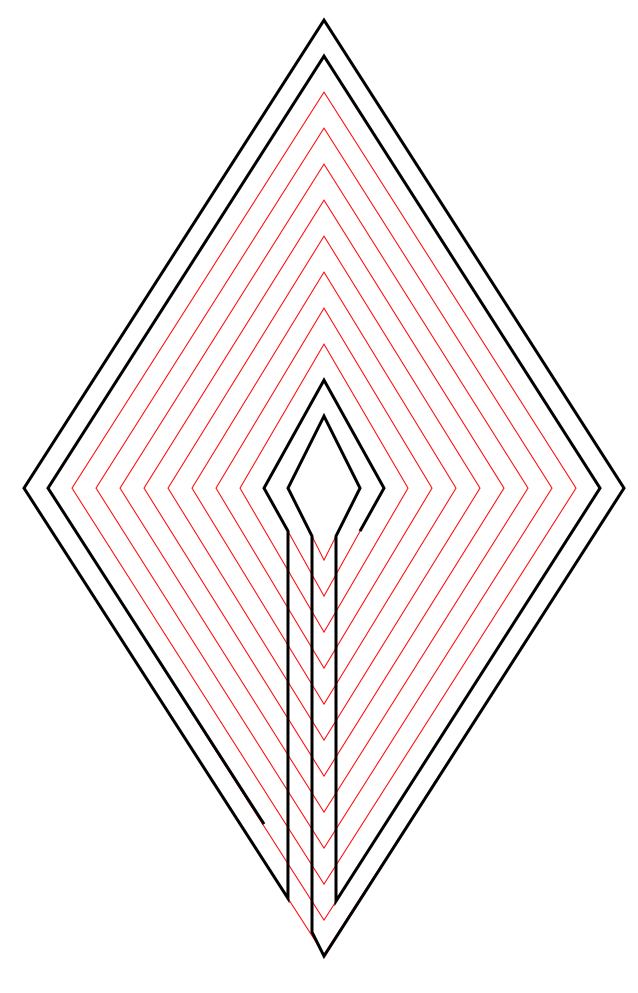
At the 6 o’clock portion of the center diamond, draw a centered pathway to the edge, while keeping the right side open for the outer pathway on the right. Extend the left pathway to the edge and then create the outer wall all the way around the diamond, leaving only the entrance pathway open on the bottom left of the diamond and turning north until you reach the second inner diamond (this creates the entrance pathway).

AESTHETIC CHOICE: I decided to make this labyrinth using standard equal walls and pathways, but you can also use thinner lines if you want.

Making a 7 Circuit Diamond Labyrinth step 2

Step 2 Draw the outer wall, and pathway to the goal

Step 3 Begin the internal pathways

Continue the entrance pathway around the center goal, leaving the pathway open on the bottom right of the second center diamond. Using the third internal diamond draw a wall to create a second pathway from the center, stopping on the bottom left and leaving the pathway open for the turnback.

Take the right pathway from the center goal and continue it counterclockwise around the diamond, stopping to keep the pathway open on the bottom left of the diamond.

Making a 7 Circuit Diamond Labyrinth step 3

Step 3 Begin the internal pathways

Step 4,5 Continue drawing the internal pathways

In the center portion of the diamond, draw a turnback pathway in the next concentric diamond, creating a third pathway from the center goal. Keep the pathway open on the bottom right for a turnback the other way in the next step.

Making a 7 Circuit Diamond Labyrinth step 4

And draw the next layer back the other way.

Making a 7 Circuit Diamond Labyrinth step 5

Step 6 Finish the internal pathways

One last layer to draw to complete the labyrinth.

Making a 7 Circuit Diamond Labyrinth step 6

Step 7 Delete guides and make aesthetic changes

Delete your guidelines. You can change the widths now if you do not like how it looks. I changed the wall endings at the turn-backs to have curved ends, because I like how it looks.

7 Circuit Diamond Labyrinth

That concludes our instructions. Good luck in making your own design !

Additional posts you might like:

How to Make Digital Labyrinths

The 12 best maze/labyrinth movies of all time

How to Make a 11 Circuit Diamond Labyrinth

In this post I will show you how to draw an 11 circuit diamond labyrinth. A diamond shaped labyrinth is not common but I like the way it looks when completed and you have a few interesting aesthetic choices to make when you design your own that I will review.

How to Draw an 11 Circuit Diamond Labyrinth

Step 1 Draw 12 concentric diamonds

These will become your guides for the drawing of the labyrinth. Note that the number of circuits you want, you need to add one and that is how many concentric layers you need for any labyrinth creation.

PROTIP: Start your drawing with the center goal so you do not run out of room !

AESTHETIC CHOICE: For this example my diamond was made using a 2/3 grid (2 over, 3 up) giving it a sharp angle. My 7 circuit uses a square turned by 45 degrees to create the diamond.

12 concentric red diamonds

Step 1 - Draw 12 concentric diamonds

Step 2 Draw the outer wall, and pathway to the goal

At the 6 o’clock portion of the center diamond, draw a centered pathway to the edge, while keeping the right side open for the outer pathway on the right. Extend the left pathway to the edge and then create the outer wall all the way around the diamond, leaving only the entrance pathway open on the bottom left of the diamond. The distance should be equal to the width of the pathway that enters the center.

making an 11 Circuit Diamond Labyrinth step 2

Step 3 Begin the internal pathways

Draw the entrance pathway all the way towards the goal, stopping when you hit the second diamond layer. Continue this pathway around the center goal, leaving the pathway open on the bottom right of the second center diamond.

Take the right pathway from the center goal and continue it counterclockwise around the diamond, stopping to keep the pathway open on the bottom left of the diamond.

making an 11 Circuit Diamond Labyrinth step 3

Step 4 Continue drawing the internal pathways

In the center portion of the diamond, draw a turnback pathway in the third concentric diamond, creating a second pathway from the center goal. Keep the pathway open on the bottom left for a turnback the other way in the next step.

In the outer layers, draw the second outer pathway from the bottom left to the right side, clockwise, ensuring to not close the pathway on the bottom right.

making an 11 Circuit Diamond Labyrinth step 4

Step 5 + Finish the internal pathways

Continue drawing pathways from each direction until they meet.

making an 11 Circuit Diamond Labyrinth final steps

Step 6 Delete guides and make aesthetic changes

Delete your guidelines.

AESTHETIC CHOICE: In this step I decided the labyrinth looked a bit flimsy with walls so thin, so I decided to change to a standard equal construction (the walls are the same thickness as the pathways) by thickening the walls.

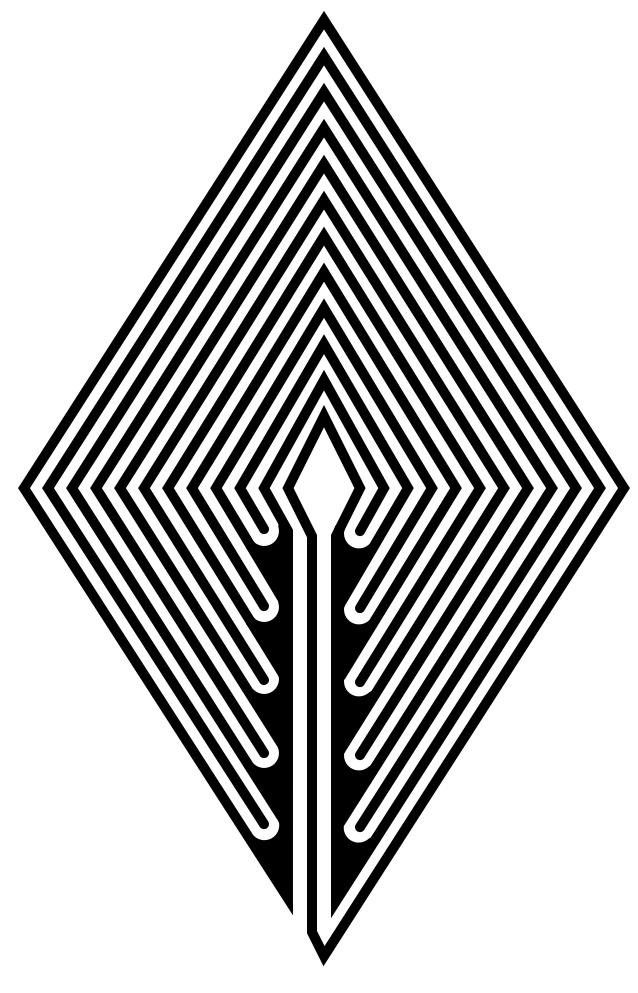
11 Circuit Diamond Labyrinth

AESTHETIC CHOICE: For any labyrinth with sharp angles the turn-backs will be deeper than normal. If you do not like the way it works, you can fill-in the turn-backs to give the labyrinth a different look (and in this case one that I prefer).

11 Circuit Diamond Labyrinth with turnback's filled

11 circuit diamond labyrinth with turn-backs

That concludes our instructions. Good luck in making your own design !

Additional posts you might like:

The 12 best maze/labyrinth movies of all time

The Louvre Maze

Spillway Lanes Sign Maze

A Comparison of 5 different types of 11 Circuit Labyrinths

I have previously shown how to make a variety of digital labyrinth drawings. The ones I reviewed fell into one of 5 categories: classical labyrinths, square labyrinths, circular labyrinths, octagonal and hexagonal labyrinths. Today we are going to take a quick look at the five different structures and compare them. We will also discuss the different symbolism associated with each labyrinth shape.

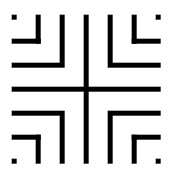
First let’s look at the seed patterns. For the classical and square labyrinths you can use the same seed pattern show below. None of the circular, octagonal, and hexagonal labyrinths have traditional starting seeds beyond their inherent shapes.

Labyrinth seed pattern

Next let’s look at the connections for the labyrinths that use this seed pattern. The difference between a square and classical labyrinth is simple, and that is the shape of the connections between the seed endings. Here is the first move for each, one square and one curved (each makes the destination of the labyrinth).

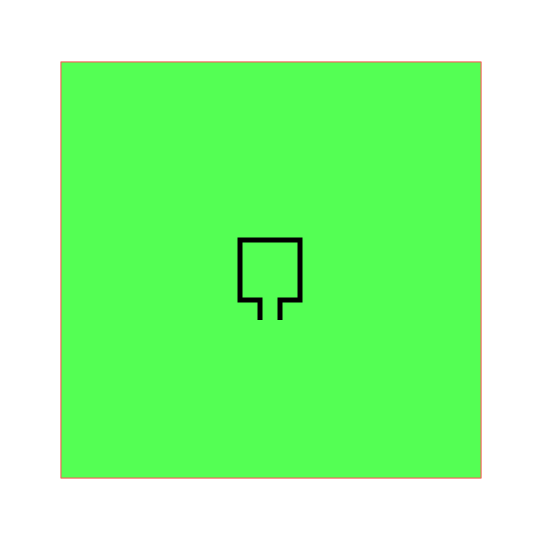
Making a Square Labyrinth - step 2
Making a  Labyrinth - step 2

Both also use the following seed connections to finish the drawing of the labyrinth:

Seed pattern for 11 circuit labyrinth with connections

For a square labyrinth you also have a second option to create a larger square goal if you prefer (the seed is shown with a green background guide below). This is more likely to be found in a real world labyrinth to allow labyrinth walkers to have a large center to rest/meditate in. On the right you see the final version of this center goal variation.

Square center labyrinth variation
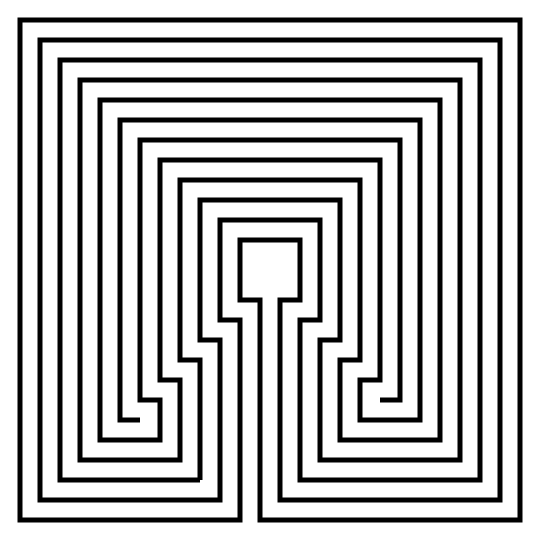
11 Circuit Square labyrinth with large center

What about the starting seeds for the other 3 types of labyrinths ? Well it seems they go their own way. While they also have 11 circuits, the making of them differs significantly from the classical and the square versions. They also have more variety in the way they are constructed, including allowing the creator to make some aesthetic choices along the way.

Let’s first look at the starting patterns:

Circular - 12 concentric circles

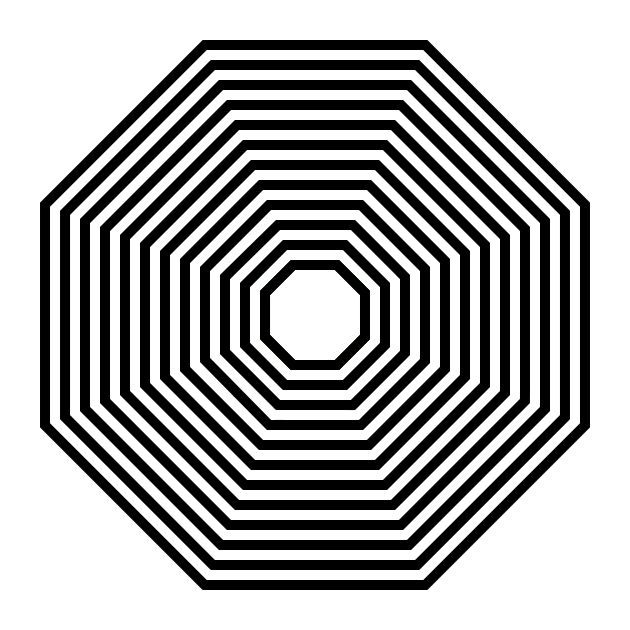
Octagonal - 12 concentric octagons

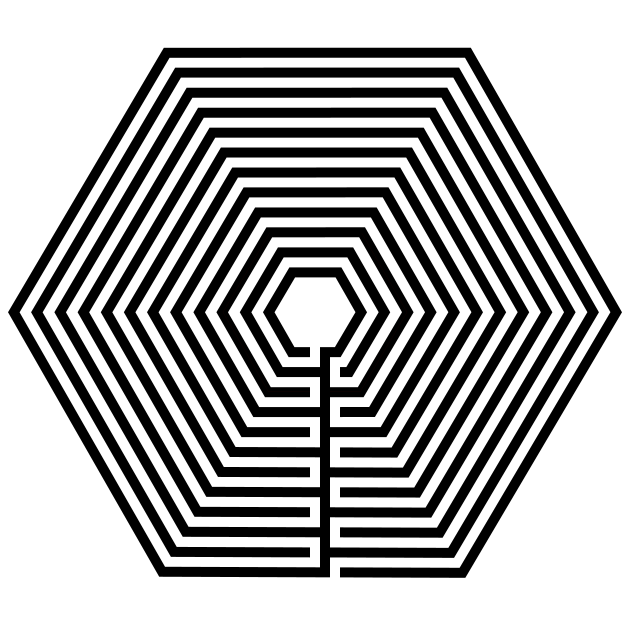
Hexagonal - 12 concentric hexagons

12 concentric circles
12 concentric octagons
12 concentric hexagons

We have consistency here, we just change the shape. If you did not already know, the # of concentric shapes needed is always 1 greater than the number of circuits you want. So, if you wanted to make a 7 circuit pentagonal labyrinth, you need to start with 8 concentric pentagons. If you go back to our seeding pattern for both the square/classical labyrinths you’ll notice that there are 12 seeded connections there also ! So this math is consistent across all constructions.

The next step in drawing each of these labyrinths is determining how many turn-backs or sections you would like the labyrinth to have, and it really is your personal choice. There is no standard way to draw the walls and turn-backs like you find with the classical labyrinth. I typically make 4 sections for my step by step instructions, but I have made 1,2,4 and 8 sections for most shapes with one exception, the hexagonal looks best in 6 sections vs. 8 for obvious reasons. Similarly, a pentagon would look natural with 5 sections.

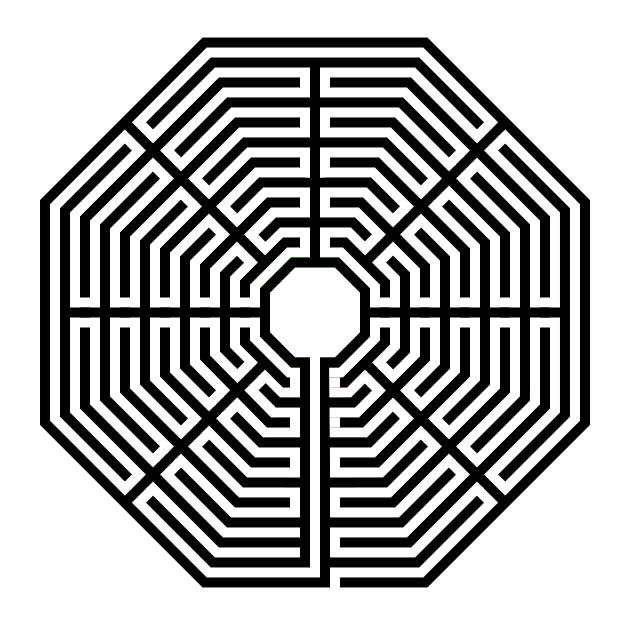
Here are the 1,2,4, and 8 section octagonal labyrinths:

Octagonal labyrinth 11 circuit 1 section
Octagonal labyrinth 11 circuit 2 section
Octagonal labyrinth 11 circuit 4 section
Octagonal labyrinth 11 circuit 8 section

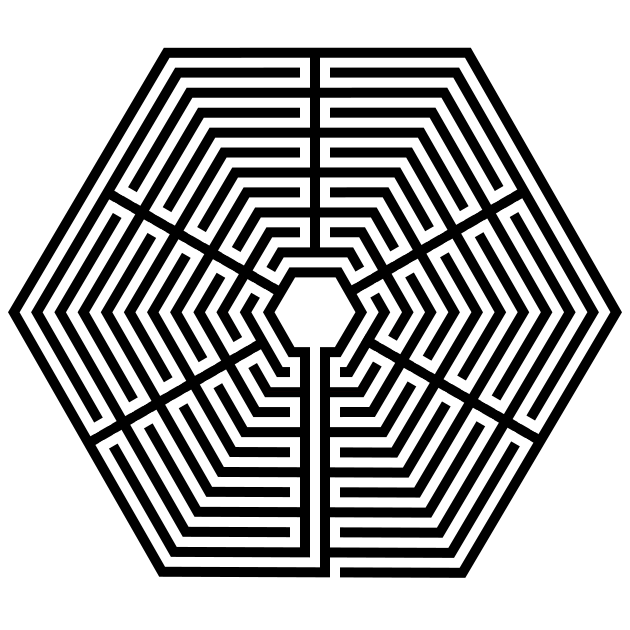
Here are the 1,2,4, and 6 section hexagonal labyrinths:

Hexagonal labyrinth with 1 section
Hexagonal labyrinth with 2 section
Hexagonal labyrinth with 4 sections
Hexagonal labyrinth with 6 sections

And finally the 1,2,4, and 8 section circular labyrinths:

Circular Labyrinth 11 Circuit 1 section
Circular Labyrinth 11 Circuit 2 sections
Circular Labyrinth 11 Circuit 4 sections
Circular Labyrinth 11 Circuit 8 sections

Once you have chosen the number of turn-backs, you can also make 3 more design aesthetics:

Wall or Line Thickness:

For my examples, the hexagonal and octagonal labyrinths each used standard equal constructions (the wall and pathway thicknesses were the same). I like the way they look. All of my other examples used a regular construction. Here is what a circular labyrinth would look like in standard equal construction. All labyrinths can be made in either construction. Which do you prefer ?

11 Circuit Circular Labyrinth thin walls
11 Circuit Circular Labyrinth thick walls

Left-handed vs. Right-handed Labyrinths:

All 5 versions of these labyrinths can be created as either right handed or left handed. Every example in this discussion so far has been right handed. The left handed versions is the mirror image of what I have shown. This is difficult to notice for most people except for the classical labyrinth where it is apparent as shown below (although you would notice the handedness of any labyrinth that you were walking I imagine):

11 Circuit classical labyrinth right handed
11 Circuit classical labyrinth left handed

Labyrinth Orientation

The last variation applies to only the octagonal and hexagonal labyrinths construction (or any other shape you decide to use). For geometric shapes you may start the initial pathway centered on a wall, as all the above examples have done, or you may start the labyrinth on a corner. Here is the 4 sectioned hexagon with each orientation. Notice that the section lines are placed in the same place for each version.

11 circuit Hexagonal labyrinth
11 circuit Hexagonal labyrinth start in corner

So that concludes our discussion and comparison of the 5 main types of labyrinths. I hope I have inspired you to create your own !

More shapes to consider:

Following the basic steps I have outlined you can create additional shaped labyrinths. I think once you get to a decagon (10 sided) and dodecagon (12 sided) regular shaped polygons you are close enough to a circle that that would be the preferred construction. A pentagon and triangle are certainly both possible, although not commonly seen. Similarly, irregular polygonal shapes are possible but typically not drawn, just used in the real world because a rock/tree/other is in the way of the path.

Here is the final comparison. Which do you prefer ?

11 circuit labyrinths in 5 different shapes

Labyrinths - Shape and Symbolism

The symbolism of labyrinths is complex and varied. Some people see them as symbols of the journey of life, while others see them as representations of the universe or the mind. Labyrinths can also be seen as metaphors for the challenges that we face in life and the rewards that we can reap if we persevere. Here is a look at some of the symbolism found in the most common shapes:

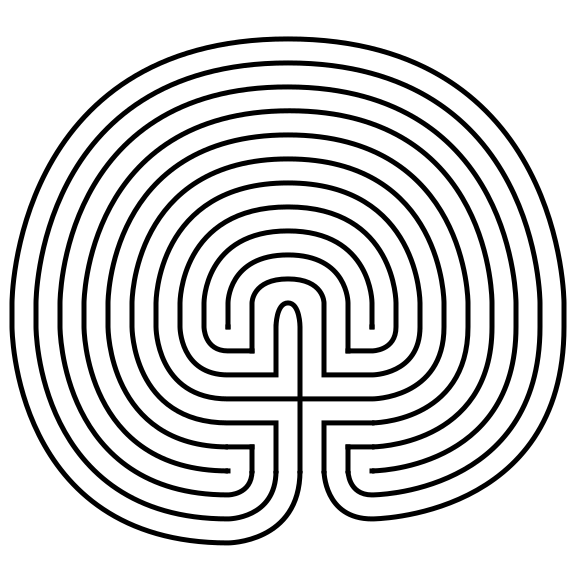
Most Classical labyrinths have 7 circuits. The 7 circuits represent the 7 stages of life: birth, childhood, youth, adulthood, middle age, old age, and death.
Square labyrinths are often seen as representing the four elements (earth, air, fire, and water),

Circular labyrinths are often seen as representing the cycle of life.

Hexagonal Labyrinths may have been made for a variety of reasons. One theory is that the number 6 has symbolic significance in many cultures. It is often associated with creation, completion, and balance. For example, in the Bible, God created the world in six days, and the Star of David has six points. It is possible that the builders of labyrinths used the number 6 because they believed that it had special powers or meaning.

Step by step instructions on how to draw digital labyrinths.