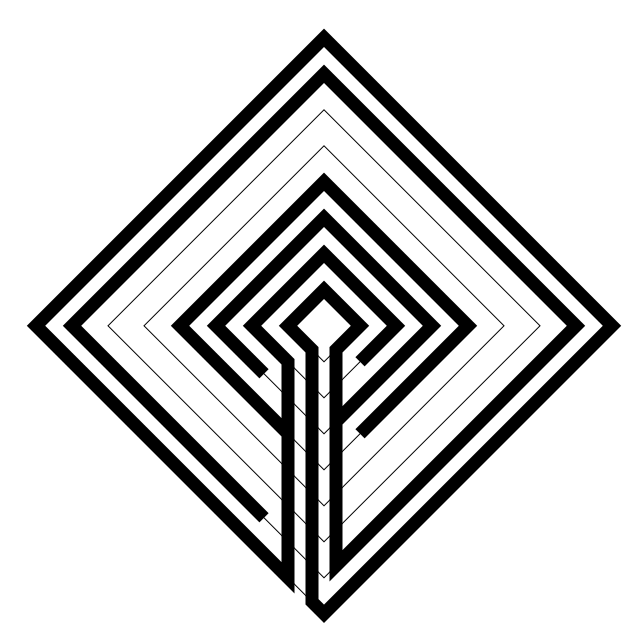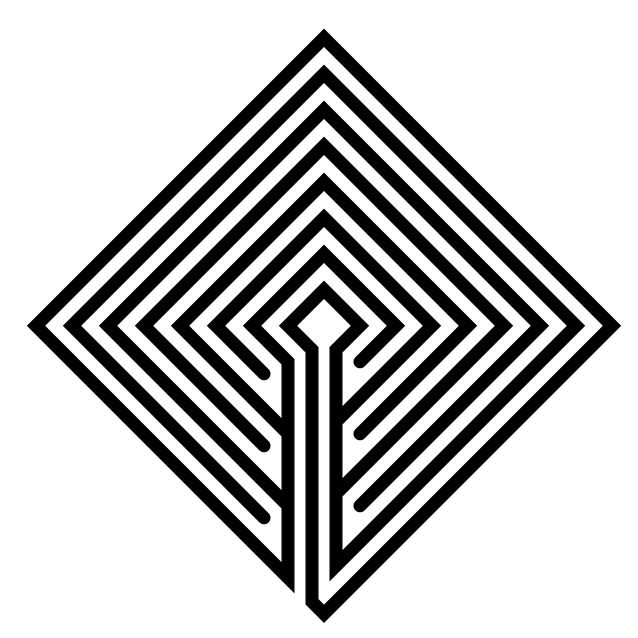
How to Make a 7 Circuit Caerdroia Labyrinth

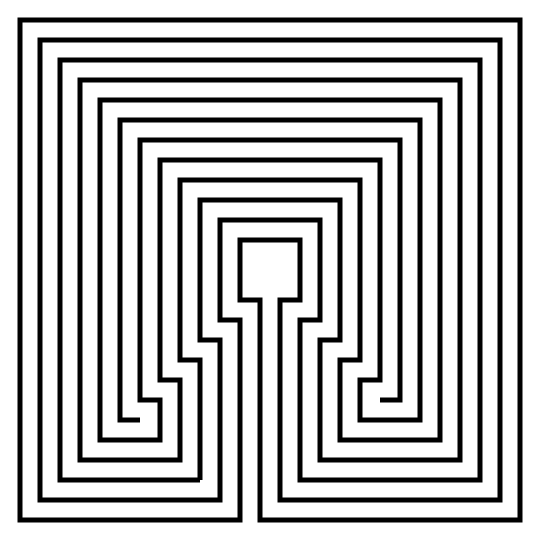
In this post I will show you how to draw a 7 circuit Caerdroia Labyrinth. I first became aware of this type of labyrinth, a variation of the Cretan labyrinth, when I saw it in the film, The Night House, which has a maze theme weaved into the storyline. This type of labyrinth is Welsh and they were used for gatherings of singing and dancing. To learn more about them check out Wikipedia.

How to Draw a 7 Circuit Caerdroia Labyrinth

Step 1 Draw the seed pattern

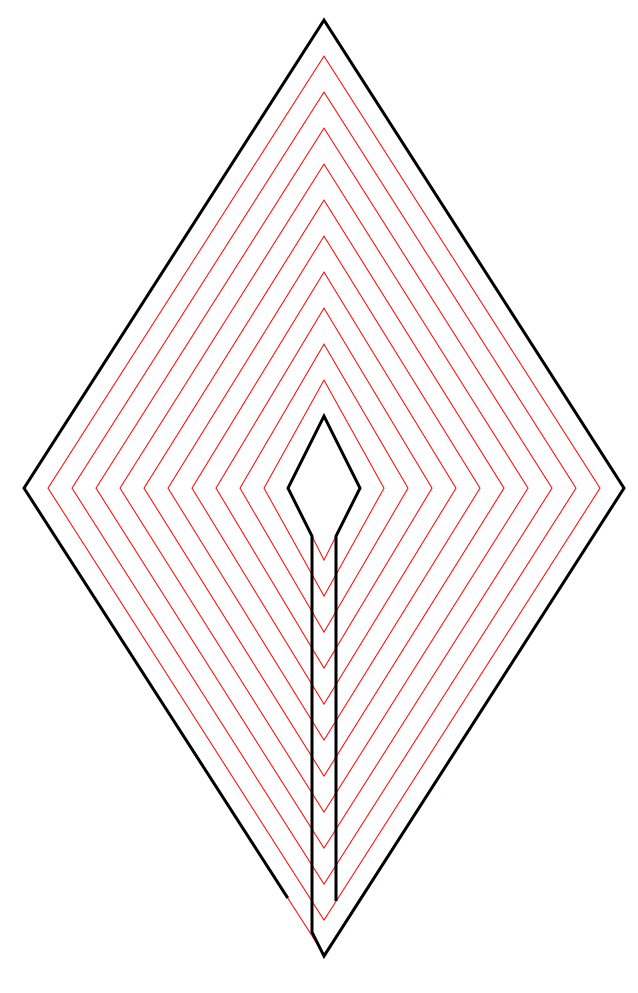
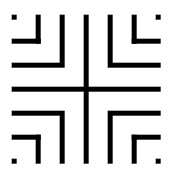
I came up with 2 possible seed patterns for this. The first is based on the classical 7 seed labyrinth and adjusted for the unique shape of this labyrinth. You can see this below in black overlaid onto the complete labyrinth in red. It uses a center cross (in this case offset), 4 L’s and 4 dots just like that seed uses.

The step by step instructions will use this seed, however there is another seed option I will review below.

Caerdroia Labyrinth seed pattern

Step 1 - Draw the seed pattern

Step 2 Note the Connection points

All seeds become labyrinths by connecting one point to another around the entire shape. For a 7 circuit you will need to make 8 connections as labeled below.

Caerdroia Labyrinth seed pattern with links shown

Step 2 Note the connections

Step 3 Note the location of the peaks and shape changes

In the northern part of the labyrinth, you have all circular pathways, and all of them have a peak that is centered between the first connection points (also centered above the center goal).

In the southern part of the labyrinth you have a square labyrinth. This portion of the labyrinth fills bottom half and a half step above the seed (this is an aesthetic choice by me - you may also use the seed as the point of shape change if you prefer)

Caerdroia Labyrinth design analysis

Step 3 Location and shape changes

Step 4 Draw and connect the pathways to create the labyrinth

After all the explanation above, connect the same numbered pathways to create the labyrinth. Connections 1-5 require (mostly) the drawing of semi-circles, while 6-8 require pathway extensions before drawing the semicircles.

Connect the pathways in order from left to right.
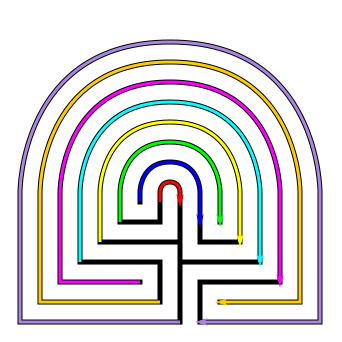
Caerdroia Labyrinth connections drawn

That completes the labyrinth, BUT let’s look at the other seed I mentioned above.

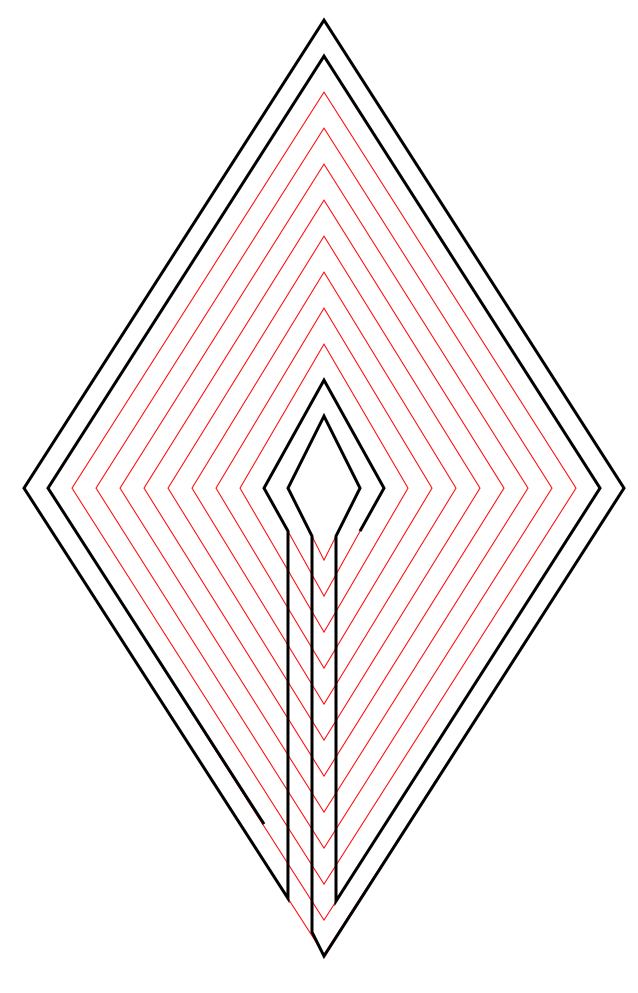
ALTERNATIVE Step 1 Draw the seed pattern

To simplify the connection drawing this seed requires only the drawing of semicircles, but a much larger seed which looks more like a very wide tree. There are still 8 connections to make, but they are more uniform. Just make sure you align all of their transition points from square shaped to circular shaped.

Caerdroia Labyrinth alternative seed pattern

All other step are basically the same, with just the drawing of your walls changing since you did more upfront work !

Caerdroia Labyrinth

OPTIONAL STEP 5 Make any Aesthetic Changes

You have options for the wall.to pathway ratio. Below I made them equal. The display of corners ( I chose soft below vs. sharp corners), and how the ends of lines will look (I chose rounded vs squared).

Caerdroia Labyrinth with thick walls

That concludes our instructions. Good luck in making your own design !

Additional posts you might like:

Maze Construction - 5 Maze Design Decisions Make All the Difference
The 12 best maze/labyrinth movies of all time

How to Make a 7 Circuit Diamond Labyrinth

In this post I will show you how to draw a 7 circuit diamond labyrinth.

How to Draw a 7 Circuit Diamond Labyrinth

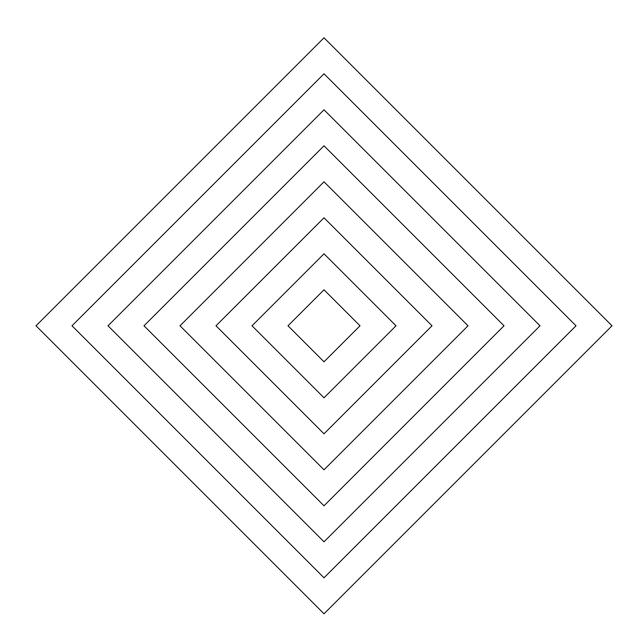
Step 1 Draw 8 concentric diamonds

These will become your guides for the drawing of the labyrinth. Note that the number of circuits you want add one and that is how many concentric layers you need for any labyrinth creation.

PROTIP: Start your drawing with the center goal so you do not run out of room ! This also allows you to pick the size the center goal will be.

AESTHETIC CHOICE: For this example my diamond uses a square turned by 45 degrees. The 11 circuit diamond labyrinth .was made using a 2/3 grid (2 over, 3 up) giving it a sharp angle.

8 concentric diamonds

Step 1 - Draw 8 concentric diamonds

Step 2 Draw the outer wall, and pathway to the goal

At the 6 o’clock portion of the center diamond, draw a centered pathway to the edge, while keeping the right side open for the outer pathway on the right. Extend the left pathway to the edge and then create the outer wall all the way around the diamond, leaving only the entrance pathway open on the bottom left of the diamond and turning north until you reach the second inner diamond (this creates the entrance pathway).

AESTHETIC CHOICE: I decided to make this labyrinth using standard equal walls and pathways, but you can also use thinner lines if you want.

Making a 7 Circuit Diamond Labyrinth step 2

Step 2 Draw the outer wall, and pathway to the goal

Step 3 Begin the internal pathways

Continue the entrance pathway around the center goal, leaving the pathway open on the bottom right of the second center diamond. Using the third internal diamond draw a wall to create a second pathway from the center, stopping on the bottom left and leaving the pathway open for the turnback.

Take the right pathway from the center goal and continue it counterclockwise around the diamond, stopping to keep the pathway open on the bottom left of the diamond.

Making a 7 Circuit Diamond Labyrinth step 3

Step 3 Begin the internal pathways

Step 4,5 Continue drawing the internal pathways

In the center portion of the diamond, draw a turnback pathway in the next concentric diamond, creating a third pathway from the center goal. Keep the pathway open on the bottom right for a turnback the other way in the next step.

Making a 7 Circuit Diamond Labyrinth step 4

And draw the next layer back the other way.

Making a 7 Circuit Diamond Labyrinth step 5

Step 6 Finish the internal pathways

One last layer to draw to complete the labyrinth.

Making a 7 Circuit Diamond Labyrinth step 6

Step 7 Delete guides and make aesthetic changes

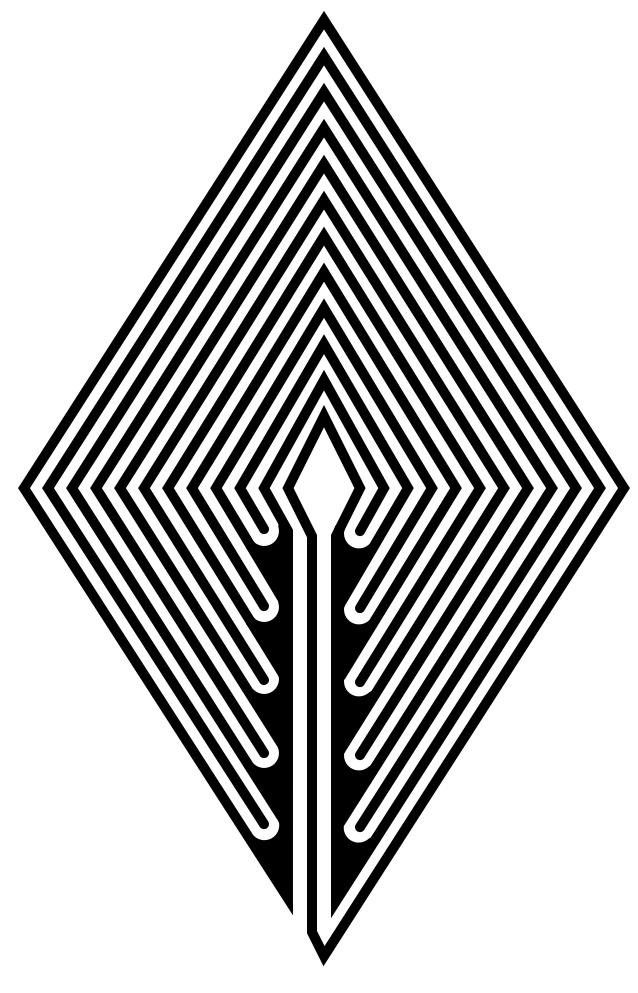
Delete your guidelines. You can change the widths now if you do not like how it looks. I changed the wall endings at the turn-backs to have curved ends, because I like how it looks.

7 Circuit Diamond Labyrinth

That concludes our instructions. Good luck in making your own design !

Additional posts you might like:

How to Make Digital Labyrinths

The 12 best maze/labyrinth movies of all time

How to Make a 11 Circuit Diamond Labyrinth

In this post I will show you how to draw an 11 circuit diamond labyrinth. A diamond shaped labyrinth is not common but I like the way it looks when completed and you have a few interesting aesthetic choices to make when you design your own that I will review.

How to Draw an 11 Circuit Diamond Labyrinth

Step 1 Draw 12 concentric diamonds

These will become your guides for the drawing of the labyrinth. Note that the number of circuits you want, you need to add one and that is how many concentric layers you need for any labyrinth creation.

PROTIP: Start your drawing with the center goal so you do not run out of room !

AESTHETIC CHOICE: For this example my diamond was made using a 2/3 grid (2 over, 3 up) giving it a sharp angle. My 7 circuit uses a square turned by 45 degrees to create the diamond.

12 concentric red diamonds

Step 1 - Draw 12 concentric diamonds

Step 2 Draw the outer wall, and pathway to the goal

At the 6 o’clock portion of the center diamond, draw a centered pathway to the edge, while keeping the right side open for the outer pathway on the right. Extend the left pathway to the edge and then create the outer wall all the way around the diamond, leaving only the entrance pathway open on the bottom left of the diamond. The distance should be equal to the width of the pathway that enters the center.

making an 11 Circuit Diamond Labyrinth step 2

Step 3 Begin the internal pathways

Draw the entrance pathway all the way towards the goal, stopping when you hit the second diamond layer. Continue this pathway around the center goal, leaving the pathway open on the bottom right of the second center diamond.

Take the right pathway from the center goal and continue it counterclockwise around the diamond, stopping to keep the pathway open on the bottom left of the diamond.

making an 11 Circuit Diamond Labyrinth step 3

Step 4 Continue drawing the internal pathways

In the center portion of the diamond, draw a turnback pathway in the third concentric diamond, creating a second pathway from the center goal. Keep the pathway open on the bottom left for a turnback the other way in the next step.

In the outer layers, draw the second outer pathway from the bottom left to the right side, clockwise, ensuring to not close the pathway on the bottom right.

making an 11 Circuit Diamond Labyrinth step 4

Step 5 + Finish the internal pathways

Continue drawing pathways from each direction until they meet.

making an 11 Circuit Diamond Labyrinth final steps

Step 6 Delete guides and make aesthetic changes

Delete your guidelines.

AESTHETIC CHOICE: In this step I decided the labyrinth looked a bit flimsy with walls so thin, so I decided to change to a standard equal construction (the walls are the same thickness as the pathways) by thickening the walls.

11 Circuit Diamond Labyrinth

AESTHETIC CHOICE: For any labyrinth with sharp angles the turn-backs will be deeper than normal. If you do not like the way it works, you can fill-in the turn-backs to give the labyrinth a different look (and in this case one that I prefer).

11 Circuit Diamond Labyrinth with turnback's filled

11 circuit diamond labyrinth with turn-backs

That concludes our instructions. Good luck in making your own design !

Additional posts you might like:

The 12 best maze/labyrinth movies of all time

The Louvre Maze

Spillway Lanes Sign Maze

A Comparison of 5 different types of 11 Circuit Labyrinths

I have previously shown how to make a variety of digital labyrinth drawings. The ones I reviewed fell into one of 5 categories: classical labyrinths, square labyrinths, circular labyrinths, octagonal and hexagonal labyrinths. Today we are going to take a quick look at the five different structures and compare them. We will also discuss the different symbolism associated with each labyrinth shape.

First let’s look at the seed patterns. For the classical and square labyrinths you can use the same seed pattern show below. None of the circular, octagonal, and hexagonal labyrinths have traditional starting seeds beyond their inherent shapes.

Labyrinth seed pattern

Next let’s look at the connections for the labyrinths that use this seed pattern. The difference between a square and classical labyrinth is simple, and that is the shape of the connections between the seed endings. Here is the first move for each, one square and one curved (each makes the destination of the labyrinth).
Making a Square Labyrinth - step 2
Making a  Labyrinth - step 2

Both also use the following seed connections to finish the drawing of the labyrinth:

Seed pattern for 11 circuit labyrinth with connections

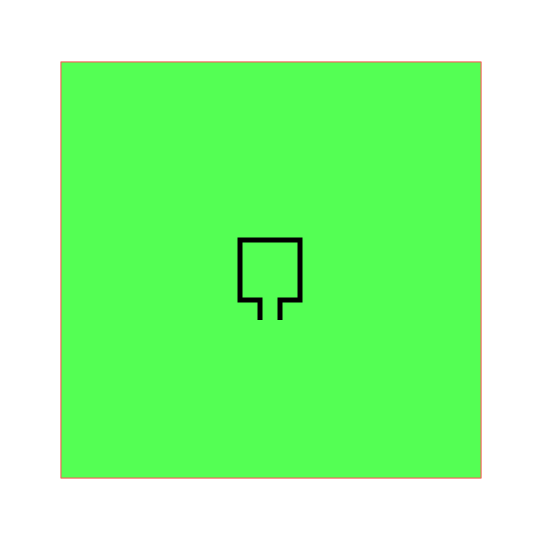
For a square labyrinth you also have a second option to create a larger square goal if you prefer (the seed is shown with a green background guide below). This is more likely to be found in a real world labyrinth to allow labyrinth walkers to have a large center to rest/meditate in. On the right you see the final version of this center goal variation.

Square center labyrinth variation
11 Circuit Square labyrinth with large center

What about the starting seeds for the other 3 types of labyrinths ? Well it seems they go their own way. While they also have 11 circuits, the making of them differs significantly from the classical and the square versions. They also have more variety in the way they are constructed, including allowing the creator to make some aesthetic choices along the way.

Let’s first look at the starting patterns:

Circular - 12 concentric circles

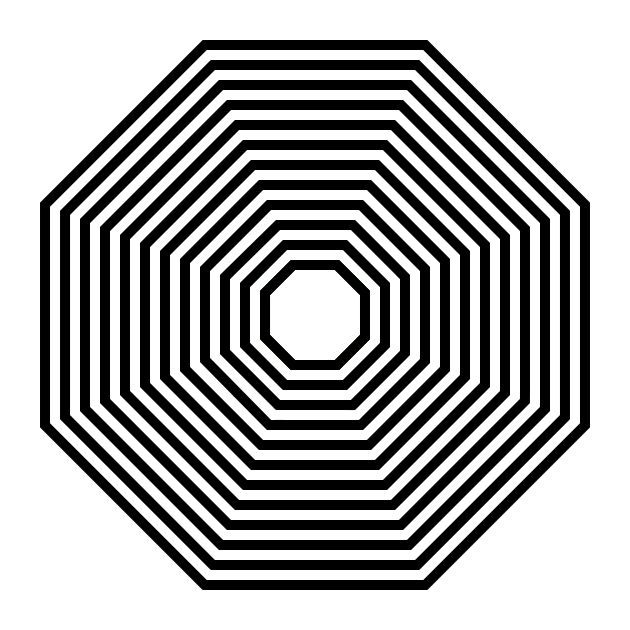
Octagonal - 12 concentric octagons

Hexagonal - 12 concentric hexagons

12 concentric circles
12 concentric octagons
12 concentric hexagons

We have consistency here, we just change the shape. If you did not already know, the # of concentric shapes needed is always 1 greater than the number of circuits you want. So, if you wanted to make a 7 circuit pentagonal labyrinth, you need to start with 8 concentric pentagons. If you go back to our seeding pattern for both the square/classical labyrinths you’ll notice that there are 12 seeded connections there also ! So this math is consistent across all constructions.

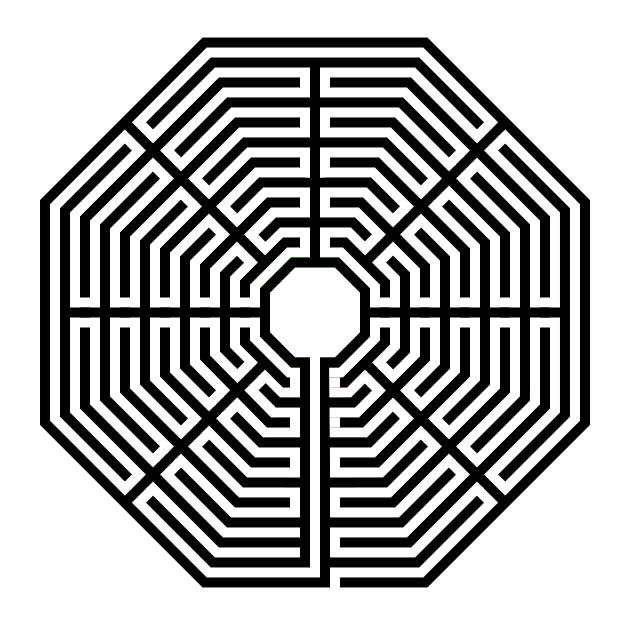
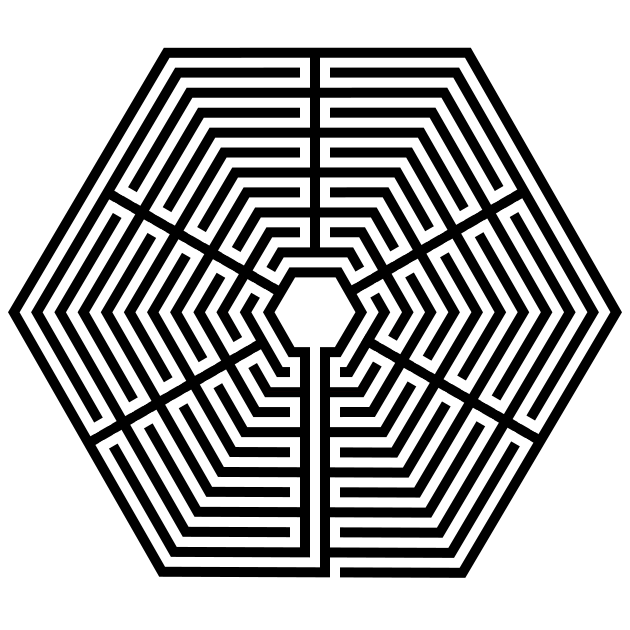
The next step in drawing each of these labyrinths is determining how many turn-backs or sections you would like the labyrinth to have, and it really is your personal choice. There is no standard way to draw the walls and turn-backs like you find with the classical labyrinth. I typically make 4 sections for my step by step instructions, but I have made 1,2,4 and 8 sections for most shapes with one exception, the hexagonal looks best in 6 sections vs. 8 for obvious reasons. Similarly, a pentagon would look natural with 5 sections.

Here are the 1,2,4, and 8 section octagonal labyrinths:

Octagonal labyrinth 11 circuit 1 section
Octagonal labyrinth 11 circuit 2 section
Octagonal labyrinth 11 circuit 4 section
Octagonal labyrinth 11 circuit 8 section

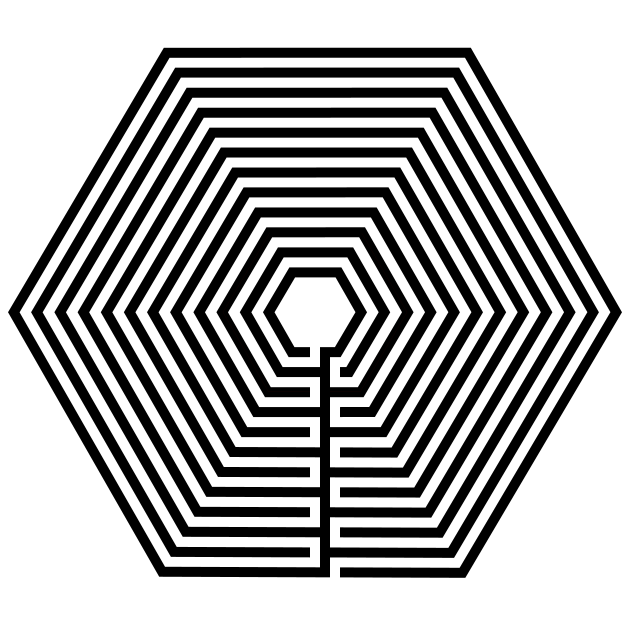
Here are the 1,2,4, and 6 section hexagonal labyrinths:

Hexagonal labyrinth with 1 section
Hexagonal labyrinth with 2 section
Hexagonal labyrinth with 4 sections
Hexagonal labyrinth with 6 sections

And finally the 1,2,4, and 8 section circular labyrinths:

Circular Labyrinth 11 Circuit 1 section
Circular Labyrinth 11 Circuit 2 sections
Circular Labyrinth 11 Circuit 4 sections
Circular Labyrinth 11 Circuit 8 sections

Once you have chosen the number of turn-backs, you can also make 3 more design aesthetics:

Wall or Line Thickness:

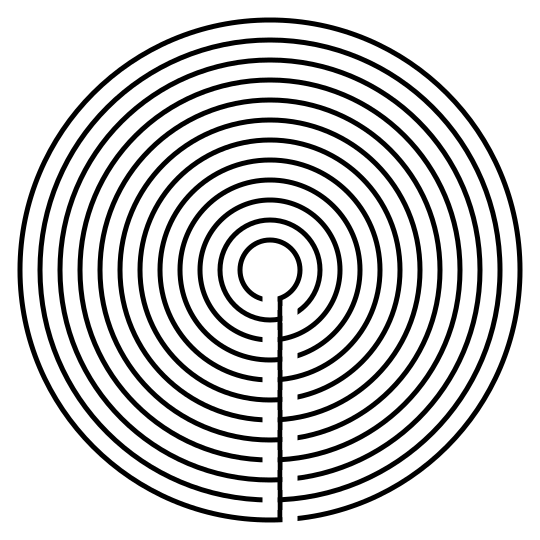
For my examples, the hexagonal and octagonal labyrinths each used standard equal constructions (the wall and pathway thicknesses were the same). I like the way they look. All of my other examples used a regular construction. Here is what a circular labyrinth would look like in standard equal construction. All labyrinths can be made in either construction. Which do you prefer ?

11 Circuit Circular Labyrinth thin walls
11 Circuit Circular Labyrinth thick walls

Left-handed vs. Right-handed Labyrinths:

All 5 versions of these labyrinths can be created as either right handed or left handed. Every example in this discussion so far has been right handed. The left handed versions is the mirror image of what I have shown. This is difficult to notice for most people except for the classical labyrinth where it is apparent as shown below (although you would notice the handedness of any labyrinth that you were walking I imagine):
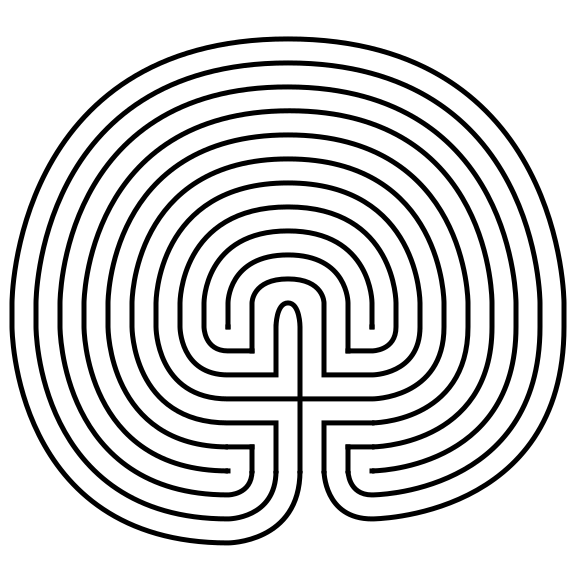
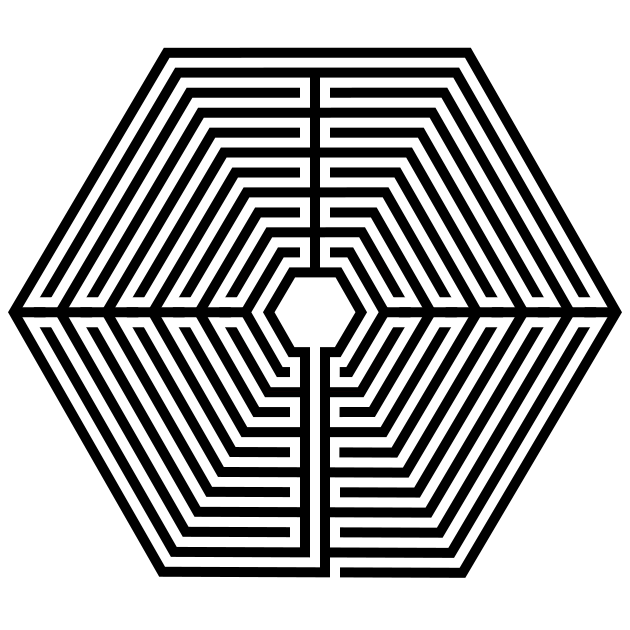
11 Circuit classical labyrinth right handed
11 Circuit classical labyrinth left handed

Labyrinth Orientation

The last variation applies to only the octagonal and hexagonal labyrinths construction (or any other shape you decide to use). For geometric shapes you may start the initial pathway centered on a wall, as all the above examples have done, or you may start the labyrinth on a corner. Here is the 4 sectioned hexagon with each orientation. Notice that the section lines are placed in the same place for each version.

11 circuit Hexagonal labyrinth
11 circuit Hexagonal labyrinth start in corner

So that concludes our discussion and comparison of the 5 main types of labyrinths. I hope I have inspired you to create your own !

More shapes to consider:

Following the basic steps I have outlined you can create additional shaped labyrinths. I think once you get to a decagon (10 sided) and dodecagon (12 sided) regular shaped polygons you are close enough to a circle that that would be the preferred construction. A pentagon and triangle are certainly both possible, although not commonly seen. Similarly, irregular polygonal shapes are possible but typically not drawn, just used in the real world because a rock/tree/other is in the way of the path.

Here is the final comparison. Which do you prefer ?

11 circuit labyrinths in 5 different shapes

Labyrinths - Shape and Symbolism

The symbolism of labyrinths is complex and varied. Some people see them as symbols of the journey of life, while others see them as representations of the universe or the mind. Labyrinths can also be seen as metaphors for the challenges that we face in life and the rewards that we can reap if we persevere. Here is a look at some of the symbolism found in the most common shapes:

Most Classical labyrinths have 7 circuits. The 7 circuits represent the 7 stages of life: birth, childhood, youth, adulthood, middle age, old age, and death.

Square labyrinths are often seen as representing the four elements (earth, air, fire, and water),

Circular labyrinths are often seen as representing the cycle of life.

Hexagonal Labyrinths may have been made for a variety of reasons. One theory is that the number 6 has symbolic significance in many cultures. It is often associated with creation, completion, and balance. For example, in the Bible, God created the world in six days, and the Star of David has six points. It is possible that the builders of labyrinths used the number 6 because they believed that it had special powers or meaning.

Step by step instructions on how to draw digital labyrinths.