
Case Study#8 - Improving Previous Mazes

In my first 7 case studies I took half finished mazes or completed mazes that weren’t very good and improved them. If you want to read those case studies the links are at the end of the post. Today I want to take you through a series of mazes I was happy with, but still thought it could be improved and challenged myself to do the slow work of improving it.

I asked a friend for some feedback and they thought every color maze was better than every black and white maze, with only a few exceptions. My thought was, let’s take the time to color a few mazes of the week from this week and see if color improves them or not. I ended up doing 9 different mazes, with 2 getting a lot of extra attention. Today we look at 7 of the mazes.

Museo Soumaya Maze

Let’s look at that original maze, also known as the ‘before’:
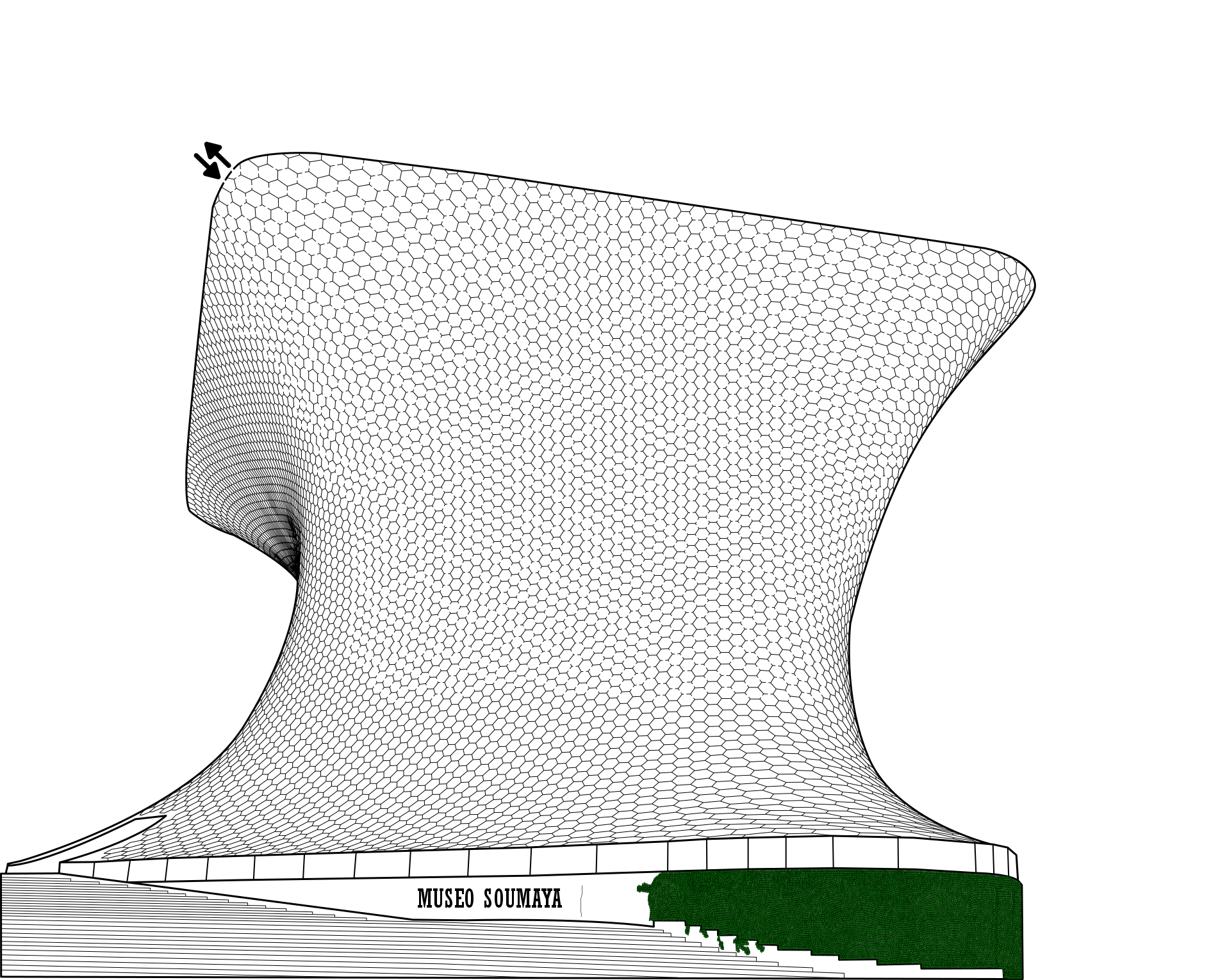
Museo Soumaya Maze black and white

The building has a unique shape, and while it is a black and white maze I did give the leaves that cover the front color so people could see what it was. The revised maze:

Museo Soumaya Maze in color

Some simple coloring, but shadows give the building more shape. I think this is a slight improvement !

Heydar Aliyev Center Maze

A beautiful white building seemed natural to stay black and white.
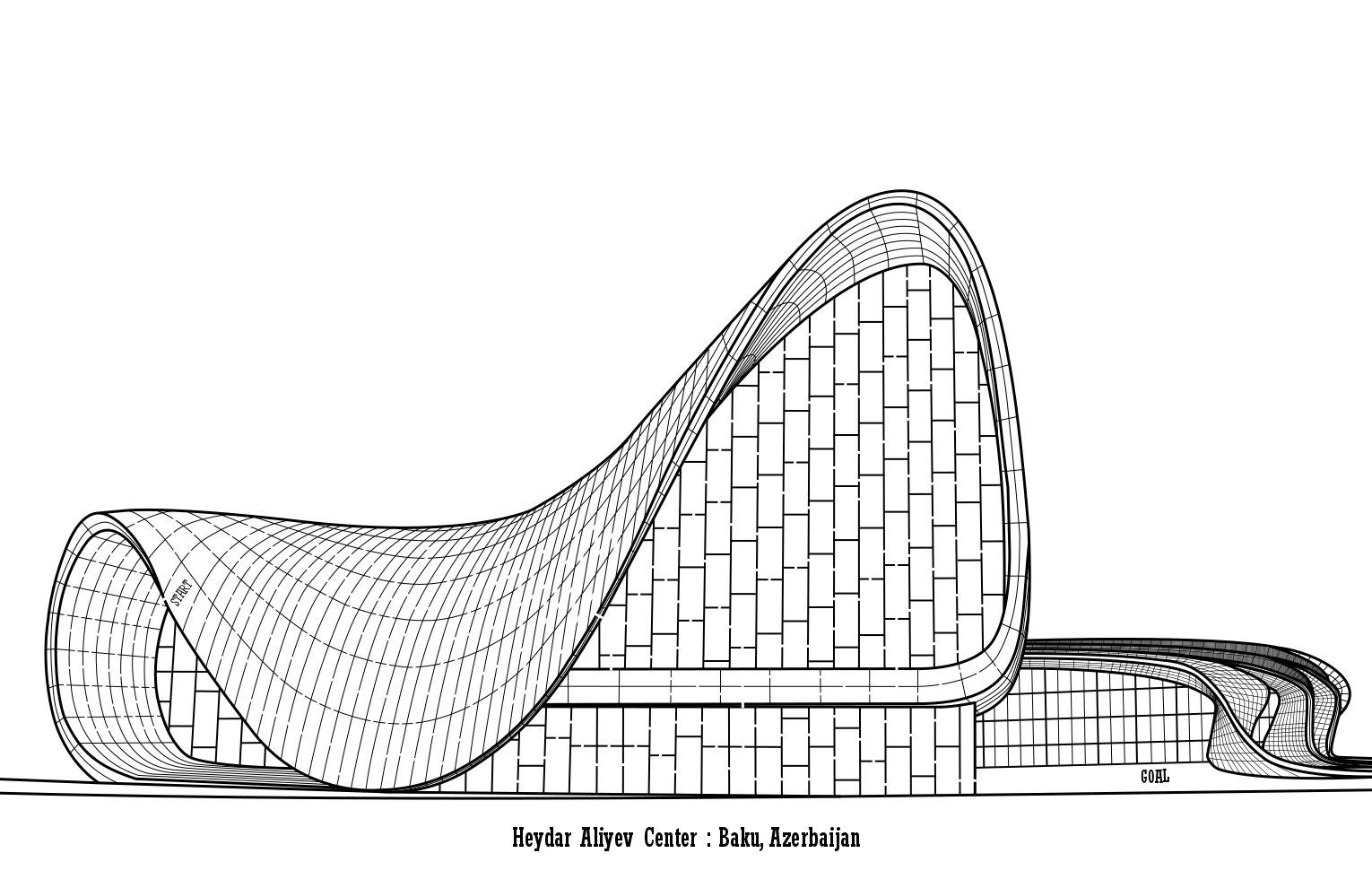
Heydar Aliyev Center Maze black and white

But in the revision I added a blue sky that helps to pop the white building more, and added shadows to give the unique building more shape on the page. Personally, I think these minor changes make the maze much better !
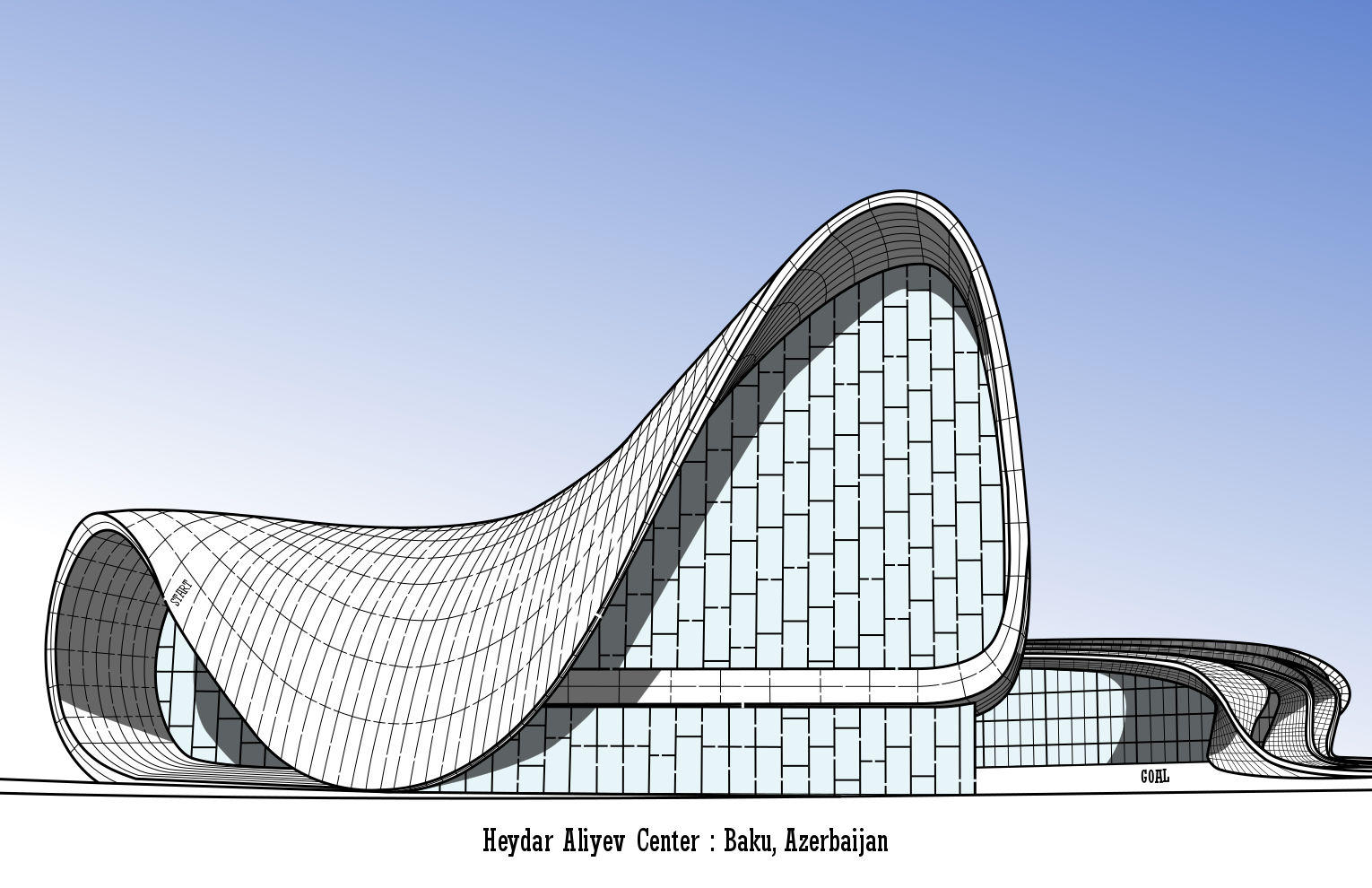
Heydar Aliyev Center Maze in color

Lotus Temple Maze
This is another building that is an off white color so I left it in greyscale. I did originally add shadows to the maze to show the unique shape, and that really worked.
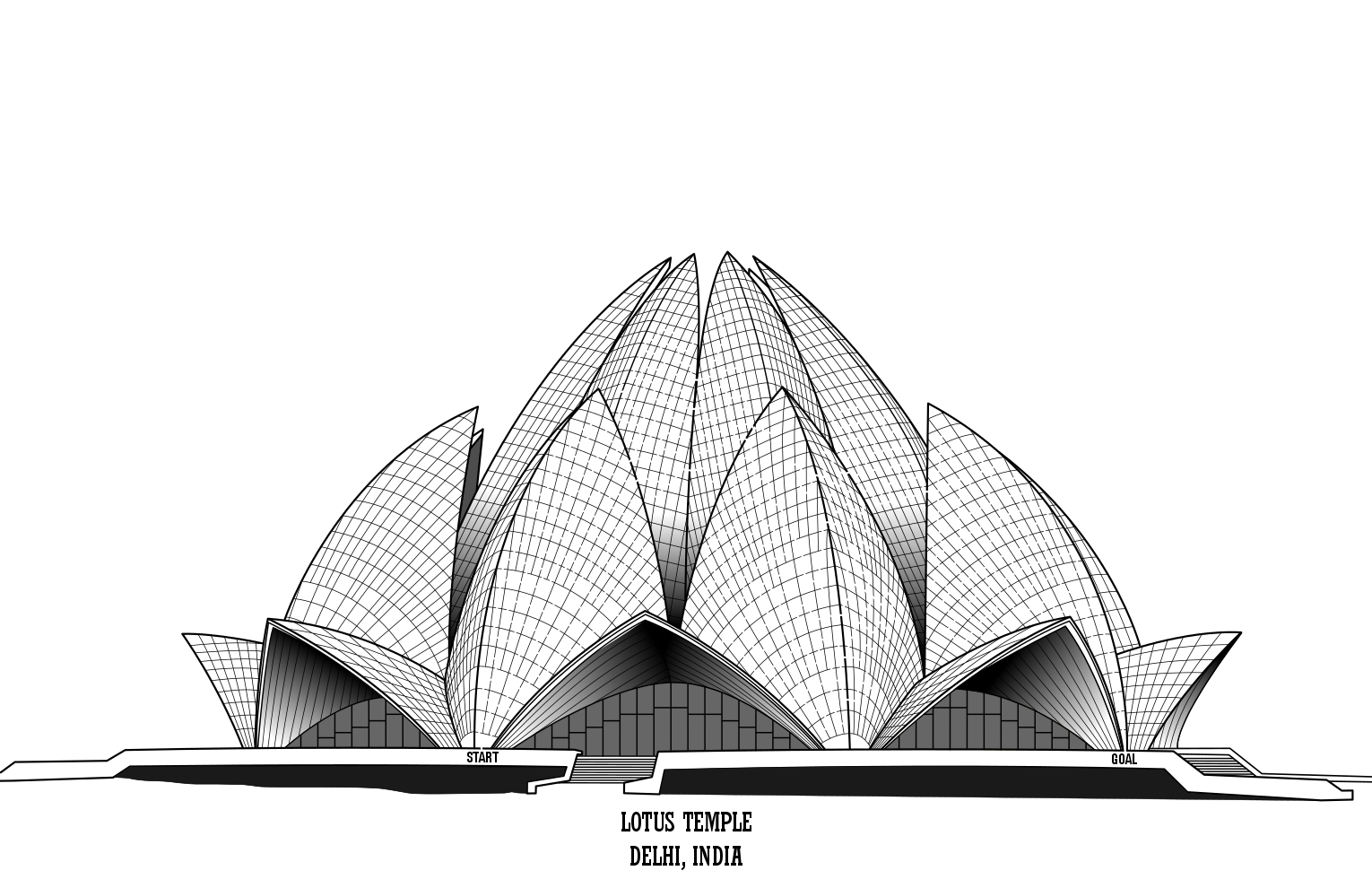
Lotus Temple Maze

For the revision I added a sky, an expanded pathway and grasses. I’m not sure if this is an improvement. I think I prefer the original.
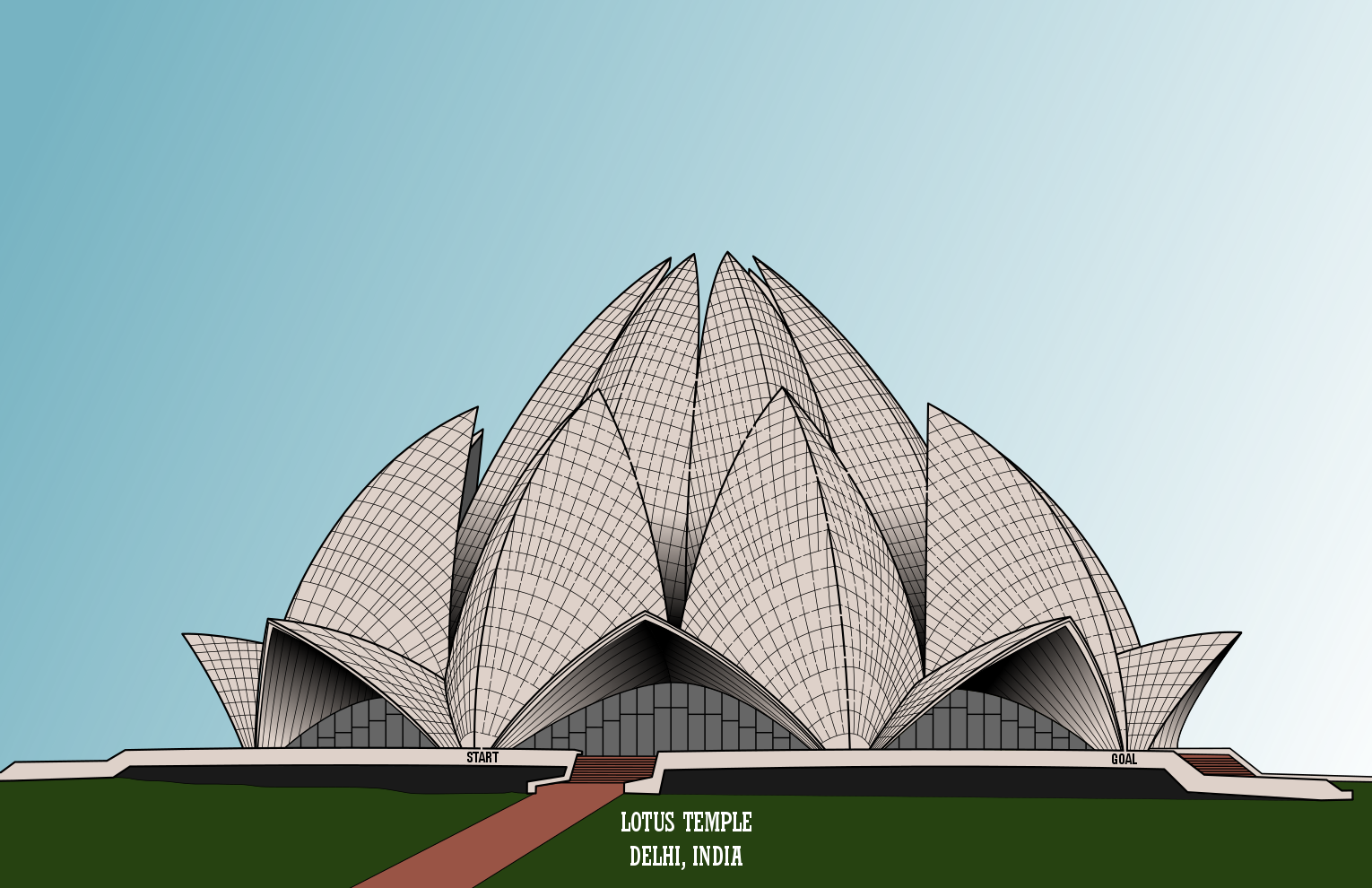
Lotus Temple Maze in color

George Rogers Clark Memorial Maze
This was a random maze I made because I liked the building. I also liked how it looked in black and white.
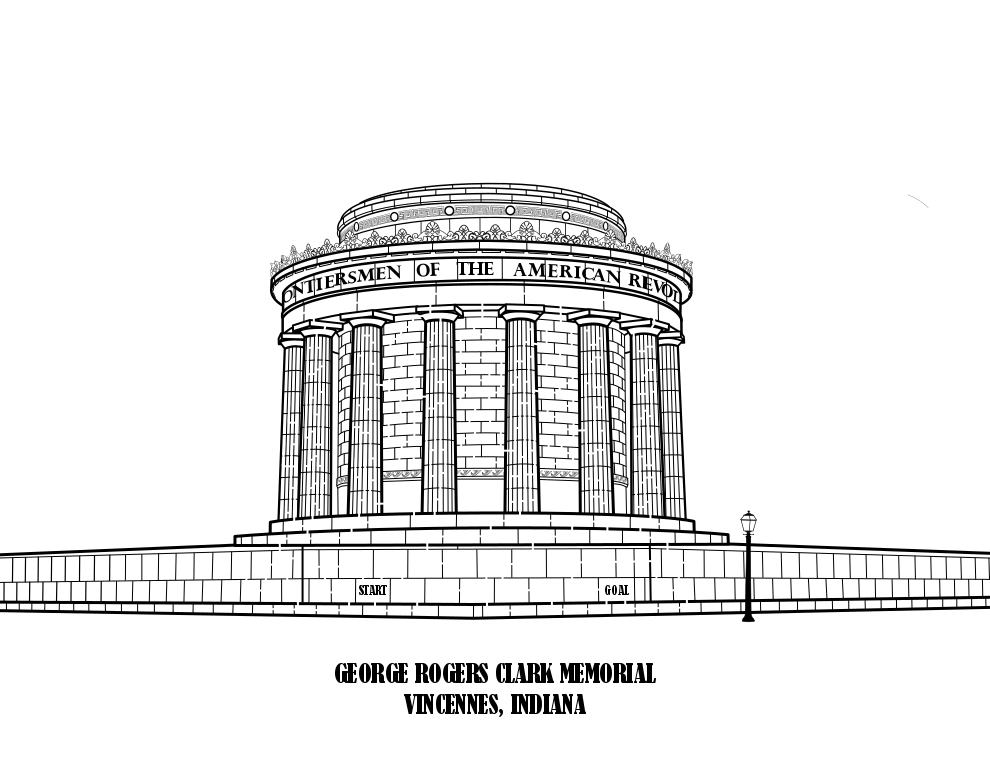
George Rogers Clark Memorial Maze in black and white

The revision only includes 4 colors and gives you a better feeling of what the building actually looks like. Either maze is ok for me. I considered shadows…but no.
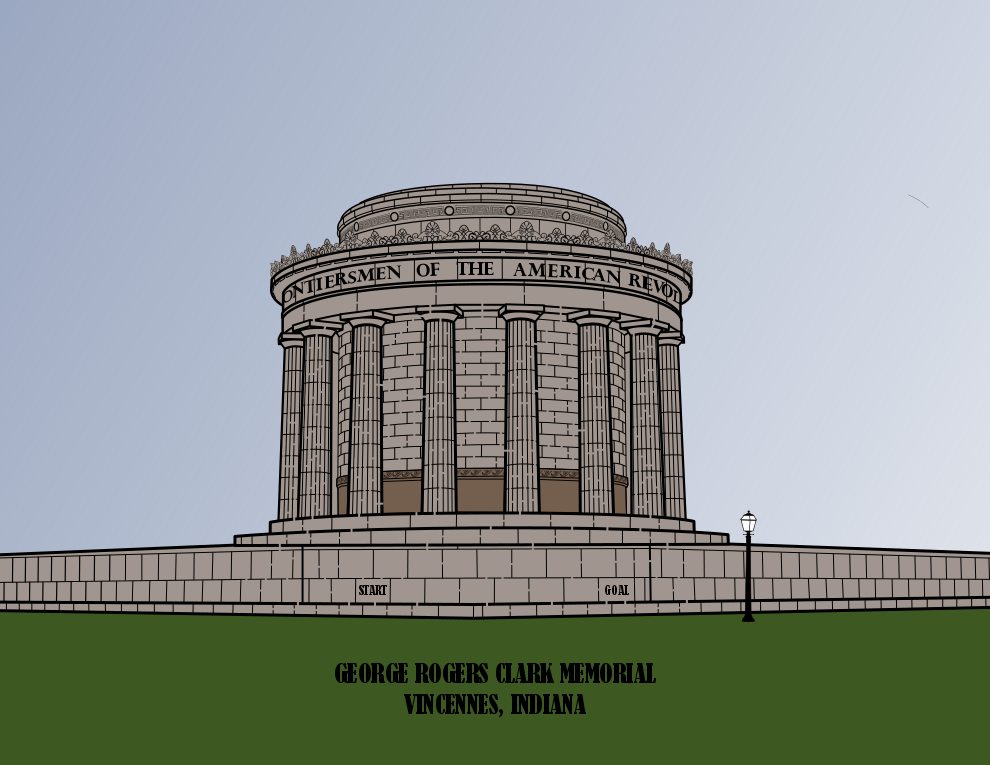
George Rogers Clark Memorial Maze in color

Bagan Temple Maze
I did this maze off of a photo I took and used a different technique of drawing different spaced and thickness lines to make it. I generally do not use this technique anymore. I also no longer “maze” the sky.
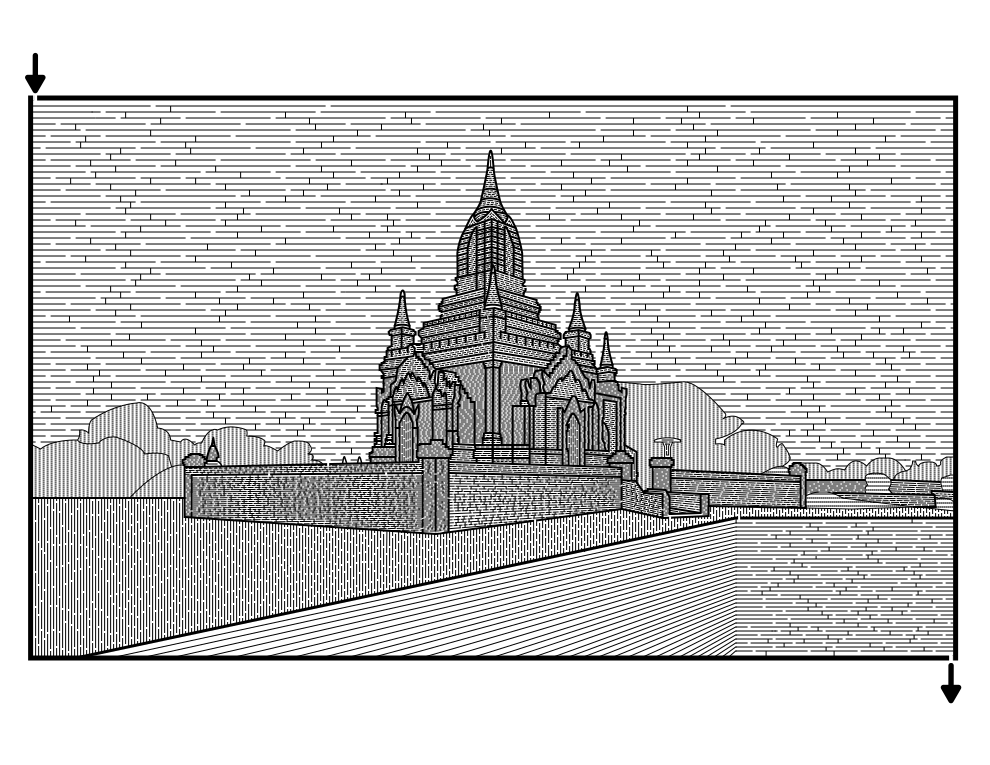
Bagan Temple Maze

Adding color inside the frame makes this look different, almost like a postcard. I think I prefer the original, but in color it is ok.

Bagan Temple Maze in color

Pro Football Hall of Fame Maze

I always knew this should be in color. The stones on the building are multicolored. I have done individual brick/stone colors before and it is tedious.

Pro Football HOF maze black and white

But I think the addition of color, especially with the plants in front and the small windows on the football roof make this much better in color (even if I went with one brown for the stones).
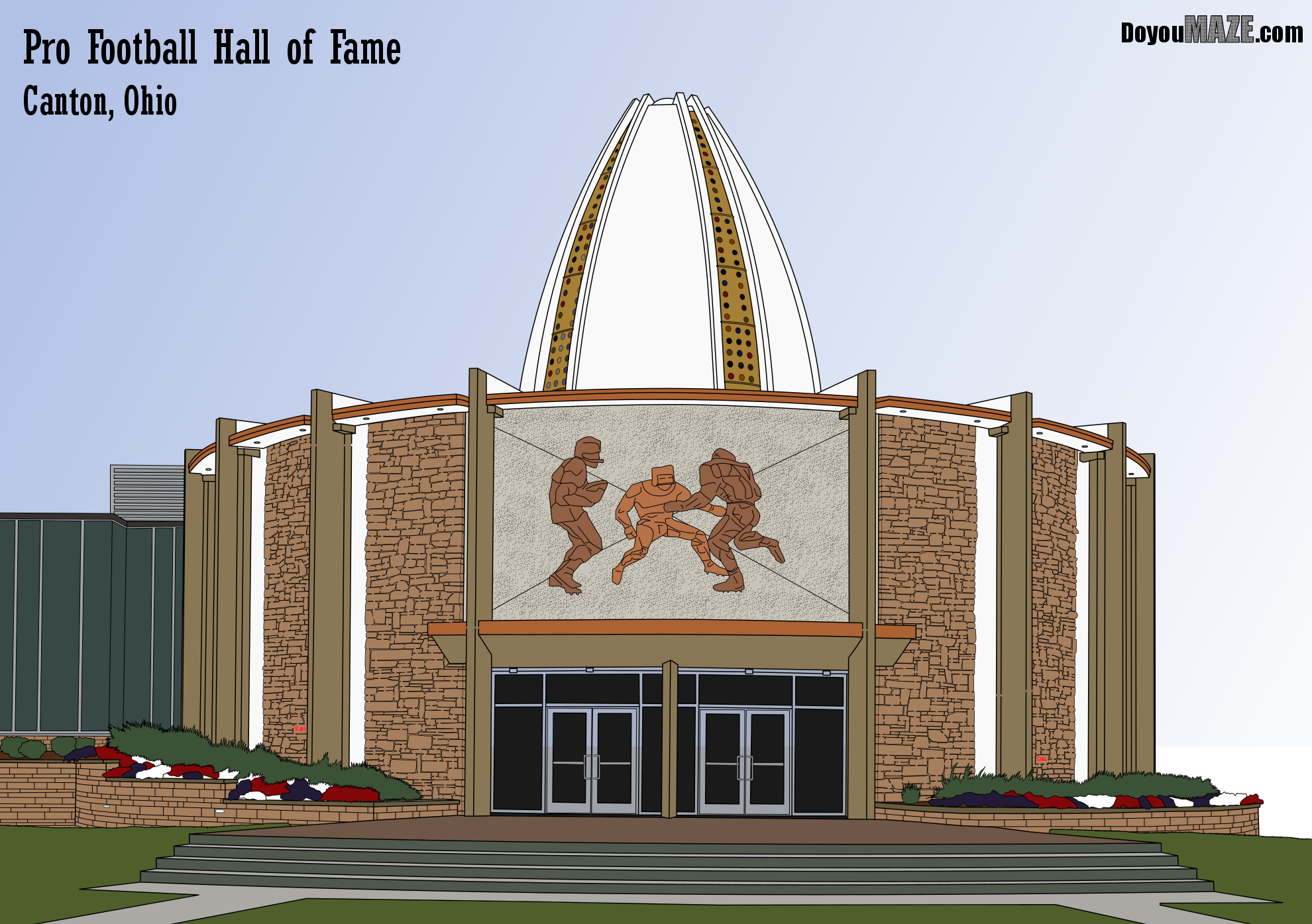
Pro Football HOF maze in color

Elm Road Theater Sign

This weeks maze was a last minute switch ! Here is the original.
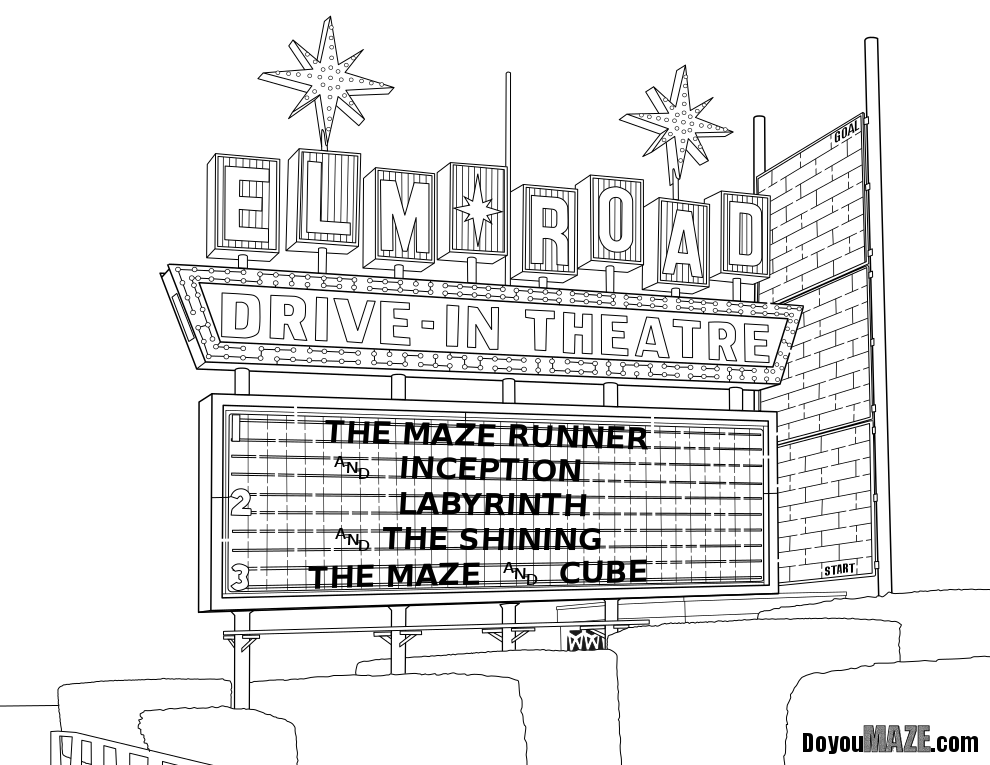
Elm Road Drive In Theatre Sign Maze

And here is the much more colorful version! I like both, but the colors really pop and give you a better sense of what the drive in sign looks like !
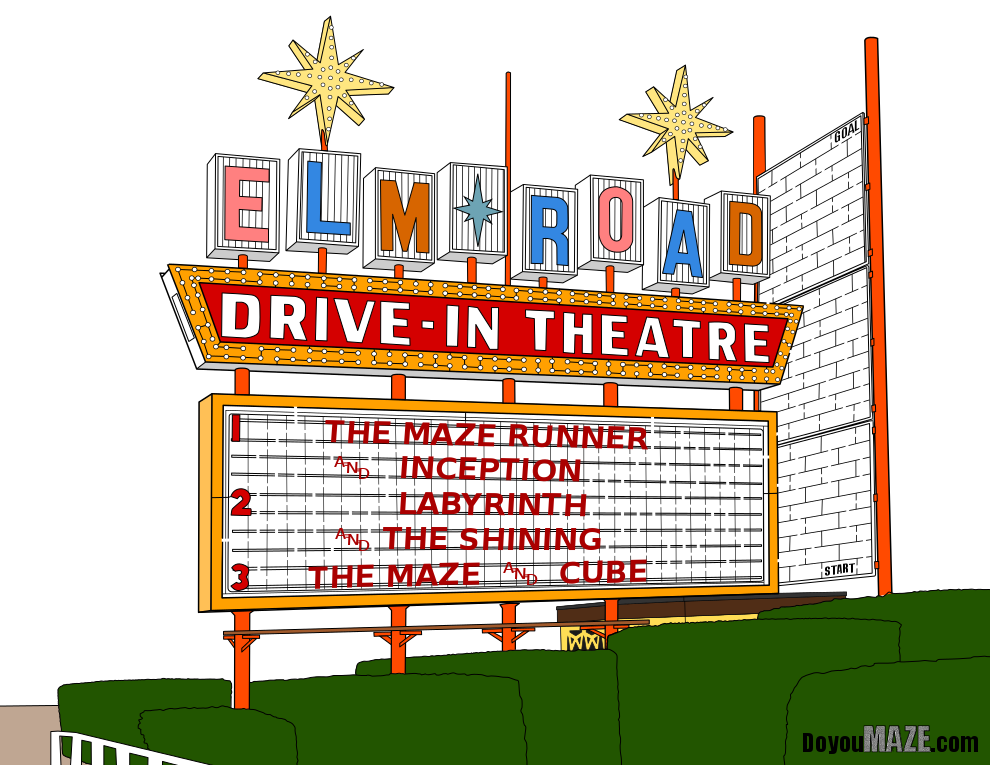
Elm Road Drive In Theatre Sign Maze in color

So that concludes this case study…some mazes look better in color, while others do not. Overall adding color is a good thing thought because when it works, it really works. So that was 7 mazes of the 9 I colored. The other 2 mazes get their own case studies (#9 and #10) because I did more work on them, and have more to discuss besides a before and after. Also, they look great (IMO) so stop by soon and read about them !

If you want to read the previous 7 case studies:

Case Study#1 - How to Improve a Bad Maze - Tiki Totem Maze

Case Study#2 - How to Improve a Bad Maze - Danzante Conchero Chichimeca Maze

Case Study#3 - How to Improve a Bad Maze - Red Rocks Amphitheatre Maze

Case Study#4 - How to Improve a Bad Maze - The Hollywood Sign

Case Study #5 - How to Improve a Bad Maze - Severance Hall

Case Study#6 - How to Improve a Maze - Uxmal

Case Study#7 - How to Improve a Bad Maze - Ship

Maze of the Week #98 - Elm Road Drive In Theatre Sign

Maze of the Week #98 takes us back to a familiar theme on the site, retro sign mazes ! The Elm Road Drive In Theatre Sign is a wonderful retro sign for a still operating drive-in movie theatre located in Warren, Ohio. You can see what is playing on the drive-ins website. You’ll notice the website prominently features the wonderful sign ! They still have a movieline !


YouTube: Although it discusses covid challenges, I like that this short video shows the sign prominently !

The Maze: I went black and white and stopped despite such great colors on the actual sign. The textures from the physical sign look great as a maze. And of course I had to give a nod to some great maze movies !

Elm Road Drive In Theatre Sign Maze in black and white

Elm Road Drive In Theatre Sign Maze

I hope you enjoy the maze. Maze download is available on the sign maze section of the site. Please check out my YouTube channel where you can watch this maze being made and solved!!

UPDATE FROM THE FUTURE: This became part of my blog post CASE STUDY#8 - IMPROVING PREVIOUS MAZES where I decided to add color to the maze. I like how it came out ! Read and see it there.

Coming next week:

A museum maze. We are 2 weeks away from a very special maze #100 !

Ken's Labyrinth: A Blast from the Past FPS Maze Game

Maze video games have a long history and where some of the biggest games from the video arcade era. Wikipedia has a whole page listing hundreds of retro maze games and the first maze game was developed in 1959 !!! Of course you needed a massive mainframe to play it…but it existed. Some of the most famous maze games are Pac-Man and all its sequels, Dig Dug, Gauntlet, and Rally-X. The game Maze, developed in 1973 brought us a first person shooter game that was played in a maze. Today I want to discuss one of the games inspired by that original first person game, Ken’s Labyrinth.

Ken's Labyrinth Video Game opening page

Ken's Labyrinth Video Game opening page

The History of Ken's Labyrinth

Ken's Labyrinth is a first-person shooter (FPS) game developed by Ken Silverman when he was 17 years old and published by Epic MegaGames in 1993. The game is notable for being one of the first FPS games to feature interactive sprites and textures, as well as for its innovative use of the Build engine.

Silverman began development on Ken's Labyrinth in 1991, when he was still a teenager. The game was originally called Walken, and it was inspired by the Wolfenstein 3D engine. Silverman quickly realized that he could do more with the engine than just recreate Wolfenstein 3D, so he began to add new features and ideas.

One of the most significant features that Silverman added to Ken's Labyrinth was the ability to interact with sprites and textures. This meant that players could interact with objects in the environment, such as vending machines, slot machines, and even the enemies themselves. This was a major innovation at the time, and it helped to set Ken's Labyrinth apart from other FPS games.

Another innovative feature of Ken's Labyrinth was its use of the Build engine. The Build engine was a new rendering engine that Silverman developed specifically for the game. The Build engine allowed for more detailed and complex levels than previous FPS engines, and it also allowed for more realistic lighting effects.

Ken's Labyrinth was released in 1993, and it was met with positive reviews from critics. The game was praised for its innovative features, its challenging gameplay, and its tongue-in-cheek humor. Ken's Labyrinth was also a commercial success, selling over 100,000 copies.

Take a look at some of the gameplay:

The success of Ken's Labyrinth helped to launch the career of Ken Silverman. Silverman went on to develop the Build engine, which was used in many popular FPS games, including Duke Nukem 3D, Shadow Warrior, and Blood.

Here are some additional facts about Ken's Labyrinth:

  • The game was originally released as shareware, with the first episode available for free. The full game was available for purchase.

  • The game was inspired by the Wolfenstein 3D engine, but it also incorporated elements from other games, such as Doom and The Legend of Zelda.

  • The game's levels were designed by Ken Silverman and his friend Andrew Cotter.

  • The game's soundtrack was composed by Ken Silverman.

  • The game was released for MS-DOS, and it has since been ported to other platforms, including Windows, Mac OS X, and Linux.

Want to give it a quick play ? There are plenty of emulators out there. Here is one to try.

Similar posts you may like: