
Drawing a classical labyrinth can be easy and fun once you learn the starting pattern and the rules of building the pathways. Follow the simple 9 step process below and draw your own 7 circuit classical labyrinth. I have broken the post into 4 parts depending on how you prefer to learn.
PART 1: STEP BY STEP LABYRINTH MAKING INSTRUCTIONS
PART 2: VISUAL STEPS WITH GRIDDING SHOWN
PART 3: VIDEO SHOWING THE LABYRINTH BEING MADE
PART 4: LABYRINTH DATA AND FACTS
PART 1: STEP BY STEP LABYRINTH MAKING INSTRUCTIONS
Step 1: Draw the starting seed pattern.
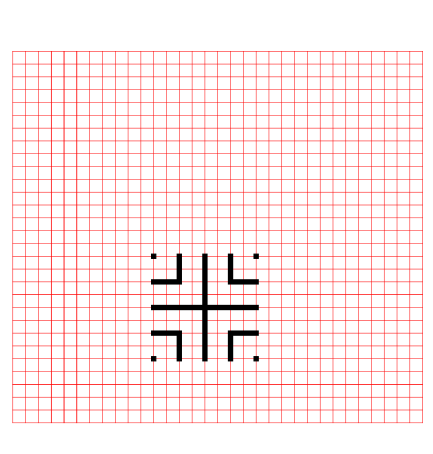
It can be seen by some people as originating from a 4x4, 16 box grid. There is a plus sign centered and dots in each of the four corners, with 4 “L” shapes between the + and the corners. See below how the starting pattern (in black) relates to the red 16 grid 4x4 box:
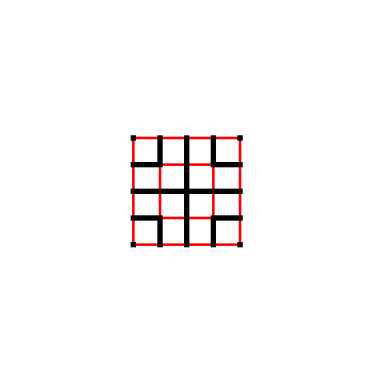
And how the seeding pattern looks without any guidelines:

Classical 7 Circuit Labyrinth Seed Pattern
Pro tip: Do not center the initial pattern on the page or in the space you are using to build your classic labyrinth. Start it 1/3rd of the way from the bottom as the majority of the building will take place above the initial pattern. If you care about left/right centering also move slightly to the left on the page. Centering will come with practice so consider yourself lucky if you get it right the first time !! Below is a labyrinth showing the center of the initial seed pattern compared to the center of the final labyrinth.

Step 2: Create the goal of the labyrinth
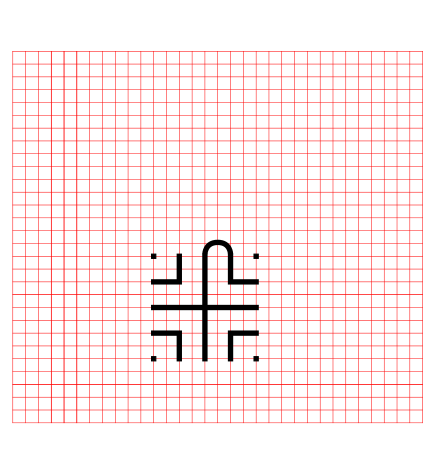
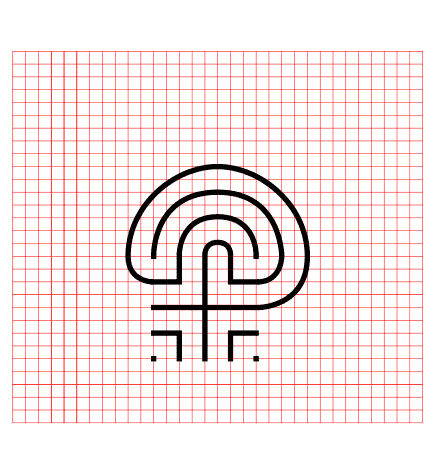
Connect the top of the plus sign to the first point directly to the right using an arching pattern. This first connection will create the goal of the labyrinth. Notice that the goal of this classical labyrinth is small compared to other constructions. If you were creating this pattern for a physical labyrinth this would mean a small central gathering place.

Arching connection - creating the goal
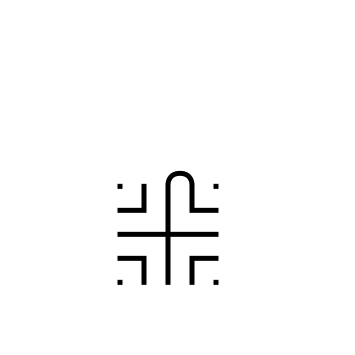
Classical 7 Circuit Labyrinth - Step 2 - Create the Goal
Step 3: Connect the first pathway arch
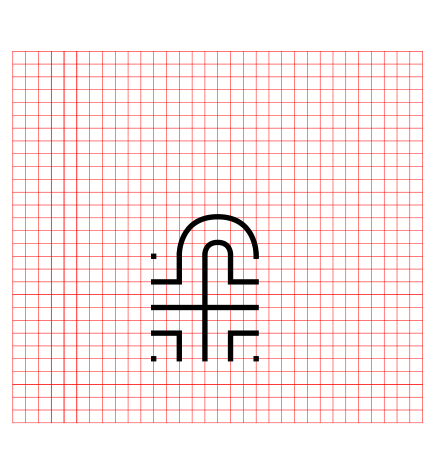
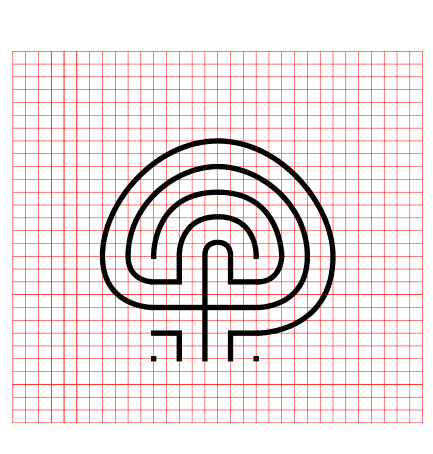
Moving to the next point to the left, the top of the backwards “L” in this case, connect it to the next point to the right, or the dot in the far right corner, again using an arching pattern. The peak of this line will align with the peak from the goal you drew in Step 2. It also should create a pathway the same width as your seed pattern. Notice that we have moved one spot to the left and connected it to the next spot on the right. This pattern will continue for this labyrinth and most that you create ! Each new arch you draw will peak above the previous peak at the top of the labyrinth.
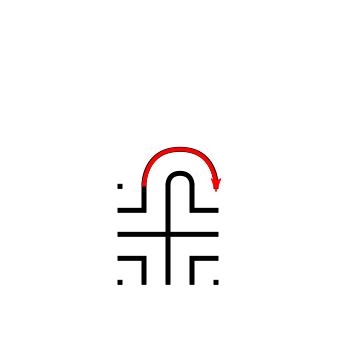
Drawing Arch #2
Let’s fast forward a bit to further explain the arches with more detail. Each side of the labyrinth has different alignments that create the peak arch point for each pathway. All northern pathways (shown below in red) align above the midpoint of the goal. All eastern pathways (shown in blue) align with the original top right dot in the seeding pattern. Western pathways (shown in green) align to the top left seeding pattern dot. The southern part of the labyrinth also aligns to the corner dots, one for each side (shown as purple and orange).

Peak points for each drawn pathway by side
Steps 4 - 9: Connect the next arch, moving from the left
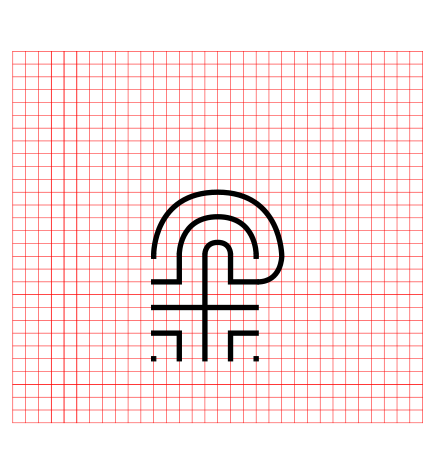
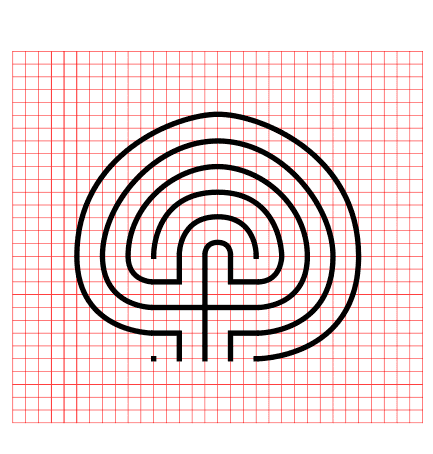
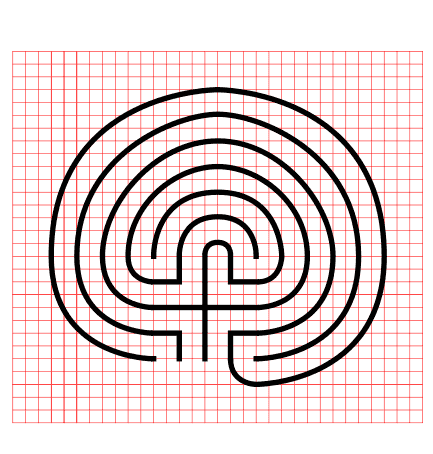
For each step continue to move to the next point left, connecting each subsequent point to the next point on the right in an arching pattern. Step 9 will connect the final points and complete your classical labyrinth ! As you connect each point ensure you create pathways that are equal sizes (or alternatively create walls an equal distance apart from the previous wall).

Steps 4 - 9
And that does it. You’ve drawn a classic 7 circuit labyrinth ! You get better each time you make one ! Hopefully this helped make this drawing easy and fun !!
The RIGHt Handed 7 Circuit labyrinth
Now we have just made a left handed version of a classic labyrinth (Did you know it was right handed ?) . What you might not know is there is a right handed version of the same labyrinth. Take everything you just learned in the steps above and reverse them as if you are looking into a mirror. The seeding pattern stays the same but the first arch moves to the left followed by arches drawn to the left in each additional step. What determines the handedness ? The way you turn after you first enter the labyrinth !
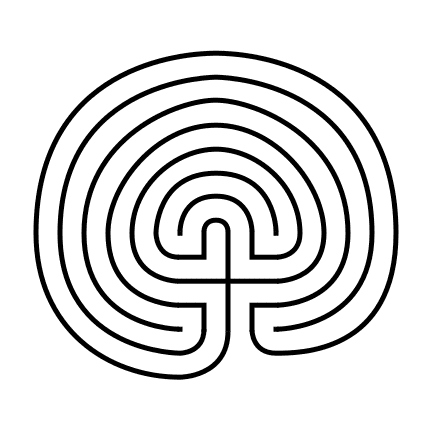
Right handed 7 circuit labyrinth
PART 2: VISUAL STEPS WITH GRIDDING SHOWN
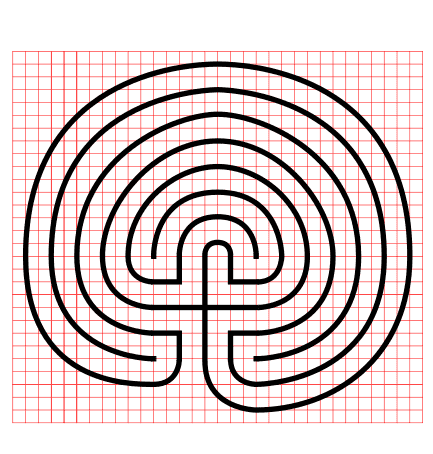
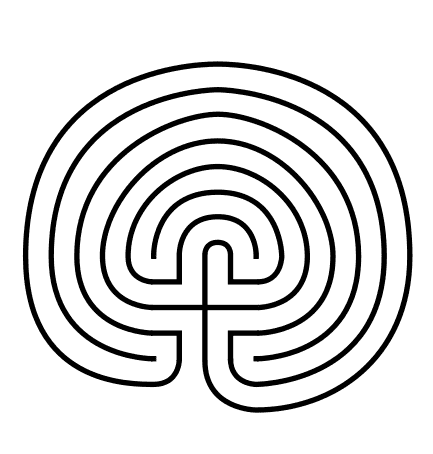
The grid is twice as dense so you can use the peak alignment points on the North side of the labyrinth. Notice that the labyrinth seed is not centered on the grid as discussed above. Click on an image to see a larger version in new window you can “build” using the next control.
PART 3: VIDEO SHOWING THE LABYRINTH BEING MADE
If you are more visual here is a quick video review of what we did from my YouTube channel (where I show how to make mazes/labyrinths and also show the making of maze art):
PART 4: LABYRINTH DATA AND FACTS:
The 7 circuit classic labyrinth is said to represent the journey of life. The path is the journey that we all take, and the center is the goal that we are all trying to reach. The 7 circuits represent the 7 stages of life: birth, childhood, youth, adulthood, middle age, old age, and death. When found in the real world (as opposed to drawn on paper), the labyrinth can be used as a tool for meditation by walking the path slowly and mindfully. As you walk, you can focus on your breath and your thoughts. You can also use the labyrinth to reflect on your life and to set goals for the future.
I did a large research product on the labyrinths of the USA and this is what I found:
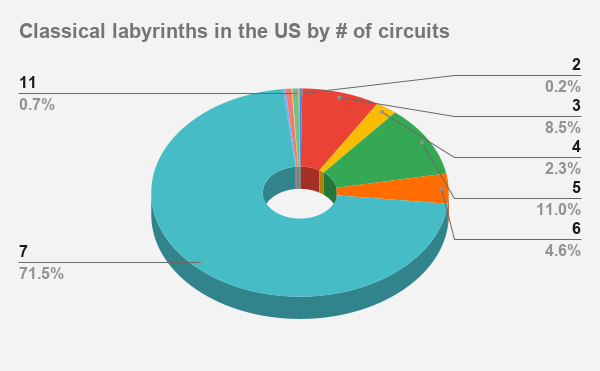
71.5% of all of the Classical labyrinths in the US have 7 circuits like you just learned. (see chart)
29.5% of the labyrinths in the US are classified as classical.
If you like this type of data check out my research: Questions about US Labyrinths Answered.
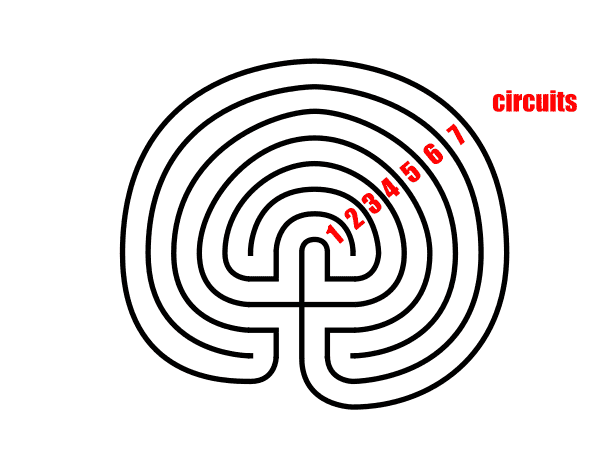
I probably should have mentioned this before just in case you were not familiar. If it isn’t for you, here is an illustrated explanation of circuit counting for labyrinths. I also teach how to make 3, 11 and 27 circuit classical labyrinths which are all variations of this core labyrinth.
Here are some locations you can see in real life:
The Newfields – Virginia B. Fairbanks Art & Nature Park Labyrinth in Indianapolis, IN is a very large 7 circuit classical labyrinth that is 95 foot in diameter. It is open to the public and well worth a visit.
The labyrinth at St. Gregory’s Abbey in Shawnee, OK is made from a gravel pathway with granite stones. I t has an 80 foot diameter and can be seen on Google Maps.
The Kanapaha Botanical Gardens in Gainesville, FL charges an admission, but you will get to walk their labyrinth ! Plan a trip on their website.
These are just 3 of the over 800 7 circuit classical labyrinths in the US. To find one near you, check out the website labyrinth locator or my review suggestions of labyrinths to visit by state which include the best labyrinths of any type.
Additional posts you might like:
Interested in learning how to make or draw other digital labyrinths ? You can find many different step by step instructions HERE.
10 of the Most Frequently asked Questions about Labyrinths, with Answers