Book Reviews: Books about Real World Mazes and Labyrinths

I have pulled together reviews of 7 books that deal with real world labyrinths and mazes. These books focus on labyrinths you can walk through in the real world. Here are my 2 previous compilations of book reviews. This post is most closely an extension of the first post:

The Best Books About Mazes and Labyrinths (that aren't actually maze books)

5 Books About the Spiritual Aspect of Labyrinths

Labyrinths: Ancient Paths of Wisdom and Peace (2001) by Virginia Westbury - 112 pages. AMZN.
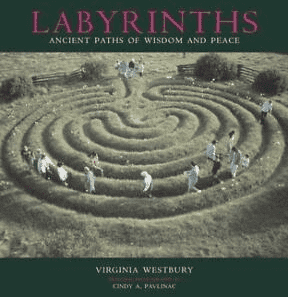
Labyrinths: Ancient Paths of Wisdom and Peace (2001)

This book is a comprehensive guide to the history, symbolism, and uses of labyrinths. It begins by tracing the origins of labyrinths back to the Bronze Age, when simple seven-circuit models were first created. The book then discusses the popularity of labyrinths during Roman times and their peak during the medieval period, when elaborate eleven-circuit models were created. In recent years, there has been a significant revival of interest in labyrinths, and the book explores the reasons for this renewed interest. It looks at the many ways in which labyrinths are being used today, such as tools for meditation, means of connecting with the mysteries of nature, or simply as elegant puzzles. The book concludes with an extensive gazetteer, indicating where the world's finest labyrinths can be found.

Topics covered in this book:

  • The different types of labyrinths, including the classical labyrinth, the seven-circuit labyrinth, and the Chartres labyrinth.

  • The symbolism of the labyrinth, including its association with the journey of the soul, the path to enlightenment, and the cycles of life and death.

  • The history of labyrinths, from their origins in the Bronze Age to their revival in recent years.

  • The many ways in which labyrinths are being used today, for meditation, spiritual practice, and simply for enjoyment.

  • A gazetteer of the world's finest labyrinths, with information on their location, history, and design.

What this book does best: Chapter 5 is all about the Chartres Labyrinth.


The Magic Of Labyrinths by Liz Simpson - 192 pages. AMZN.
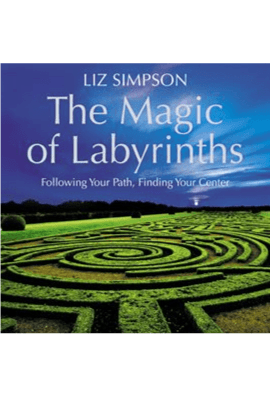
The Magic of Labyrinths

The full title of the book is The Magic of Labyrinths: Following your Path, Finding Your Center, and really that is what the book is about. It starts with the history of the labyrinth and the various types of patterns you can find and transitions into the spiritual aspect of labyrinths.

What I learned in this book:

  • I learned about new labyrinths around the world that I had not heard of previously, like the square labyrinth from the Church of Reparatus in Nigeria and the Ely Cathedral in the UK.

  • I learned some background on the Man in the Maze labyrinth from the Hopi tribe of Arizona and how it is reminiscent of labyrinths in Scandinavia !

  • The Maekula Islanders in the South Pacific have a myth that in order to cross over to the Land of the Dead the soul must complete a labyrinth.

  • I never knew that churches in England were built on “ley lines'‘ as a way to convert non-Catholics by taking over their physical places of worship.

  • There is a section discussing the Hindu concept of Kundalini energy and it’s relation to the journey through the labyrinth.

  • Chapter 5 goes into the construction of physical labyrinths and how to creatively measure them out, the use of dowsers, and the choosing of an appropriate location. If you want to draw a labyrinth on paper, I’ve got you covered.

What this book does best: Speaking to how to create a labyrinth in your lawn, church, etc. Options and things to think about before actually doing it. I also think the book does a good job exploring the fringes of the history of labyrinths and some unique shapes.


Secrets of the Maze: An Interactive Guide to the World's Most Amazing Mazes (2006) by Adrian Fisher and Howard Loxton -96 pages. AMZN

Secrets of the Maze An Interactive Guide

If you are not familiar with Adrian Fisher, he is a prolific maze designer, having designed over 700 mazes, and he even has his own Wikipedia page where you can learn about his work. If you ever need some maze themed architecture I suggest you check out his design business. Today I look at a book from Mr. Fisher and Howard Loxton.

The book begins with an introduction to mazes, including a discussion of their history, purpose, and design. The book then explores how mazes have been used throughout history for both practical and recreational purposes. The third chapter discusses the design and construction of mazes, including the different types of mazes, the materials used to build them, and the challenges involved in creating a successful maze.

The book then explores a selection of some of the most amazing mazes from around the world, including the Hampton Court Maze in England, the Longleat Hedge Maze in England, and the Dole Plantation Maze in Hawaii, which includes a brief description of each maze, its location, and its dimensions.

In the book you can also find tips on how to solve a maze, including different strategies that can be used to find your way out as well as step-by-step guide on how to design and build your own maze, including tips on choosing a location, selecting materials, and creating a challenging path.

Overall, this is a nice short book on mazes that covers all the key topics. It has great illustrations and is worth a read.


Red Thread: On Mazes and Labyrinths (2020) by Charlotte Higgins - 272 pages. AMZN

Red Thread On Mazes and Labyrinths

This book explores of the history, symbolism, and uses of labyrinths. It begins with a discussion of the myth of Theseus and the Minotaur, then goes on to discuss the different types of labyrinths, their history, and their symbolism.

Topics covered in this book:

  • The different types of labyrinths, including the classical labyrinth, the seven-circuit labyrinth, and the Chartres labyrinth.

  • The symbolism of the labyrinth, including its association with the journey of the soul, the path to enlightenment, and the cycles of life and death.

  • The history of labyrinths, from their origins in the Bronze Age to their revival in recent years.

  • The many ways in which labyrinths are being used today, for meditation, spiritual practice, and simply for enjoyment.

  • The personal journey of the author, as she explores the labyrinths of her own life.

What this book does best: The author explores the labyrinth as a metaphor for the journey of life, with its twists and turns, its dead ends and its moments of clarity. She also discusses the labyrinth as a tool for meditation and self-discovery. The book is full of fascinating insights into the labyrinth, and it is sure to appeal to anyone who is interested in this fascinating symbol.


The Idea of the Labyrinth from Classical Antiquity through the Middle Ages (2019) by Penelope Reed Doob - 541 pages. AMZN.
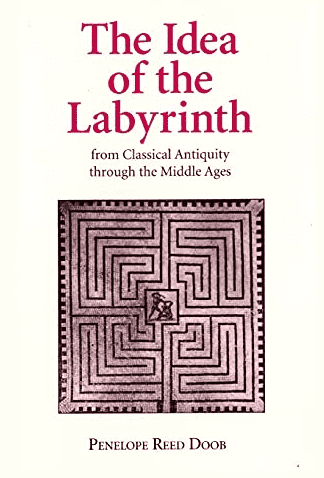
The Idea of the Labyrinth

This book is a comprehensive study of the labyrinth symbol in Western culture. Doob traces the history of the labyrinth from its origins in the ancient world to its development in the Middle Ages. She discusses the different types of labyrinths, their symbolism, and their use in literature, art, and architecture.

What is covered in this book:

  • The book is divided into three parts. The first part, "The Classical Labyrinth," discusses the labyrinth in ancient Greece and Rome. Doob examines the myth of Theseus and the Minotaur, as well as the labyrinths that were depicted on coins, mosaics, and other artifacts. She also discusses the philosophical and religious significance of the labyrinth in ancient thought.

  • The second part, "The Medieval Labyrinth," discusses the labyrinth in the Middle Ages. Doob examines the labyrinths that were depicted in manuscripts, stained glass windows, and other works of art. She also discusses the use of the labyrinth in medieval pilgrimages and religious rituals.

  • The third part, "The Idea of the Labyrinth," explores the symbolism of the labyrinth in Western culture. Doob discusses the labyrinth as a symbol of the journey of life, the search for knowledge, and the soul's journey to the divine. She also discusses the labyrinth as a metaphor for the creative process and the process of self-discovery.

Overall this is a good book that reviews labyrinths in Western culture.


The Curious History of Mazes by Julie E Bounford - 192 pages, AMZN

THE CURIOUS HISTORY OF MAZES

Before I delve into my review of the book I want to mention that the Amazon page for this book is excellent if you click on the link above. Specifically, the “From the Publishers” section - each chapter has an illustration and a quick summary.

The book is a great mix of the history, uses, and symbolism of mazes and labyrinths around the world. The illustrations and examples are excellent and I really enjoyed the breaks to solve unique mazes along the way.

What I learned in this book (at least some of it):

  • “In some Meso-American cultures, it was believed that the wicked could be “mazed” in the underworld, so their souls would not return” ; Which to me seems like a nice pitch to a new horror movie

  • I have never seen a Sidereal maze before, based on the constellations. Very interesting and fun to solve (page 45 in kindle version). Or the Switch Maze (Page 105).

  • I learned about the city of Saffron Walden in England, a city with a hedge maze and the largest turf maze in Europe at 132 feet from corner to corner. Seems like a nice place for a maze museum ?

  • That Francesco Segala, an Italian architect from Padua in the 15th century may have created the first picture mazes ever (with illustrations in the book !)

  • The first 3 dimensional maze was built in the 1830’s by Stuart Landsborough using wooden board to create a second story on a maze.

  • The strategy game Nine Men’s Morris that was popular to be played at turf mazes.

  • There are 270 labyrinths on the London Underground, created by English artist Mark Wallinger in 2013 to mark the Underground’s 150th Anniversary. You can see some of them here.

  • Cloud cities by Argentinian artist Tomás Saraceno, which you should just see to understand.

  • There is a nice illustration comparing the classical and medieval labyrinth designs (figure 2 page 46) that I found interesting.

What this book does best: The mix of mazes with history and examples makes for a fun reading experience. The mazes are a break from reading - unless you get to a hard one - then the reading is the break!


The Maze: A Labyrinthine Compendium (2018) by Thibaud Herem (Illustrator), Kendra Wilson (Author), Angus Hyland (Author) - 144 pages. AMZN.

The Maze A Labyrinthine Compendium

The book features 60 real and imagined mazes from around the world, each illustrated by Thibaud Hérem. The mazes are accompanied by short histories and descriptions, which explore the cultural significance of each maze.

What you can expect in this book:

  • The book features 60 mazes, which are arranged by region. Each maze is illustrated by Thibaud Hérem and accompanied by a short history and description. The histories provide information about the origins of the maze, its cultural significance, and its design. The descriptions offer tips on how to solve the maze and explore its symbolism.

  • It also looks at mazes from a variety of angles - including these: Symbolism, Religion and Myth, Art and Literature, Architecture, and Pop Culture.

What this book does best: The illustrations are outstanding and the overall design of the book is really appealing.


To find a labyrinth in the United States:

I completed a year long project where I researched the best labyrinths from each state in the United States and wrote a blog post about them. You can find that archive, and much more labyrinth walking content in the US Labyrinths visit section of the website.

The Best Books About Mazes and Labyrinths (that aren't actually maze books)

Today I am going to explore maze books. But not the typical puzzle maze books that you sit around and solve. No these are books about the making of those mazes, the math of mazes, the history of mazes, the architecture of hedge mazes and labyrinths, and things like that. Books about mazes. Not maze books. If you are looking for reviews of the spiritual aspect of labyrinths, I have written a post about those types of books separately. This can make for some complicated advanced searches in the library card catalog (it isn’t a card catalog anymore though is it. It’s an online search catalog). Hopefully these book reviews will give you an idea of which books you might be interested in as I answer 2 big questions for each book: What I learned in this book, and what does this book do best. Let’s get started !

The 9 best books about mazes, labyrinths and their history:

I start with the newest entry to this list, and in my opinion the best overview of mazes and labyrinths you can find. If you can find this book, it is a perfect starting place to learn about this subject matter.

Through the labyrinth : designs and meanings over 5000 years (2000) by Hermann Kern 360 pages AMZN

Through the labyrinth book cover

What I learned in this book: So much I was exhausted thinking about writing this.
What I loved about this book: Looks at labyrinths and mazes for perspectives I had never thought of across 19 different themed chapters.

What this book does best: Simply put, this is the best researched book I have found on the subject. Great photos, including many you will not see anywhere else. While my entry is short for this review, know that is only because I read this book AFTER all of the others so I had already acquired a lot of knowledge from many other books.


The Amazing Book of Mazes by Adrian Fisher 264 pages. AMZN. Adrian Fisher is a great maze designer who pulled together this book showing over 150 maze designs while explaining what makes them unique and important.

The Amazing Book of Mazes by Adrian Fisher.png

What I learned in this book:

  • Labyrinths and “real world mazes” have been around for about 4,000 years while puzzle mazes have been around for only 500 years.

  • Vertical mazes: Hedge, Panel, Corn (called Maize mazes in the UK), Mirror and Water are the most common types of vertical mazes.

  • The first vertical maze in the USA was created in 1805 in Harmony, PA and was made of vines. The oldest surviving maze in the USA is the Vizcaya Maze Garden in Miami , Florida from 1916.

  • Hedge mazes were first constructed with small hedges. Not until the late 16th Century did gardeners in England begin using the tall hedges that are standard today.

  • Panel mazes, usually made of wood, first appeared in the year 1900 and allowed the maze to be changed daily for multiple unique trips. The maze craze in Japan from 1984-88 consisted of panel mazes.

  • The first Corn Maze was developed at Lebanon Valley College in Annville, PA in 1993. From the time the height is correct until the leaves brown a typical corn maze lasts 4-8 weeks. The advantage of Corn mazes is they can be changed yearly, unlike hedge mazes, which must be taken care of consistently for years.

  • In England the crop of corn is actually what Americans would call wheat, so in England they are called Maize Mazes instead of corn mazes.

  • The first mirror maze is from Constantinople in 1889. They are a staple of fun houses and tourist areas today.

What I loved about this book: Comprehensive look at real world mazes and their history organized by type.

What this book does best: A great guide to mazes around the world with pictures. A great resource to look deeper into mazes designed for the physical world.


Mazes and Labyrinths of The World by Janet Bord 181 pages. AMZN.

Mazes and Labyrinths of The World by Janet Bord.png

What I learned in this book:

  • The original labyrinth is thought to be on the island of Crete where Theseus defeated the Minotaur at the center of the Cretan Labyrinth.

  • At one time in the UK it was common for doorsteps to have labyrinth or maze drawings on them to keep evil spirits and witches at bay.

  • Labyrinths are often linked to death and the passing from the living world to the afterlife.

  • The story of Icarus I knew was he flew too close to the sun melting the wax of his self made wings despite warnings from his father King Minos. The reason he made those wings was to escape a labyrinth he was imprisoned in.

  • Mazes are common in the following forms by country: England, turf; Sweden, stone; France and Italy, church mosaics.

What this book does best: Discusses the history of Mazes and Labyrinths in Europe, especially in England.


The Unending Mystery: A Journey Through Labyrinths and Mazes by David W. McCullough 272 pages. AMZN

The Unending Mystery A Journey Through Labyrinths and Mazes by David W. McCullough.png

What I learned in this book:

  • The appendix includes step by step examples on how to draw a simple labyrinth and also a classic seven circuit labyrinth.

  • Leonardo da Vinci notebooks from the 1490’s include the entry “repair the labyrinth” on his to do list which is fun to think about.

  • Caerdroia magazine, edited by Jeff Saward, is a Journal of Mazes and labyrinths that has been published since 1980. This is supported by the website labyrinthos.com a great place to study all types of mazes and labyrinths online.

  • The modern use of walking Labyrinths for spiritual practice popularized By Lauren Artress in her 1995 book Walking a Sacred Path (AMZN).

What this book does best: Explores the many reasons people believe labyrinths were used through history, their myths, legends, and their rising and waning popularity thru history.


Mazes and Labyrinths by Nigel Pennick 208 pages AMZN

Mazes and Labyrinths by Nigel Pennick.png

What I learned in this book:

  • Labyrinths are built from a nine point pattern

  • In India it is common in some parts of the country to see labyrinths painted or drawn in chalk at doorways to homes. This is thought to keep out evil spirits. This is known as kolam.

  • In India they also sometimes use a labyrinth as a yantra used for concentration during childbirth. The mother concentrates on solving and un-solving the labyrinth with her eyes as a way to put the mind to work on something other than the pain.

  • There are 4 types of simple labyrinths: the simple meander, the complex meander, serpentine, and spiral.

  • The path of the famous Hampton Court maze in England was used as the path for the first maze laboratory experiments with rats. Seems like a fact that would help you in Jeopardy one day.

What this book does best: Extremely detailed look at mazes from England, with details on exact measurements and map references. It also is good at speaking about theories of why the labyrinth is found across so many places and cultures.


Mazes in Videogames: Meaning Metaphor and Design by Alison Gazzard 183 pages AMZN

Mazes in Videogames Meaning Metaphor and Design by Alison Gazzard.png

The book explores how the paths of mazes and labyrinths found in the real world have influenced the paths a player experiences while exploring and playing videogames.

What I learned in this book:

  • There are 6 common path types in video games:

    • Core Path - You have no choice but to move forward on the main path and no decision to make. i.e. like a labyrinth

    • Blind Turn - The core path turns and you cannot see what is around the turn/corner. This creates tension for the walker/player and in games is often where enemies will attack from

    • Forked Path - Where a choice needs to be made to move in one of two possible new directions

    • Multi Forked Path - Where a choice needs to be made to move in one of more than 2 possible new directions

    • Loop backs - A path that after taking it returns you to the place where it started.

    • Loop alongs - A chosen path off the core path that returns to the core path at a point farther on essentially allowing you to skip a portion of the core path.

  • In Pac-Man, one of the original maze games, the ghosts acts as moving barriers, making completing the maze dynamic.

  • Video games and maze walkers each need to overcome challenges to solve the puzzle. Each may include dead ends, clues, and both will get better with repetition, i.e. multiple plays of a level / multiple walks of the maze.

  • Speed runs are a popular way to get into video game record books. Real world mazes sometimes have similar challenges, seeing how fast a person can solve the maze.

What this book does best: Takes a big picture view of how video games present pathways to the player. The different designs encountered and examples of games that best represent the pathways.

Additional suggested reading: The 12 Most Important Retro Maze Video Games to Lose a Day With


Magical Paths: Labyrinths & Mazes in the 21st Century by Jeff Saward 176 pages AMZN

Magical Paths Labyrinths & Mazes in the  21st Century By Jeff Saward.png

This book is a great overview of the history of mazes and labyrinths. It speaks to the mythology and symbolism of the works from the past through the present day. Great photos and examples. Nice resources in the back with locations of popular mazes and relevant websites.

What I learned in this book:

  • From a religious perspective there are 2 main ways to walk a labyrinth.

    • Walk in, arrive at the center, re-trace your steps and walk back out

    • Walk in, arrive at the center, walk across the labyrinth to the alter of the church

  • Order matters when reading/reviewing books. Historical learnings from other books are repeated here.

What this book does best: Great pictures (and many pictures) and easy to understand language make this a great first book to look into mazes and labyrinths.


Mazes and Labyrinths: Their History & Development by W.H. Matthews 254 pages AMZN

Mazes and Labyrinths Their History & Development by W.H. Matthews.png

This is considered by many the first comprehensive modern book that looked at mazes and labyrinths and their history. Every book that has come after this one references it. It was first published in London in 1922.

What I learned in this book:

  • To generalize, this is the original book on labyrinth and maze history. The historical details of places in England is extensive and has been used by many other authors. The specific details are meaningless in this context however.

What this book does best: Extensive illustrations of labyrinths and mazes. The cover of the book even speaks to this - “151 illustrations”.


Labyrinths & Mazes by Jurgen Hohmuth 176 pages AMZN

Labyrinths & Mazes by Jurgen Hohmuth

This book is comprised of aerial photographs of labyrinths and mazes from around Europe mixed with information from a variety of experts: Simone Augustin, Adrian Fisher, Klaus Kurvers, Martin Rasper, Jeff Saward, Ilse M Seifred, and Uwe Wolff.

What I learned in this book:

  • The book has a long discussion on the possible use of labyrinths as navigation devices for ancient sailors in coastal Sweden and Finland.

  • I need to visit Leeds Castle. The castle looks amazing and they have both a maze and labyrinth on site.

  • The book includes a detailed map and informational listing on the 55 sites around Europe that were visited. Very helpful to plan a trip.

What this book does best: The pictures here are superior to any other book I have seen. First, the subject matter includes places not typically seen before, and not just the most famous mazes/labyrinths covered in all books on the subject.


To find labyrinths in the United States: I completed a year long project where I researched the best labyrinths from each state in the United States and wrote a blog post about them. You can find that archive, and much more labyrinth walking content in the US Labyrinths visit section of the website.

Other popular posts you may like:

Maze Comic Book Reviews - 4 different comics about Theseus and the Minotaur

The Surprising Benefits of Solving Mazes

How to make a Digital Maze (40 different types)

How to make a variety of Digital Labyrinths

Maze Comic Book Cover #111 - The Lynx Files

Issue #111 in my comic book cover collection features the maze of a Lynx and is titled The Lynx Files. I used a simple matching plain background for this book, I guess we could call it monochromatic. I think it is my first monochromatic cover in the collection.

My comic book cover mazes are archived by year:

Comic Book Cover Mazes - Year 1 (Issues #1 - 53)

Comic Book Cover Mazes - Year 2 (Issues# 54 -105)

Comic Book Cover Mazes - Year 3 (Issues #106 - )

111 Lynx Maze Comic Book

Have you ever watched the X-files ?