Maze Comic Book Review - Neverwhere

Neil Gaiman's Neverwhere (2007) AMZN

from Vertigo, 221 Pages

by Mike Carey (Author), Glenn Fabry (Author), Glenn Fabry (Illustrator, Artist)

Neil Gaiman's Neverwhere (2007) comic cover

This is a comic book version of Neil Gaiman’s novel. I must say that having read this fantasy story that deals with so many colorful characters and interesting places, it makes for a perfect comic adaption. Sure, we can get into the age old discussion of how the book is better than the movie or vice versa, but in this case the illustrations of the world (called Neverwhere, or London below) and it’s people make up for any narrative that is lost from the book. After all, when taking 400 written pages from the novel down to 221 comic pages by adding pictures you are bound to lose some of the story.

As far as that story goes, well it is a wonderful quest story that takes place between the London Above that we all know and love (do we all love it? - personally I’m a big fan) and a magical city called Neverwhere that is below London. The main characters are Door, who can open all types of doors to anywhere, and hailing from London above, Richard Mayhew, who I can best describe as a completely ordinary guy. And then, one day, his life will never be the same. And we get a quest that includes needing to navigate a maze to reach their final destination. But as is the case in many mazes/labyrinths it is guarded by a beast, which may or may not be a minotaur ? What do you think ? Whatever it is, this is not something I would want to meet.
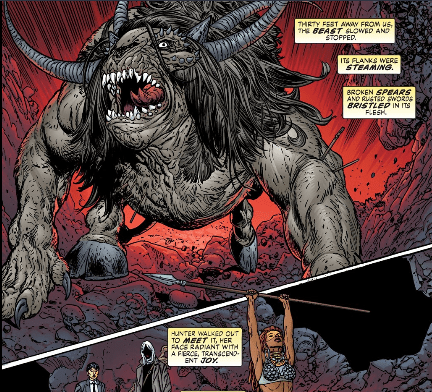
Neil Gaiman's Neverwhere (2007) Minotaur beast

This is an excellent story. Read it as a novel or a comic. The world building and concept are great. I love the idea of a secret city hidden beneath the city we all know above. 8.5/10 !

This story was also made into a television mini-series in 1996 that received ok reviews (7.2 on IMDB) split into six 30 minute episodes. I think it would be a perfect story for an update in the age of streaming. You can currently find the entire series streaming on YouTube. Below is episode 1 to get you started - even the thumbnail looks very 90’s from their hair to his sleeves being super long.. And if anyone from Netflix is reading this….how about an updated mini-series ? Don’t let Appletv+ have another cool Sci-Fi series.

You can also find a BBC Radio dramatization of the book done by a full cast of actors, including Benedict Cumberbatch, and Christopher Lee !! Coming in at just under 4 hours, it would make for an exciting commute.

You may know Neil Gaiman from 6 other adaptions that have made it to our screens:

  • Coraline (2009), the excellent movie.

  • The Sandman (2022), based of his most famous comic.

  • Stardust (2007). A great cast for this fairy tale adventure movie.

  • Good Omens (2019), which was so good, Amazon kept figuring out ways more seasons !

  • Lucifer (2016). I think we understand who this is about.

  • American Gods (2017). Lasted 3 seasons, with the first the best !

Other maze comic reviews you may like reading:

Maze Comic Book Reviews - Theseus And The Minotaur - A review of multiple comic books that each tell the same story. Compares them so you know which is right for you !

Maze Comic Book Reviews - Jim Henson's Labyrinth Comics - Comics based on the famous 80’s movie characters.

Comic Book Reviews: 4 Great Comics with Maze Themes - Pulls together 4 comic titles that I recommend, including one from Jeff Lemire !

The Best Books About Mazes and Labyrinths (that aren't actually maze books)

Today I am going to explore maze books. But not the typical puzzle maze books that you sit around and solve. No these are books about the making of those mazes, the math of mazes, the history of mazes, the architecture of hedge mazes and labyrinths, and things like that. Books about mazes. Not maze books. If you are looking for reviews of the spiritual aspect of labyrinths, I have written a post about those types of books separately. This can make for some complicated advanced searches in the library card catalog (it isn’t a card catalog anymore though is it. It’s an online search catalog). Hopefully these book reviews will give you an idea of which books you might be interested in as I answer 2 big questions for each book: What I learned in this book, and what does this book do best. Let’s get started !

The 9 best books about mazes, labyrinths and their history:

I start with the newest entry to this list, and in my opinion the best overview of mazes and labyrinths you can find. If you can find this book, it is a perfect starting place to learn about this subject matter.

Through the labyrinth : designs and meanings over 5000 years (2000) by Hermann Kern 360 pages AMZN

Through the labyrinth book cover

What I learned in this book: So much I was exhausted thinking about writing this.
What I loved about this book: Looks at labyrinths and mazes for perspectives I had never thought of across 19 different themed chapters.

What this book does best: Simply put, this is the best researched book I have found on the subject. Great photos, including many you will not see anywhere else. While my entry is short for this review, know that is only because I read this book AFTER all of the others so I had already acquired a lot of knowledge from many other books.


The Amazing Book of Mazes by Adrian Fisher 264 pages. AMZN. Adrian Fisher is a great maze designer who pulled together this book showing over 150 maze designs while explaining what makes them unique and important.

The Amazing Book of Mazes by Adrian Fisher.png

What I learned in this book:

  • Labyrinths and “real world mazes” have been around for about 4,000 years while puzzle mazes have been around for only 500 years.

  • Vertical mazes: Hedge, Panel, Corn (called Maize mazes in the UK), Mirror and Water are the most common types of vertical mazes.

  • The first vertical maze in the USA was created in 1805 in Harmony, PA and was made of vines. The oldest surviving maze in the USA is the Vizcaya Maze Garden in Miami , Florida from 1916.

  • Hedge mazes were first constructed with small hedges. Not until the late 16th Century did gardeners in England begin using the tall hedges that are standard today.

  • Panel mazes, usually made of wood, first appeared in the year 1900 and allowed the maze to be changed daily for multiple unique trips. The maze craze in Japan from 1984-88 consisted of panel mazes.

  • The first Corn Maze was developed at Lebanon Valley College in Annville, PA in 1993. From the time the height is correct until the leaves brown a typical corn maze lasts 4-8 weeks. The advantage of Corn mazes is they can be changed yearly, unlike hedge mazes, which must be taken care of consistently for years.

  • In England the crop of corn is actually what Americans would call wheat, so in England they are called Maize Mazes instead of corn mazes.

  • The first mirror maze is from Constantinople in 1889. They are a staple of fun houses and tourist areas today.

What I loved about this book: Comprehensive look at real world mazes and their history organized by type.

What this book does best: A great guide to mazes around the world with pictures. A great resource to look deeper into mazes designed for the physical world.


Mazes and Labyrinths of The World by Janet Bord 181 pages. AMZN.

Mazes and Labyrinths of The World by Janet Bord.png

What I learned in this book:

  • The original labyrinth is thought to be on the island of Crete where Theseus defeated the Minotaur at the center of the Cretan Labyrinth.

  • At one time in the UK it was common for doorsteps to have labyrinth or maze drawings on them to keep evil spirits and witches at bay.

  • Labyrinths are often linked to death and the passing from the living world to the afterlife.

  • The story of Icarus I knew was he flew too close to the sun melting the wax of his self made wings despite warnings from his father King Minos. The reason he made those wings was to escape a labyrinth he was imprisoned in.

  • Mazes are common in the following forms by country: England, turf; Sweden, stone; France and Italy, church mosaics.

What this book does best: Discusses the history of Mazes and Labyrinths in Europe, especially in England.


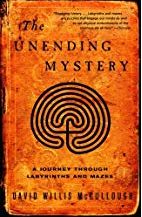
The Unending Mystery: A Journey Through Labyrinths and Mazes by David W. McCullough 272 pages. AMZN

The Unending Mystery A Journey Through Labyrinths and Mazes by David W. McCullough.png

What I learned in this book:

  • The appendix includes step by step examples on how to draw a simple labyrinth and also a classic seven circuit labyrinth.

  • Leonardo da Vinci notebooks from the 1490’s include the entry “repair the labyrinth” on his to do list which is fun to think about.

  • Caerdroia magazine, edited by Jeff Saward, is a Journal of Mazes and labyrinths that has been published since 1980. This is supported by the website labyrinthos.com a great place to study all types of mazes and labyrinths online.

  • The modern use of walking Labyrinths for spiritual practice popularized By Lauren Artress in her 1995 book Walking a Sacred Path (AMZN).

What this book does best: Explores the many reasons people believe labyrinths were used through history, their myths, legends, and their rising and waning popularity thru history.


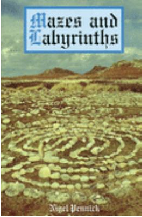
Mazes and Labyrinths by Nigel Pennick 208 pages AMZN

Mazes and Labyrinths by Nigel Pennick.png

What I learned in this book:

  • Labyrinths are built from a nine point pattern

  • In India it is common in some parts of the country to see labyrinths painted or drawn in chalk at doorways to homes. This is thought to keep out evil spirits. This is known as kolam.

  • In India they also sometimes use a labyrinth as a yantra used for concentration during childbirth. The mother concentrates on solving and un-solving the labyrinth with her eyes as a way to put the mind to work on something other than the pain.

  • There are 4 types of simple labyrinths: the simple meander, the complex meander, serpentine, and spiral.

  • The path of the famous Hampton Court maze in England was used as the path for the first maze laboratory experiments with rats. Seems like a fact that would help you in Jeopardy one day.

What this book does best: Extremely detailed look at mazes from England, with details on exact measurements and map references. It also is good at speaking about theories of why the labyrinth is found across so many places and cultures.


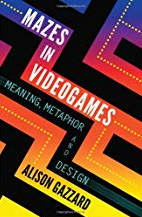
Mazes in Videogames: Meaning Metaphor and Design by Alison Gazzard 183 pages AMZN

Mazes in Videogames Meaning Metaphor and Design by Alison Gazzard.png

The book explores how the paths of mazes and labyrinths found in the real world have influenced the paths a player experiences while exploring and playing videogames.

What I learned in this book:

  • There are 6 common path types in video games:

    • Core Path - You have no choice but to move forward on the main path and no decision to make. i.e. like a labyrinth

    • Blind Turn - The core path turns and you cannot see what is around the turn/corner. This creates tension for the walker/player and in games is often where enemies will attack from

    • Forked Path - Where a choice needs to be made to move in one of two possible new directions

    • Multi Forked Path - Where a choice needs to be made to move in one of more than 2 possible new directions

    • Loop backs - A path that after taking it returns you to the place where it started.

    • Loop alongs - A chosen path off the core path that returns to the core path at a point farther on essentially allowing you to skip a portion of the core path.

  • In Pac-Man, one of the original maze games, the ghosts acts as moving barriers, making completing the maze dynamic.

  • Video games and maze walkers each need to overcome challenges to solve the puzzle. Each may include dead ends, clues, and both will get better with repetition, i.e. multiple plays of a level / multiple walks of the maze.

  • Speed runs are a popular way to get into video game record books. Real world mazes sometimes have similar challenges, seeing how fast a person can solve the maze.

What this book does best: Takes a big picture view of how video games present pathways to the player. The different designs encountered and examples of games that best represent the pathways.

Additional suggested reading: The 12 Most Important Retro Maze Video Games to Lose a Day With


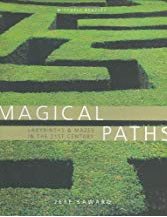
Magical Paths: Labyrinths & Mazes in the 21st Century by Jeff Saward 176 pages AMZN

Magical Paths Labyrinths & Mazes in the  21st Century By Jeff Saward.png

This book is a great overview of the history of mazes and labyrinths. It speaks to the mythology and symbolism of the works from the past through the present day. Great photos and examples. Nice resources in the back with locations of popular mazes and relevant websites.

What I learned in this book:

  • From a religious perspective there are 2 main ways to walk a labyrinth.

    • Walk in, arrive at the center, re-trace your steps and walk back out

    • Walk in, arrive at the center, walk across the labyrinth to the alter of the church

  • Order matters when reading/reviewing books. Historical learnings from other books are repeated here.

What this book does best: Great pictures (and many pictures) and easy to understand language make this a great first book to look into mazes and labyrinths.


Mazes and Labyrinths: Their History & Development by W.H. Matthews 254 pages AMZN

Mazes and Labyrinths Their History & Development by W.H. Matthews.png

This is considered by many the first comprehensive modern book that looked at mazes and labyrinths and their history. Every book that has come after this one references it. It was first published in London in 1922.

What I learned in this book:

  • To generalize, this is the original book on labyrinth and maze history. The historical details of places in England is extensive and has been used by many other authors. The specific details are meaningless in this context however.

What this book does best: Extensive illustrations of labyrinths and mazes. The cover of the book even speaks to this - “151 illustrations”.


Labyrinths & Mazes by Jurgen Hohmuth 176 pages AMZN

Labyrinths & Mazes by Jurgen Hohmuth

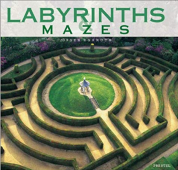
This book is comprised of aerial photographs of labyrinths and mazes from around Europe mixed with information from a variety of experts: Simone Augustin, Adrian Fisher, Klaus Kurvers, Martin Rasper, Jeff Saward, Ilse M Seifred, and Uwe Wolff.

What I learned in this book:

  • The book has a long discussion on the possible use of labyrinths as navigation devices for ancient sailors in coastal Sweden and Finland.

  • I need to visit Leeds Castle. The castle looks amazing and they have both a maze and labyrinth on site.

  • The book includes a detailed map and informational listing on the 55 sites around Europe that were visited. Very helpful to plan a trip.

What this book does best: The pictures here are superior to any other book I have seen. First, the subject matter includes places not typically seen before, and not just the most famous mazes/labyrinths covered in all books on the subject.


To find labyrinths in the United States: I completed a year long project where I researched the best labyrinths from each state in the United States and wrote a blog post about them. You can find that archive, and much more labyrinth walking content in the US Labyrinths visit section of the website.

Other popular posts you may like:

Maze Comic Book Reviews - 4 different comics about Theseus and the Minotaur

The Surprising Benefits of Solving Mazes

How to make a Digital Maze (40 different types)

How to make a variety of Digital Labyrinths

5 Books About the Spiritual Aspect of Labyrinths

When you draw and make mazes and labyrinths daily you inevitably read about the history of each. I took some time to read about the spiritual aspect of Labyrinths and here are the 5 best books I read on the subject. I suggest starting with Walking a Sacred Path, the most well known book on the subject and the first book that I review below.

Walking a Sacred Path: Rediscovering the Labyrinth as a Spiritual Tool by Dr. Lauren Artress 201 pages. AMZN

Walking a Sacred Path Rediscovering the Labyrinth as a Spiritual Tool by Dr. Lauren Artress.png

What I learned in this book:

  • Walking a labyrinth is a very personal experience for anyone who does it. Often it is a meditative and spiritual journey that parallels the journey you take in life.

  • Walking the labyrinth harkens back to the former days of pilgrimage in religious traditions.

  • There are many ways to walk a labyrinth. Do what feels right to you. Chapter four includes a process you might find helpful to make the walk productive.

  • The labyrinth is seen as a metaphor for many things: the union between heaven and earth, death and rebirth, faith and doubt, the brain, intestines or birth canal, and the journey to heaven.

  • The labyrinth reinforces the use of rituals to connect us.

  • A labyrinth is a walking meditation vs. the traditional still meditation.

What this book does best: The best book about the spiritual journey of walking labyrinths there is.

Labyrinth : Your Path to Self-Discovery by Tony Christie 312 pages. AMZN

Labyrinth: Your Path to Self-Discovery by Tony Christie

What I learned in this book:

  • This book casts a wide net on the structure of the labyrinth and how it may tie in to a multitude on religions and practices including: Mithraism, Alchemy, the planets and cosmos, the Alchemical process, the 4 elements, Tarot cards, the Kabbalah tree of life, the mythical hero’s journey, Melchizedek, our death and rebirth, chakras, major arcana, the Ursa Major constellation, and the magical square of the moon. I would be shocked if came away from this book and said you learned nothing and everything spoken about was familiar.

  • There have been studies done about how people feel after walking a labyrinth and the results are 81% more centered and 87% more peaceful - John W Rhodes 2008 experiment

  • While discussing walking the labyrinth and finding your life’s purpose the author writes - “Books you buy or are given as gifts can indicate where your [life’s] purpose lies”. I found that statement to be very true in my own life. Books are great gifts, especially when they are carefully selected.

  • When walking a labyrinth you should have a threefold approach: knowledge, experience, and reflection.

What this book does best: This looks at the spiritual aspect of labyrinths from every angle and thru many lenses (see my first bullet point).

Exploring the Labyrinth: A Guide For Healing and Spiritual Growth by Melissa Gayle West 209 pages AMZN

Exploring the Labyrinth: A Guide for Healing and Spiritual Growth

What I learned in this book:

  • Walk the labyrinth with purpose. Have something in mind to mediate on/think about while you walk. And most importantly be open minded as you walk.

  • The labyrinth walk can help you deal with grief, fear and anger.

  • The book does a nice job discussing how a labyrinth can be used. Use the labyrinth for:

    • Physical Healing and Curing

    • Relaxation and Guidance

    • Re-connection to Self and Spirit

    • Illness and Pain as a teacher

    • Ritual and Celebrations

  • Has a nice guide or checklist to use when creating a labyrinth ritual for your celebration by answering a series of questions

  • Suggests that the center of a labyrinth should have an altar of some kind like a bench, tree, flowers or a statue.

What this book does best: The entire 2nd Part of the book is dedicated to making your own labyrinth. And while it covers drawing a Cretan and making a finger labyrinth, the real value is in making physical labyrinths. Instructions are included to make a both a Cretan labyrinth and the Chartres labyrinth with tape, as well as how to make the Cretan labyrinth with rope.

Walking the Labyrinth: A Place to Pray and Seek God by Travis Scholl 240 pages AMZN

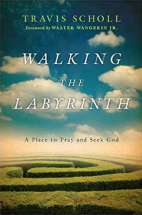
Walking the Labyrinth: A Place to Pray and Seek God

What I learned in this book:

  • The meaning of the word Liminality - roughly the time between times, or the middle stage of a ritual.

  • I had never heard the quote from the Danish Philosopher Soren Kiekegaard before '“Life can only be understood backwards, but must be lived forward”

What this book does best: This is a Christian book. The author walks a labyrinth each day during Lent with a daily Scripture from the book of Mark being used to meditate on during the walk. The book tells about the scripture and speaks to how the author feels in modern day walking the labyrinth.

Labyrinths from the Outside In: Walking to Spiritual Insight by Rev Dr Donna Schaper and Rev Dr Carole Ann Camp 187 pages AMZN

Labyrinths from the Outside In Donna Schaper Carole Ann Camp.png

What I learned in this book:

  • The meaning of the word Acedia - Being bored to death while being bombarded with stimulation

  • The origin of the word labyrinth may have come from the word labyrs which was a double headed Ax used on the island of Crete.

  • The book suggests breaking the walk of a labyrinth into the following parts, each with their own meaning and preparation: !.Preparation 2. Invocation (typically a prayer before the walk) 3. Walking in 4. Reaching the center 5. Walking out 6. Exit and Gratitude

  • The book suggests using the labyrinth to commemorate/celebrate/heal with rites of passage rituals for key moments in life. Including births, deaths, puberty, menopause, birthdays, retirement and any negative events that require healing.

What this book does best: The book ends with multiple chapters on ideas for walking the labyrinth with gratitude to celebrate holidays, religious events, the changing of the seasons, the zodiac, large life events and much more, all with a nod to the spiritual aspect of the walk.

If you are interested in more spiritual labyrinth aspects I suggest the following:

  1. Lauren Artress website - For coaching, workshops and classes.

  2. Veriditas - The nonprofit labyrinth group founded by Lauren Artress

  3. Worldwide Labyrinth Finder - Find a labyrinth to walk near you, or while on vacation

To find a labyrinth in the United States: I completed a year long project where I researched the best labyrinths from each state in the United States and wrote a blog post about them. You can find that archive, and much more labyrinth walking content in the US Labyrinths visit section of the website.

Area Maze Book Reviews

Today I bring you a slightly different book review. I have covered what an Area Maze is before in my post about the 44 different types of mazes and labyrinths, but today I will go over it again. Let’s get into the 2 books !

The Original Area Mazes (2017) AMZN ; The Original Area Mazes, Volume 2 (2018) AMZN

by Naoki Inaba, Ryoichi Murakami; from Workman Publishing, 228 Pages ; 201 Pages

The Original Area Mazes Vol1 and 2 book covers

Area Mazes - Called a maze, but actually a type of logic puzzle from Japan created by Naoki Inaba. Used to teach Japan children mathematics and logic. Solving requires calculating the area of a rectangle, often multiple times (Area = length × width). Also called Menseki Meiro. If you would like to try to solve some, online area mazes can be found here. They are available in 5 difficulty levels. Here is a second website with free downloadable pdf of 4 puzzles that includes answers.

What you need to know about Area Mazes: Each of the mazes is NOT drawn to scale. You cannot measure for an answer. You must use the formula Area = length × width and spatial reasoning to find the answer that you are being asked for. Each book starts with easier problems and gets more difficult as the book continues (Levels are ranked from 1-5). If you read this book digitally (as I did - it was available on Hoopla from my library) it includes links to see the solution as you move through the book !

Here is an example I made to show how to solve an Area Maze. You are trying to calculate the area of the grey box. Answer and reasoning below.

Area maze example

In the above example you would first solve the wall under the # 12. You solve the equation 4 * Y = 12. So Y = 3, meaning the bottom left side of the square has a length of 3. Now you can solve using the 3 and the 21 to calculate the length of the left side of the square above the 4. Solve 3 * Z = 21. The answer is 7. Continue this to solve the Area Maze. Top right wall = 4. Area and answer is thus 4x4=16. How did you do ?

Well, that was a level 1 for sure. Shapes and calculations get very interesting as you get to the later chapters !

If you like Sudoku and similar puzzles, you will love these puzzles ! As far the the books, my review is: Excellent 9/10 !

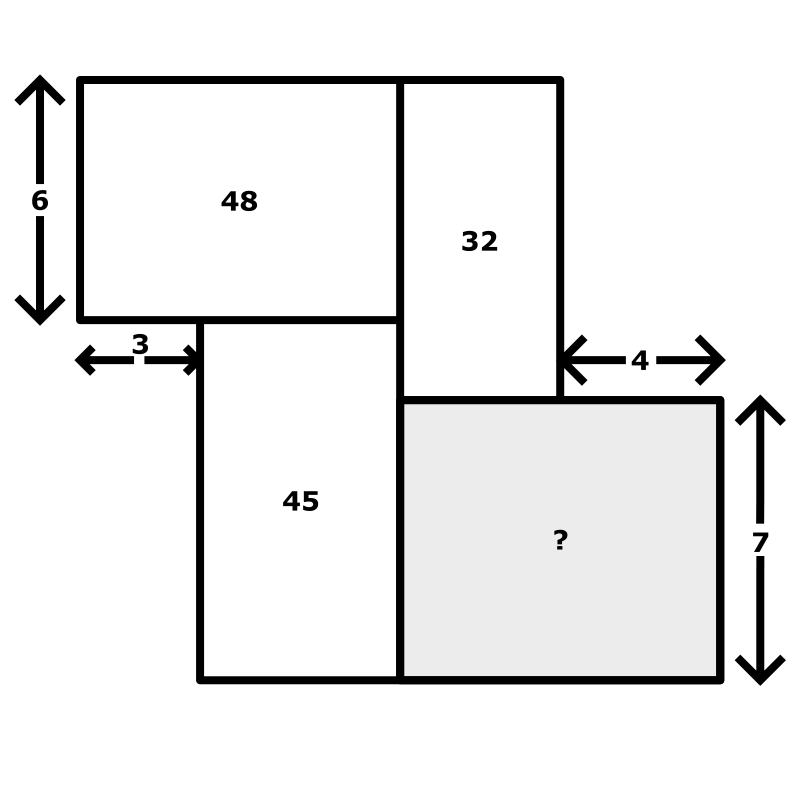
Here is another example that is a bit more difficult:

Area Maze example #2

If you are interested in area mazes beyond the books check out this video about them which shows 2 different methods to solve the maze in the thumbnail. If you want try to solve it, then watch the video like I did !

One of the great things about area mazes is they can be made in many difficulty levels. I seem to like level 1 and level 2 !! If you likes math problems these might be for you !

Other blog posts you might like:

Maze books about the spirituality of mazes, or the history of physical mazes.

The 12 Best Maze and Labyrinth Movies Of All Time

How to make over 40 types of maze