I originally wrote over 40 different How to Make a Maze blog posts where I showed just what the title suggests - how to create 40+ different maze types. Recently I set out to update these with new information and better examples. That is when I realized I wanted to re-classify a few maze types into a new category:
Maze types that can apply to many maze constructions
Basically, rather than being a specific maze type, they have a specific thing about them that make them unique but could be applied to many maze types. This will become clearer with explanation. Here are the (former) blog posts this post replaces. You can also click on any link to jump to that section of this blog post.
How to Make a Depth Maze
How to Make a 3-D (Looking) Maze
How to Make a Dual Entrance/Exit Maze
How to Make an Object as Goal Maze
How to Make a Warp Zone Maze
How to Make a Mixed Section Maze
How to Make a Go & Return Maze
How to Make a Racing Maze
How to Make a Mobile Maze
How to Maze a Pod Maze
How to Maze a Free Drawn Maze
I believe each of these maze choices apply to multiple types of mazes. I will go through each type below, one at a time with examples to prove this. I also an eliminating one maze type:
How to Make a Pattern Maze
Which I discuss last in the blog that I believe no longer is a type of maze. I like to start all of my maze design posts with my 5 rules of maze design, then we’ll jump into each section.
THE 5 RULES OF MAZE DESIGN:
These 5 rules apply to any maze you make so we start with them !
1. Always keep an open pathway for the solution
While drawing a maze you will need to juggle multiple open pathways each of which could become the solution. One of them will become the solution. Keep track of it. This is especially important if you are designing pathways in both directions (from the start and from the goal).
2. Clearly mark the start and goal, or the objective of the maze
A maze should have a start and a goal that you can assess just by glancing at it. There are many ways to start and end a maze I review in this blog post: Options for Starting and Ending a Maze
3. Ensure the difficulty matches the intended audience
Most people want to solve a puzzle/maze that is just slightly below or slightly above their skill level. Many things help determine the difficulty of a maze. Size, number of branches, the length of dead ends, the number of choices, the complexity of the rules (if the maze has them).
4. Ensure your maze has a solution
When your maze is complete, solve it to determine the difficulty level and to ensure it is a real, solvable maze. Depending on the complexity of the maze you may want to do this right away or wait so you can properly assess the difficulty.
5. Explain anything that needs explaining
Some mazes have rules or conditions. Explain them with directions. If it isn't obvious, make it so.
Depth Mazes
Depth Maze Definition:
Depth Maze - A maze that uses multiple colors to create a layered effect and give the maze depth. Can be used with any wide path maze style to give the maze more visual interest.
The key to this maze is making it look more interesting by giving it depth. However, this is an aesthetic choice that can be applied to many different kinds of mazes. Basically you create a maze in the style you prefer (standard, grid, arrow, etc.) then add depth to it by “shifting” the maze to create a background.
Depth Maze Examples: click to see larger versions of the examples in the gallery.
The first example is grid maze construction with multiple layers.
The second is a standard maze with a black layer above a green layer.
Our third example shows a standard maze of Ohio to show how it looks with irregular shapes. Black over burgundy.
Our final example shows an Arrow Maze with a layer to give it some shape. This example could stand in for any maze construction that uses grids - block move, color grid, letter mazes, number mazes, etc.
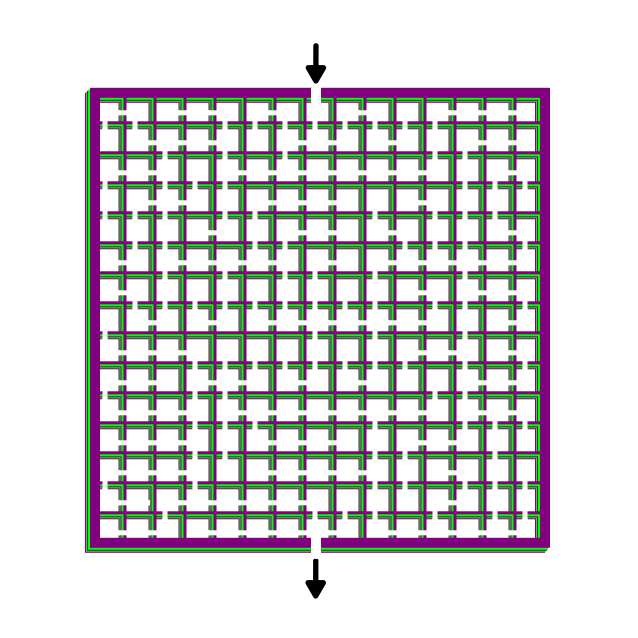
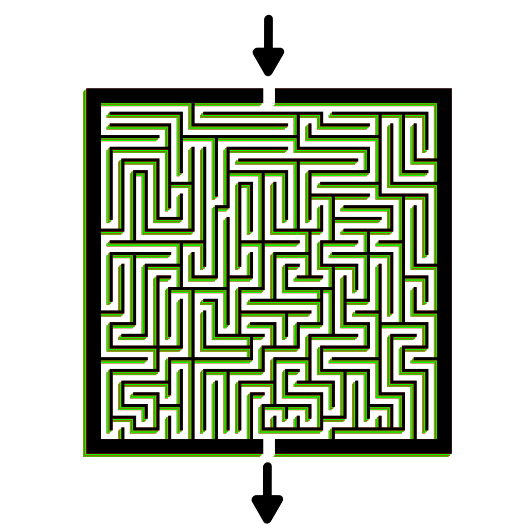

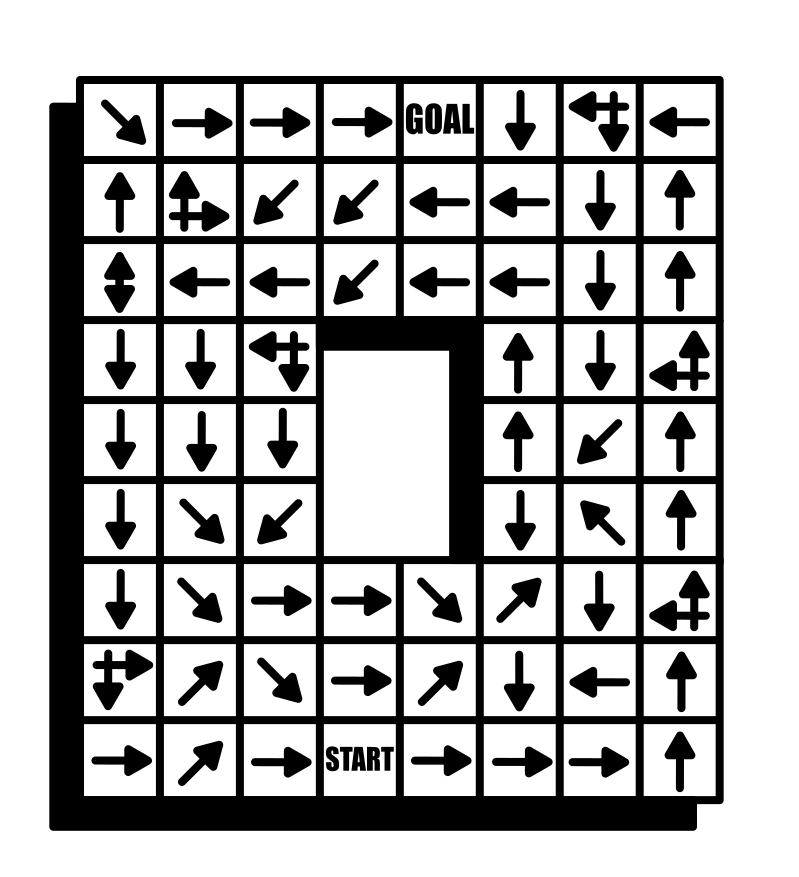
So, while a depth maze is a version of a maze, it is something that can be applied to many different types of mazes as an aesthetic choice. Here is an abbreviated “how to” for this type of maze:
Step 1 - Draw a Maze - this will become the background
Step 2 - Copy and Shift the maze - this will become the main maze, choose the color you prefer.
Alternate Step 2 - for solid mazes made of grids like the arrow maze above, you will need to draw the background layer.
When would you use this ? When you want to add visual interest to a maze. To make grid maze shapes easier to see (especially white mazes on white backgrounds).
3-D Looking Maze
3-D Looking Maze Definition:
3-D Looking Maze - A maze that uses layers and colors to create a 3-D look. Different than a Depth maze in that it uses multiple colors to create “shadows” for the different layered sides and it completes the corners.
This is a more detailed version of a depth maze that goes the extra mile to complete the 3-D look.
3-D Looking Examples: click to see larger versions of the examples. 4 different types of mazes.
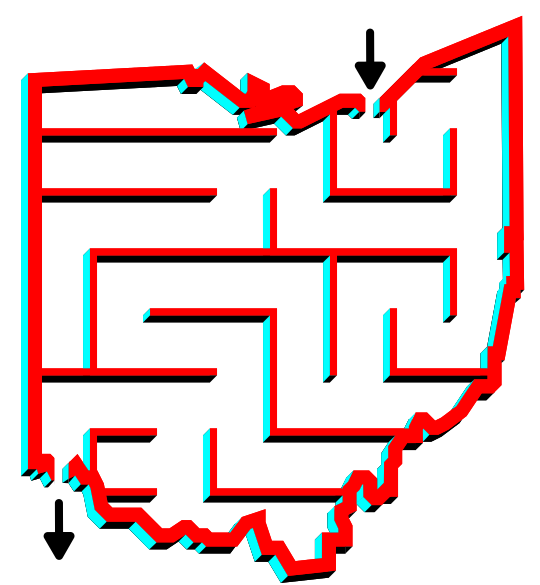
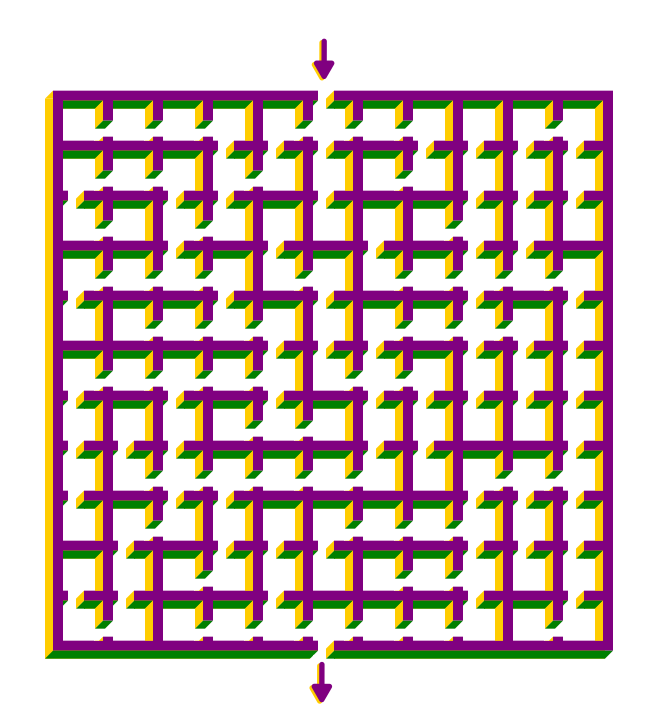
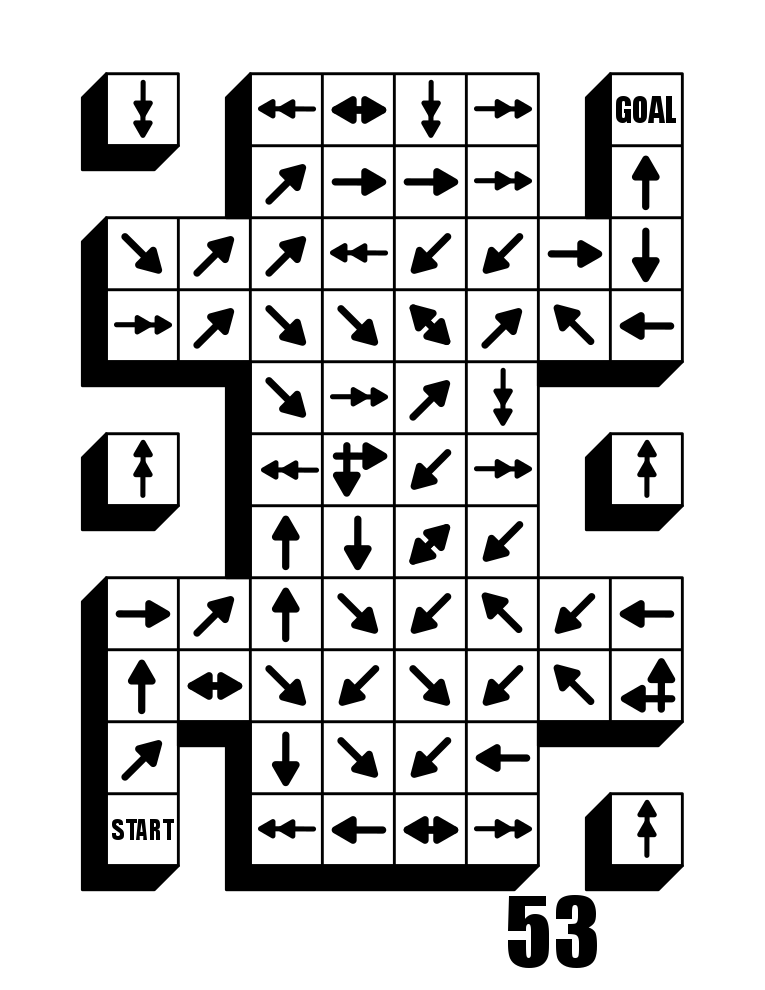
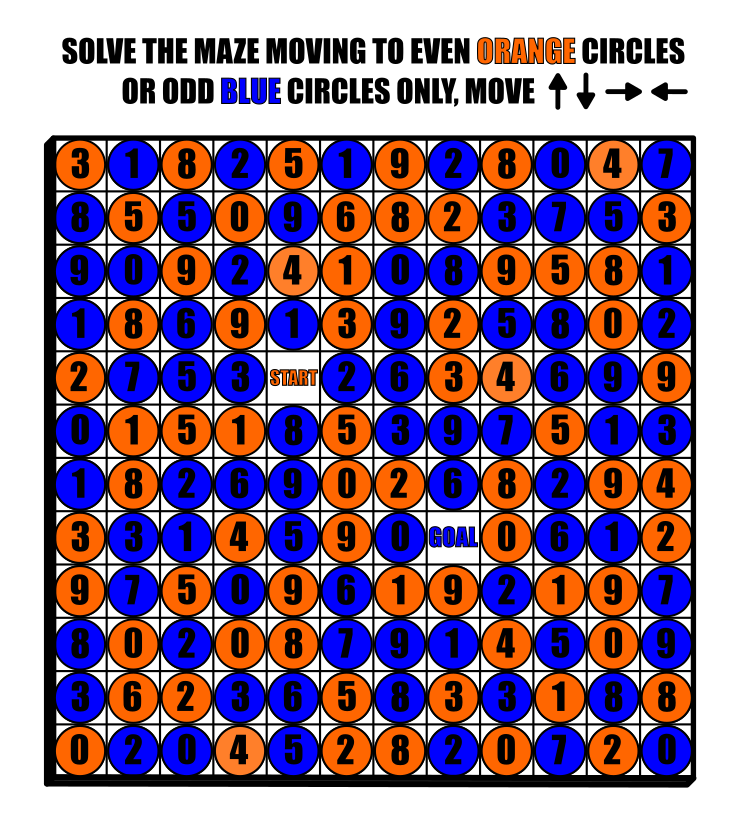
So this is a depth maze that continues with some additional work to make it 3D looking. Here is an abbreviated “how to” for this type of maze:
Step 1 - Draw a Maze
Step 2 - Draw the 3D portion of the Maze
When would you use this ? When you want to add visual interest to a maze. To make grid maze shapes easier to see (especially white mazes on white backgrounds).
Dual Entrance/Exit Maze
Dual Entrance/Exit Maze Definition:
Dual Entrance/Exit Maze - A maze that can be solved moving in either direction. The start and the goal are interchangeable. The construction of the maze happens in two directions to prevent “backwards solving” or starting from the goal to help solve a maze.
This is just a way of making the maze harder to solve by making the start and goal interchangeable. It can be applied to many different types of mazes (standard, grid, arrow) etc.
Dual Entrance/Exit Maze Examples: click to see larger versions of the examples. 4 different types of mazes.
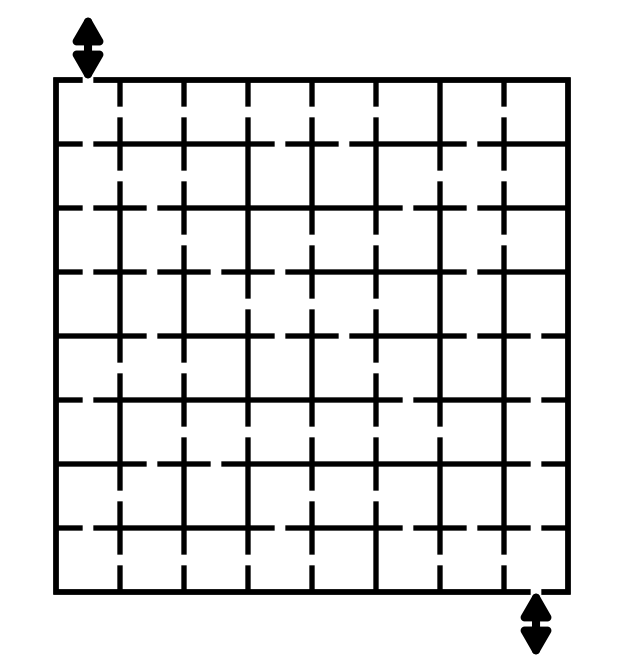
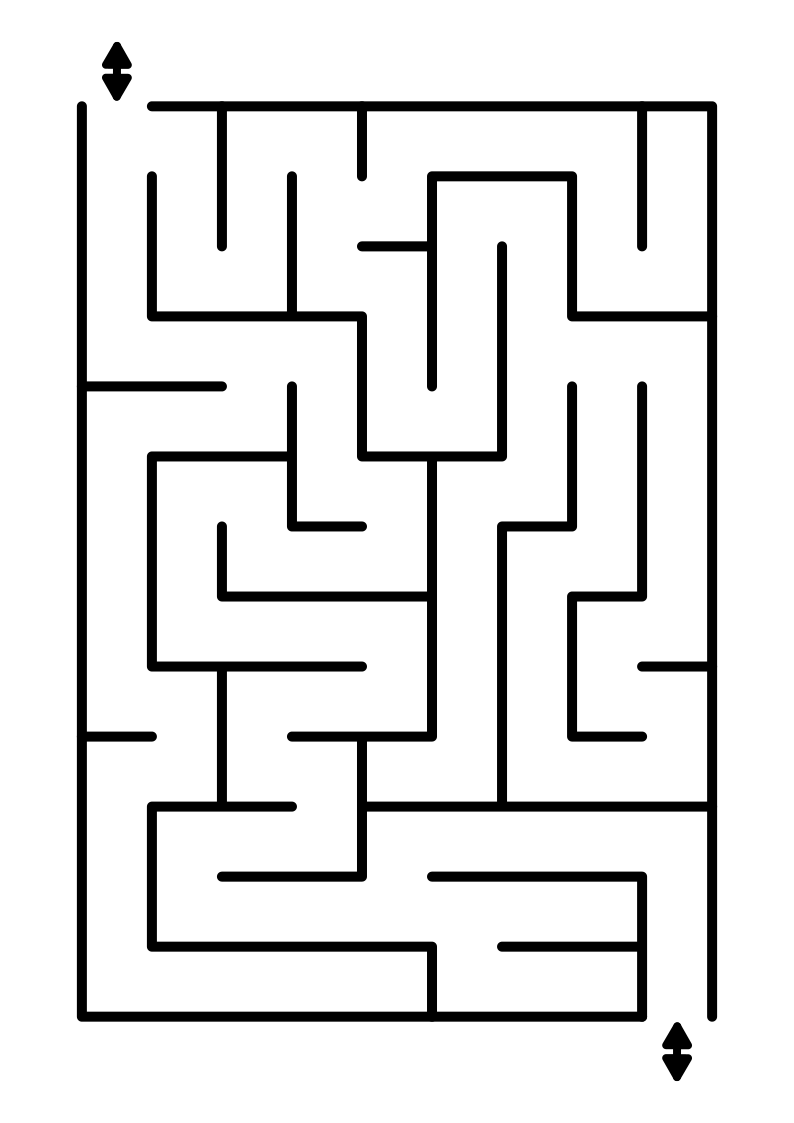
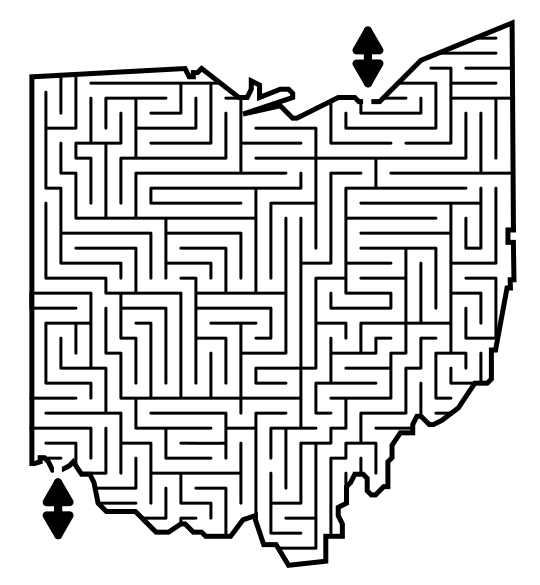
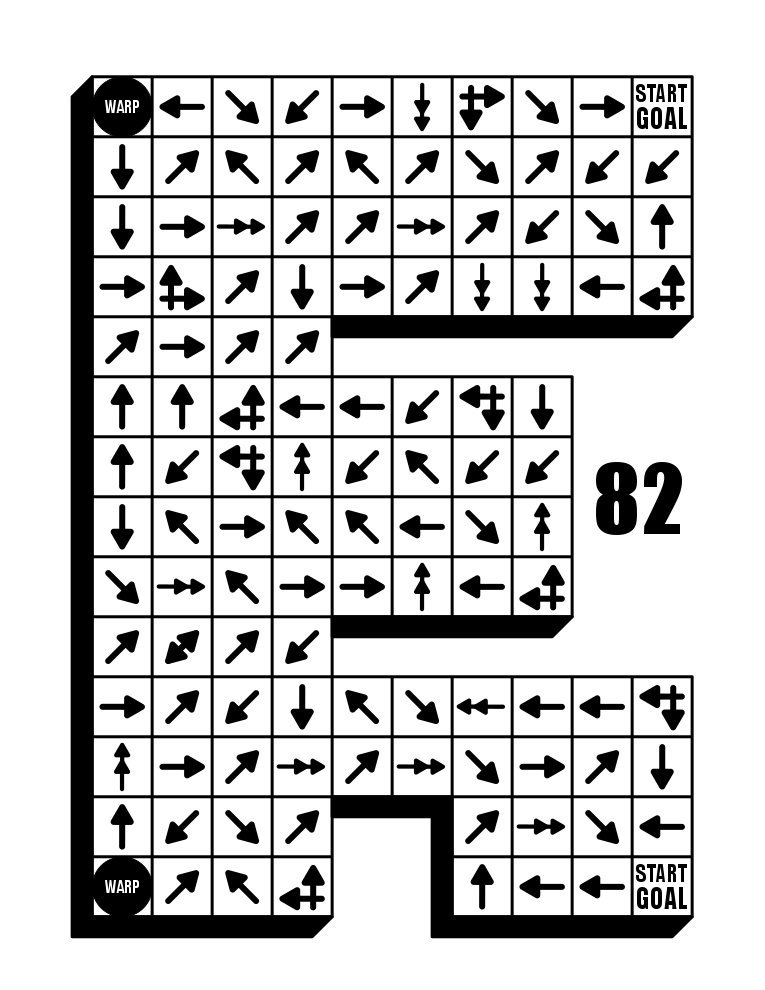
So, while a dual entrance/exit maze is a version of a maze, it is something that can be applied to many different types of mazes to make them more complicated. You can use double sided arrows, Start/Goal blocks, or question marks to denote this type of maze. Here is an abbreviated “how to” for this type of maze:
Step 1 - After creating the outline choose 2 locations that can be a start or goal.
Step 2 - Draw the maze paths from 2 directions while designing the maze.
Step 3 - Connect pathways from each direction to create the solution.
When would you use this ? When you want to add some complexity to the maze. Especially helpful when you want to stop “back solving”, or starting at the goal instead of the start to more easily solve a maze.
Object as Goal Maze
Object as Goal Maze Definition: A maze of any construction that has a goal of an object. The object can be within the maze or at the end of the maze.
So instead of reaching the word GOAL, or an out arrow, you reach an object that represents the same thing.
Object as Goal Maze Examples: We see a grid maze construction, standard maze, a Christmas themed Arrow Maze and a Line Leads maze. The Line leads maze is essentially always an object as goal type maze.
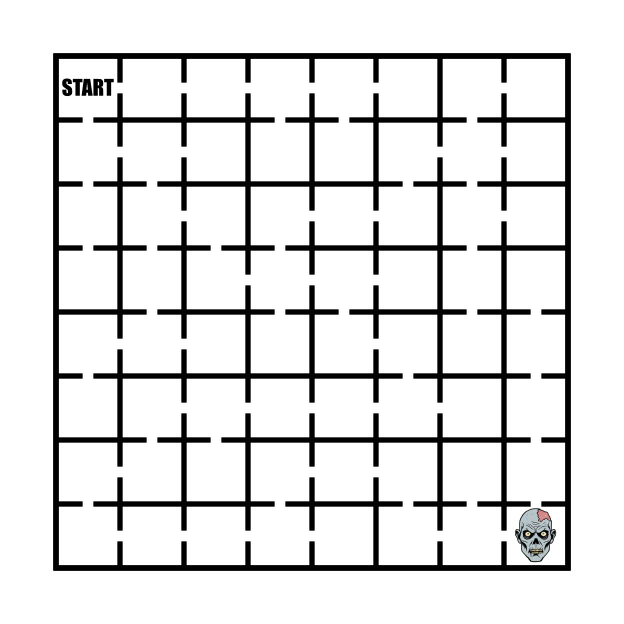
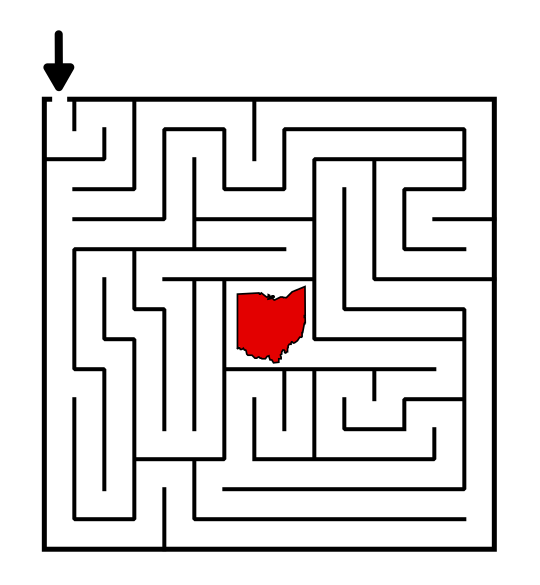
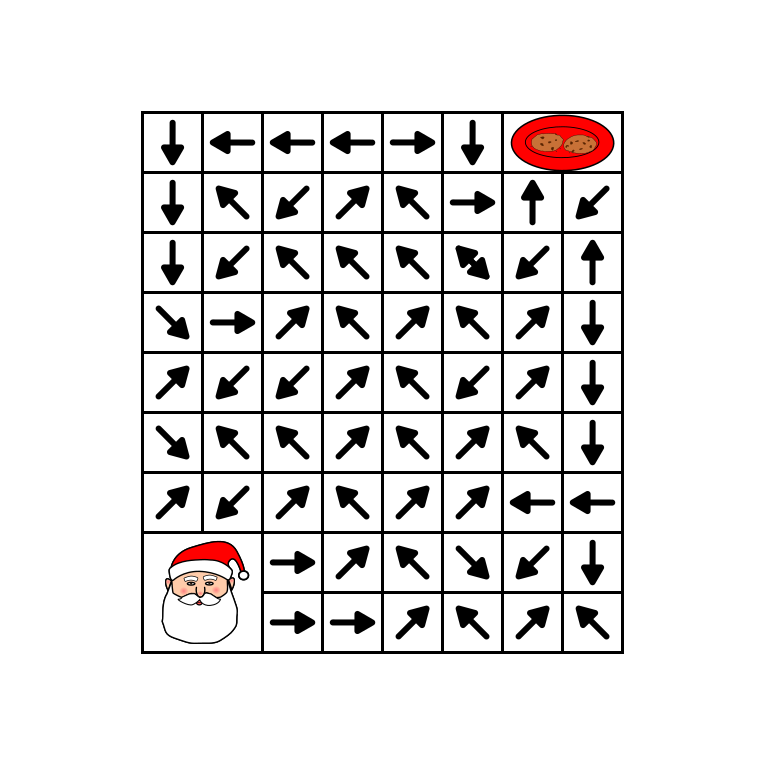
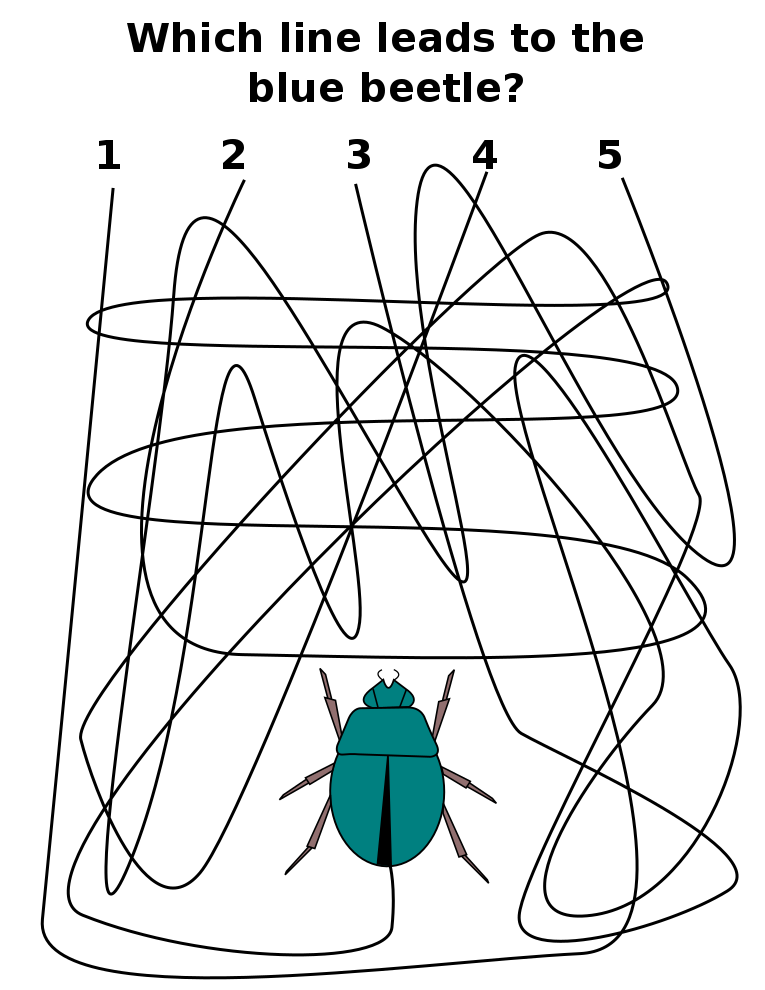
So, almost every type of maze can have this feature by replacing the goal/arrow with an object. And of course I am sure you noticed Santa is an object as Start example !! An object can live on either side of this equation ! Here is an abbreviated “how to” for this type of maze:
Step 1 - Create a maze
Step 2 - Make the goal an object
When would you use this ? This type of maze works especially well for themed mazes for holidays and events. Kids mazes often feature this to make them more interesting !
Free Book Download Available - I made a book of 30 easy kids mazes available in my free book section. Many of them use objects as goals.
Warp Zone Maze
Warp Zone Maze Definition:
Warp Zone Maze - A maze that contains warp zones that allow the solver to move across the maze with no regard to walls. Another construction difference from other mazes is that sections of the maze may be completely closed from entry without using the warp zones.
This is just a way of making the maze harder to solve by not allowing the solver to eyeball dead ends as easily, since the pathways are disjointed.
Warp Zone Maze Examples: click to see larger versions of the examples. We have a standard maze, an axonometric maze, an arrow maze and a standard maze int he shape of Ohio.
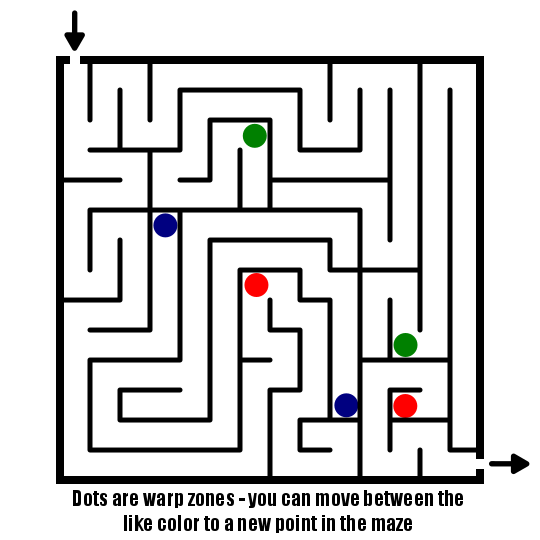
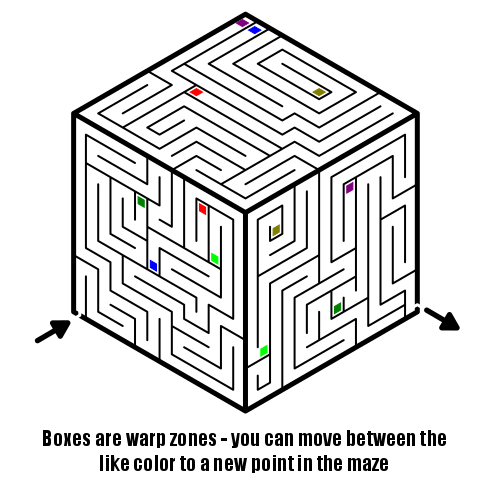
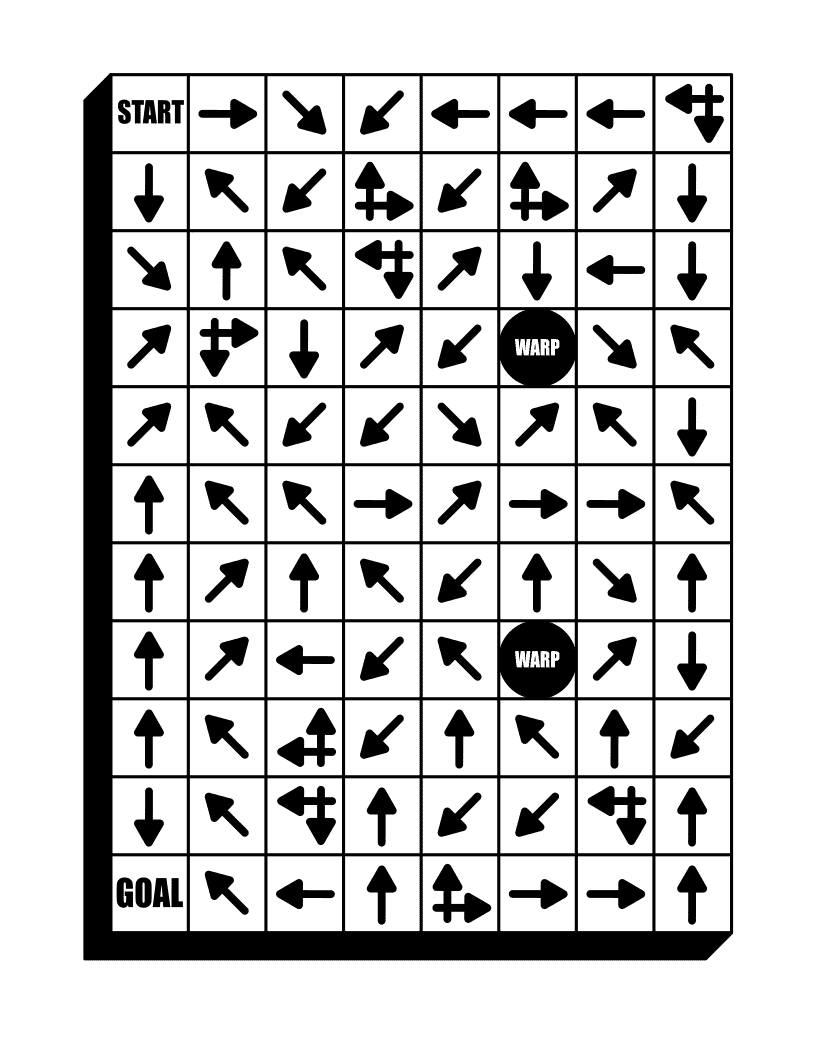
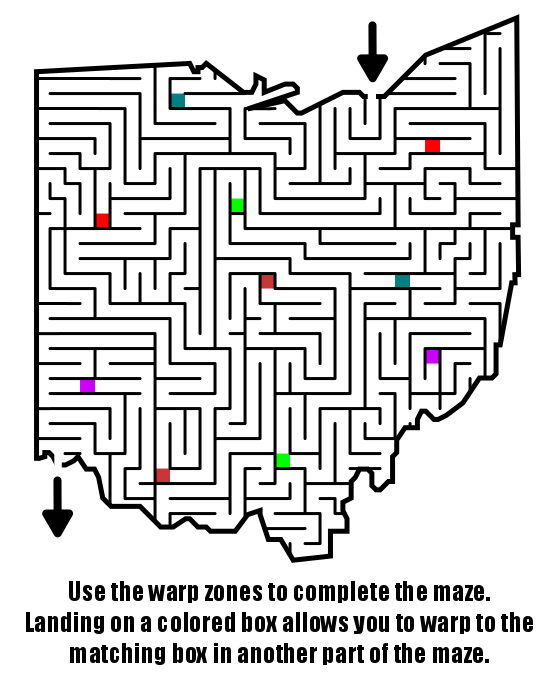
Notice that 3 of the examples have directions with the maze to explain how to use them. Incidentally, the arrow maze has instructions also, just on a separate page. The style of warps can be whatever makes sense in your design, but colors and shapes are most typical. Most types of mazes can use this type of addition to make them more interesting, and harder. Here is an abbreviated “how to” for the relevant steps in creating this type of maze:
Step 2 - While drawing the maze, incorporate warps into the pathway design.
Final Step - Explain how to use the warp zones.
When would you use this ? To add complexity and variety to mazes. This is not a typical thing you find so the novelty of it can be a nice change of pace for many people.
Free Book Download Available - I made a book of 40 warp zone mazes available in my free book section.
Mixed Section Maze
Mixed Section Maze Definition:
Mixed Section Maze - A maze that uses many different design constructions to separate different sections of the maze. This construction works well for objects that have many different parts.
This is an aesthetic choice above all else. Rarely is this used to add complexity.
Mixed Section Maze Examples: click to see larger versions of the examples. The Pancake Maze uses a standard maze for the pancakes and free drawn for the syrup. The chocolate cupcake does the same except for the cake and the icing. Both the Maze of Australia and Ohio use different maze types of designs for the different sections of the country/state.
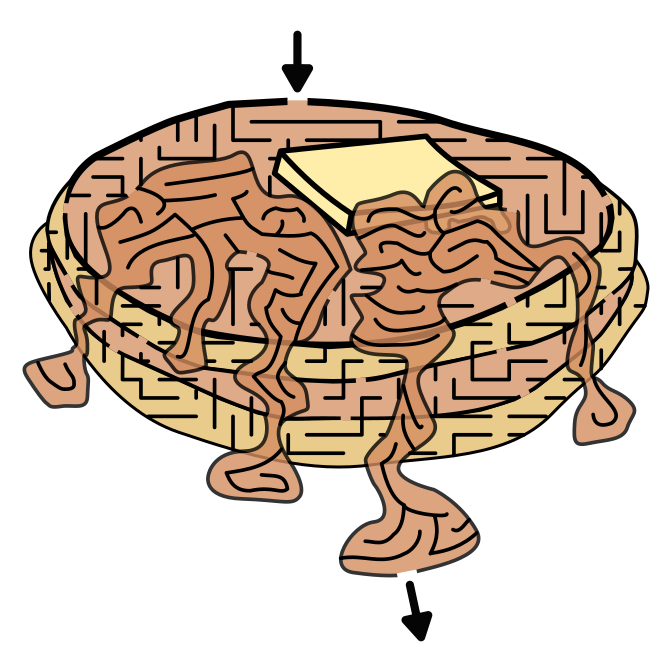
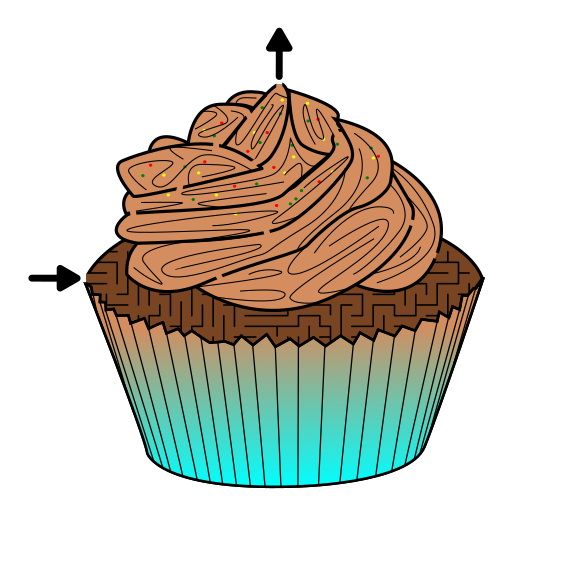
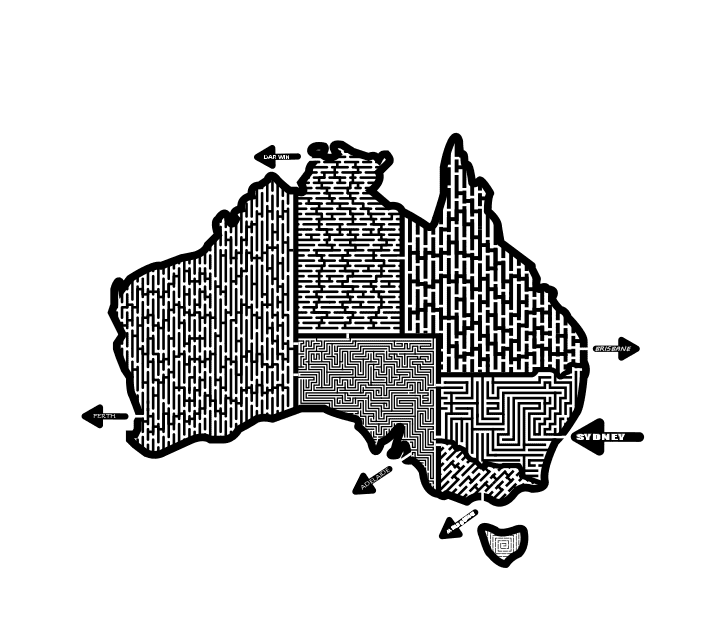
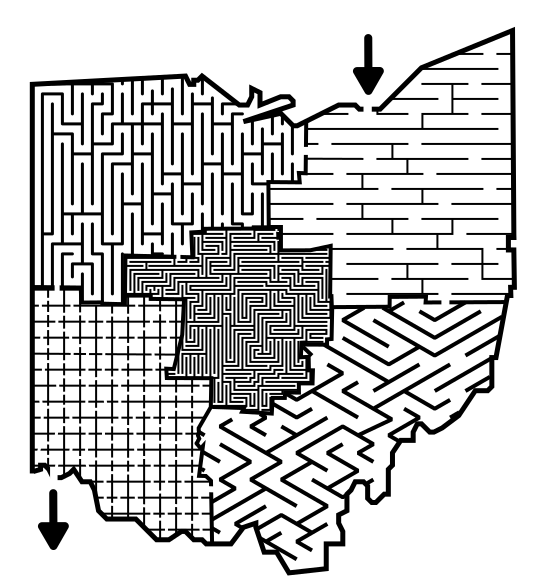
Here is an abbreviated “how to” for the relevant steps in creating this type of maze:
Planning Step - Before drawing the maze, determine what styles you want to use on which section !
Step 2 - While drawing the maze, follow through on your best laid plans !
When would you use this ? Because the object you are making a maze of has different sections where different maze constructions would enhance that section. Because different styles will look good in different sections.
Go & Return Maze
Go & Return Maze Definition:
Go & Return Maze - A maze where the start and goal are the same and the solver must travel to a specified area in the maze (the internal goal) and then return back to the start to exit. Often this includes the condition that the solver use a new pathway back than the one taken while entering.
This is a choice that can add complexity to a maze, especially if a new pathway needs to be used to return back to the start/goal ! Another way to think about this is to think of the go location as a checkpoint in the maze.
Go & Return Maze Examples: Each of the first 2 mazes are standard mazes that use this construction choice. It is easy to imagine other constructions using this choice.
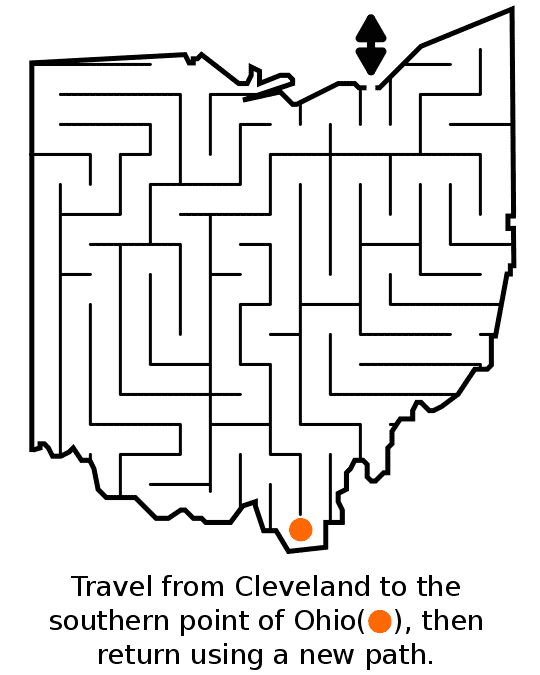
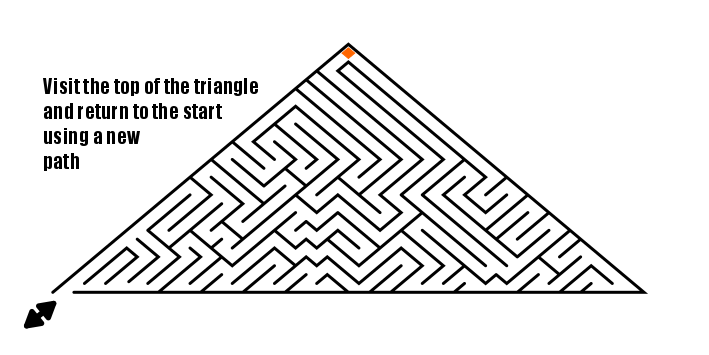
Here is an abbreviated “how to” for the relevant steps in creating this type of maze:
Step 2 - Choose a location internal in the maze to “go” to.
Step 3 - Design the maze (possibly in 2 directions at once), so the solver has 2 different pathways that reach the “go” point in the maze.
Final Step - Add directions to the maze so the solver understands what they need to do to solve it correctly.
When would you use this ? Simply for variety in a much larger book of mazes.
Racing Maze
Racing Maze Definition:
Racing Maze - A maze made specifically for racing between two people. The winner is the person that reaches the common goal first.
This is more about how a maze is used than what the maze looks like.
Racing Maze Examples: Honestly any maze can be a racing maze, but here are examples I made that include the same maze on one page where your opponent is across from you.
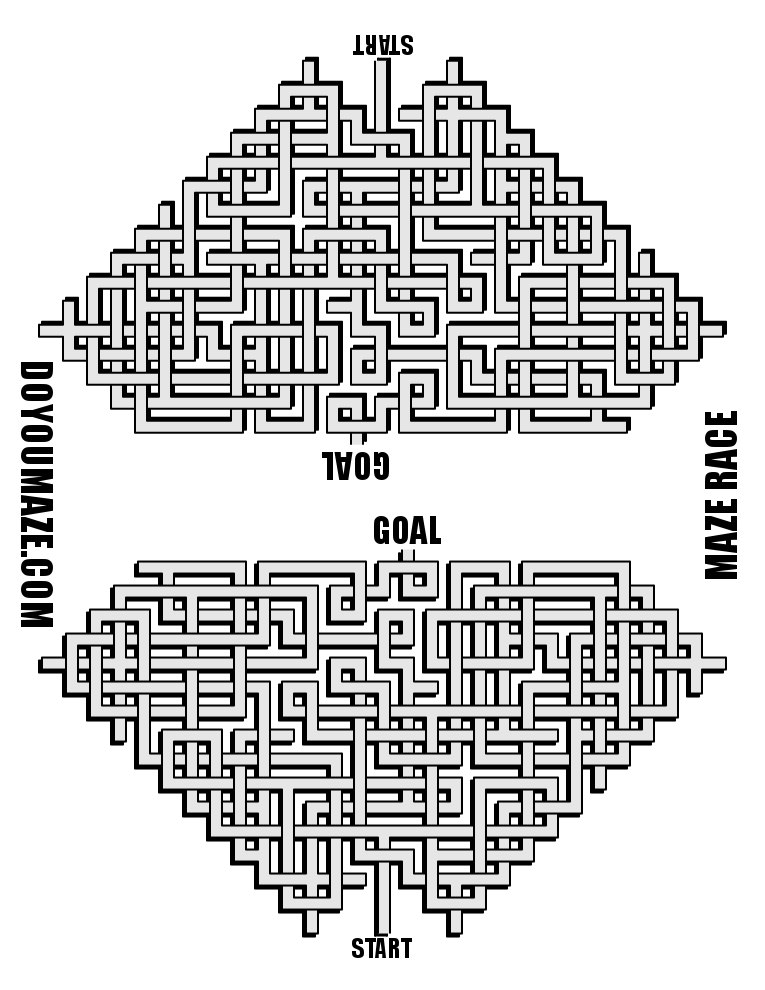
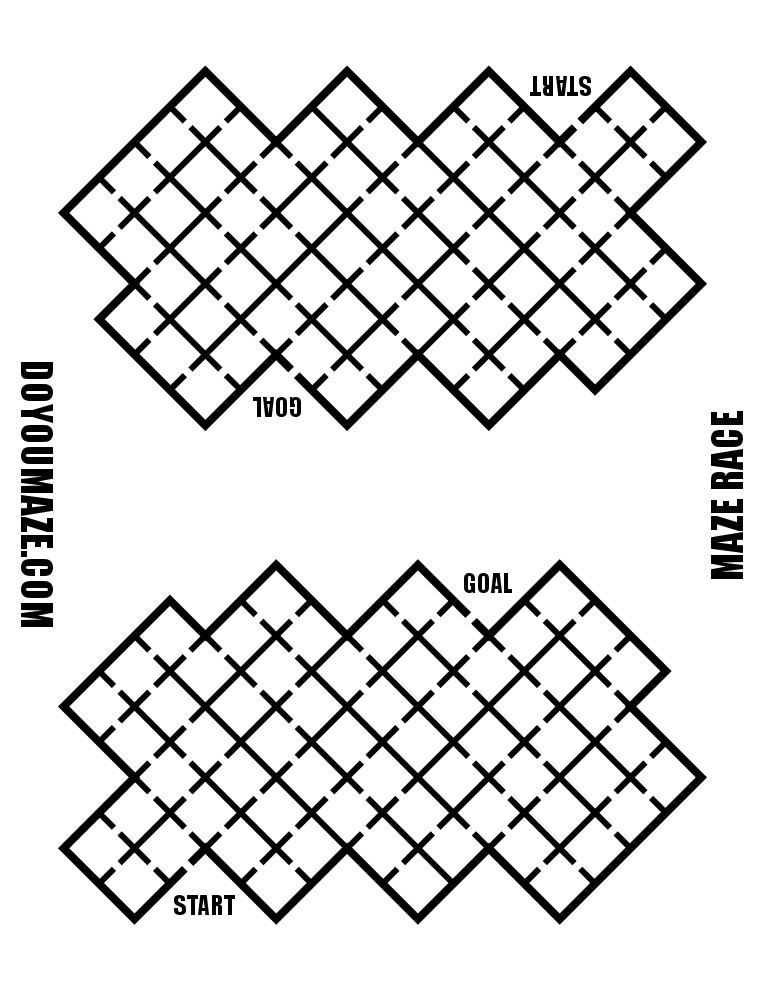
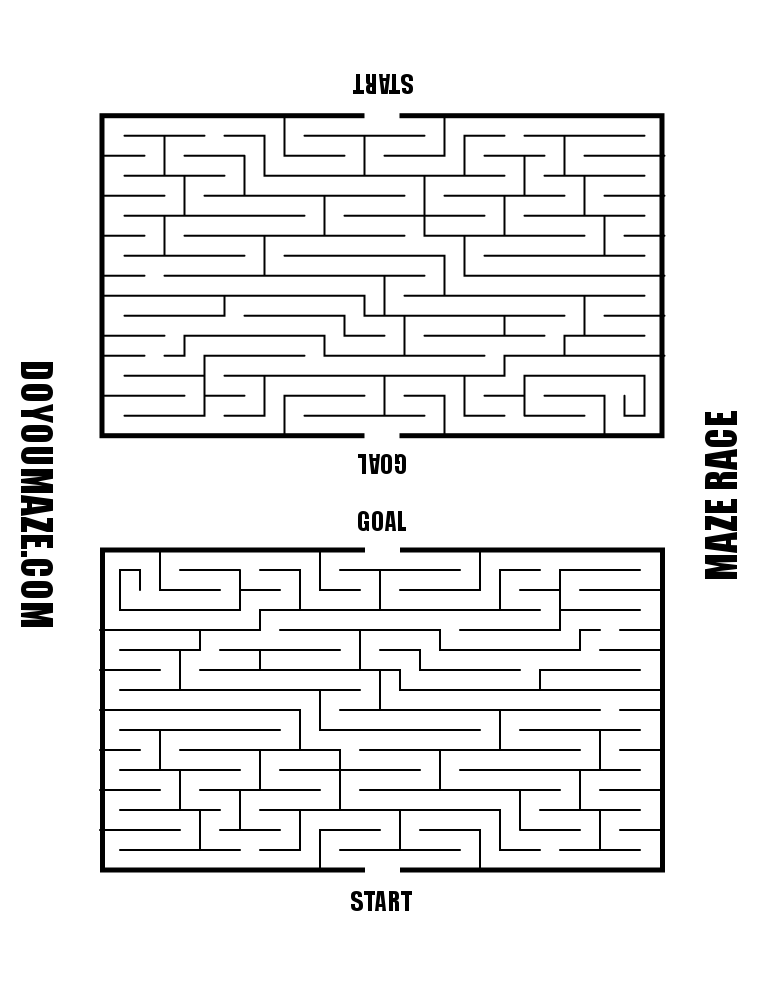
Later I realized that many people like to hover over a maze, so printing 2 mazes on one sheet can be a bad idea for the competition. Print the same maze on 2 separate sheets instead ! This also means the 2 person limit no longer needs to be adhered to. Multiple people can race at once ! I give ideas in my post: How to Race Mazes - Rules, and ideas for Maze competitions
Guidelines for a good racing maze:
The competition consists of identical mazes, one printed for each competitor.
The maze type should be able to be solved with a writing utensil (to prove the solve has been done). So a maze like an arrow maze would not work easily. Block Move and Warp mazes can also be problematic. If you take a wrong warp an eraser will be needed.
Consider the difficulty you want for the maze. Something too difficult will lower the tension that a more speedy maze will create.
Free Book Download Available - I made a book of 31 racing mazes available in my free book section.
Mobile Maze
Mobile Maze Definition:
Mobile Maze - A maze designed specifically to be viewed and solved on a mobile device.
This is all about the shape of the maze. Any maze that can be made to look good on a phone is fair game, which is all of them I think.
Mobile Maze Examples: A nice variety of examples to check out using your phone.
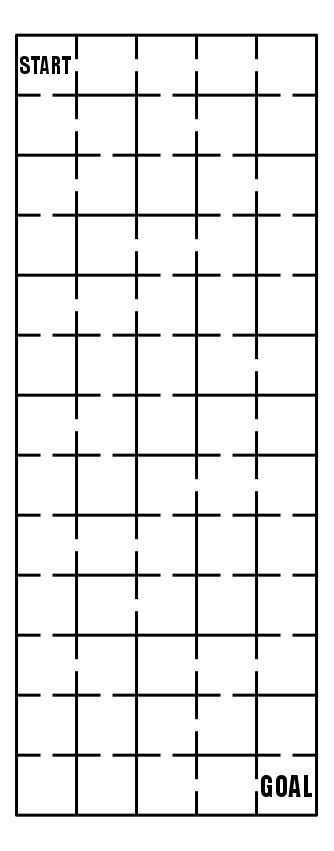

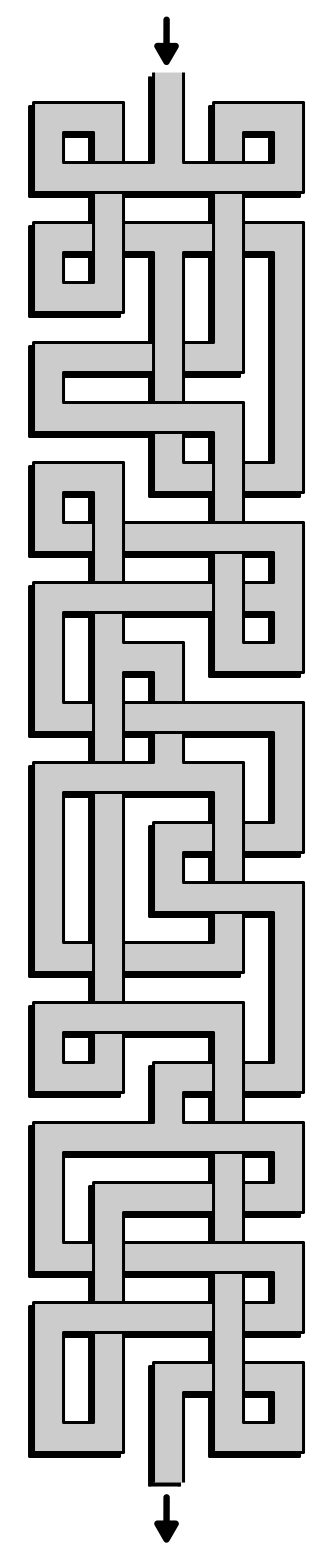
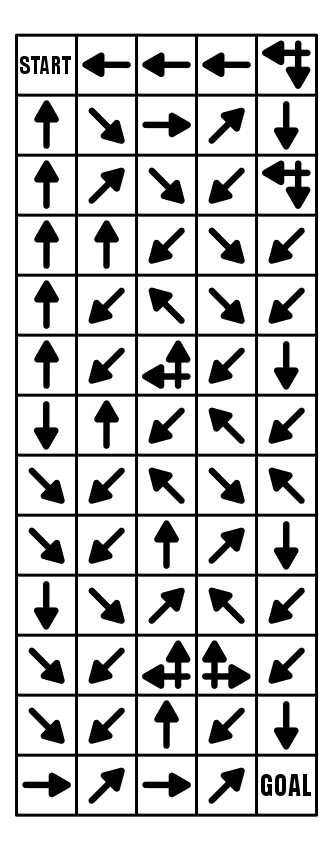
Guidelines for a good mobile maze:
Design the maze vertically using a 9:16 ratio or greater. The 9:16 ratio is the standard size for a mobile screen (you can read more about screen sizes below) . An easy way to think of this is that you want a maze about twice as high as the width. If you want a maze to be scrollable in order to be solved (this adds some difficulty !), try for a larger ratio like 1:4. What do I mean by that ? Well in a scrollable maze a dead end may be off the visible screen - in fact you might even design your maze with this in mind to make it more challenging !
Make pathways that are WIDE. This is a vague but important design feature. I find that a bit of testing is needed to get this just right. If you design digitally it can easily be adjusted (and this is for mobile, so I assume that it is) in order to have a maze that can be solved easily. For Grid based mazes (Grid Maze, Color Grid Maze, Arrow Maze, Block Move, etc.) the widest # of blocks I would suggest using is 5.
MAZE DESIGN BASED ON SCREEN SIZE:
Computer screen monitors vary in their aspect ratio, but most since 2012 are 16:9 (1.78), although through time they have varied from 1.25 to 1.60. So, yes, you are not imagining things, computers are getting wider. Some of you might even remember when televisions were a 4:3 aspect ratio (1.33) before they became much wider.
Most smartphones also happen to be a 16:9 (in landscape mode or 9:16 in portrait mode) which is convenient when you use landscape mode to watch YouTube or other videos on your phone. But when you are not watching videos, your phone is in portrait mode for just about everything else you use it for. Tablets have large range of ratios with many 4:3 like an old tv and some 16:10. This makes them a bit wider so that books get formatted as a priority over videos (you are reading with your tablet and not watching movies right ?).
So, when I make a maze for this website I am always thinking about how it will look on a large screen and how it will print on a standard size piece of paper (8.5x11) which is a 1.29 ratio. The mazes still look fine on a cellphone screen, but are not entirely solvable in most cases without zooming in to see the pathways more clearly. This means a lot more difficulty in maneuvering to solve a maze.
So when you make a maze those are the screens you might be making them for. And in this case, Mobile mazes you want to design for a 9:16 screen !
Mobile Mazes Available - I made a section of 31 mobile mazes available in my free maze section.
Pod Maze
Pod Maze Definition:
Pod Maze - A Maze with separated sections, called pods, that must be traveled between to solve the maze. The ability to jump between pods is denoted by small arrows in the pathways.
This is all about making a portion of the maze invisible essentially. Instead of having long pathways you obsure portions of the maze with black sections to create pods.
Pod Maze Examples: The first 2 examples show a standard maze and a grid maze. Once I knew a grid would work, I knew the other gridded mazes would work also. The next 2 examples are to show the use of color and different shapes.
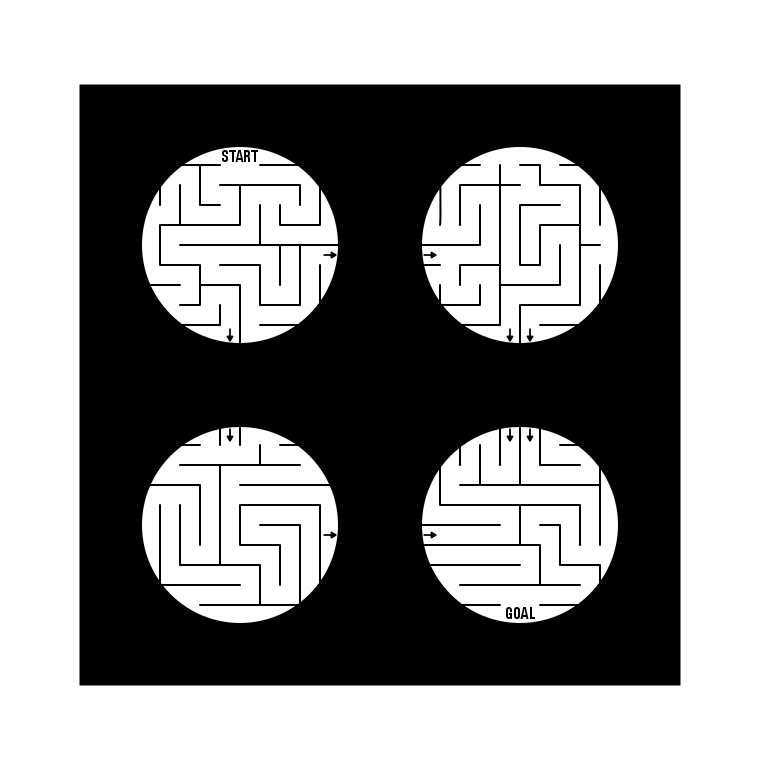
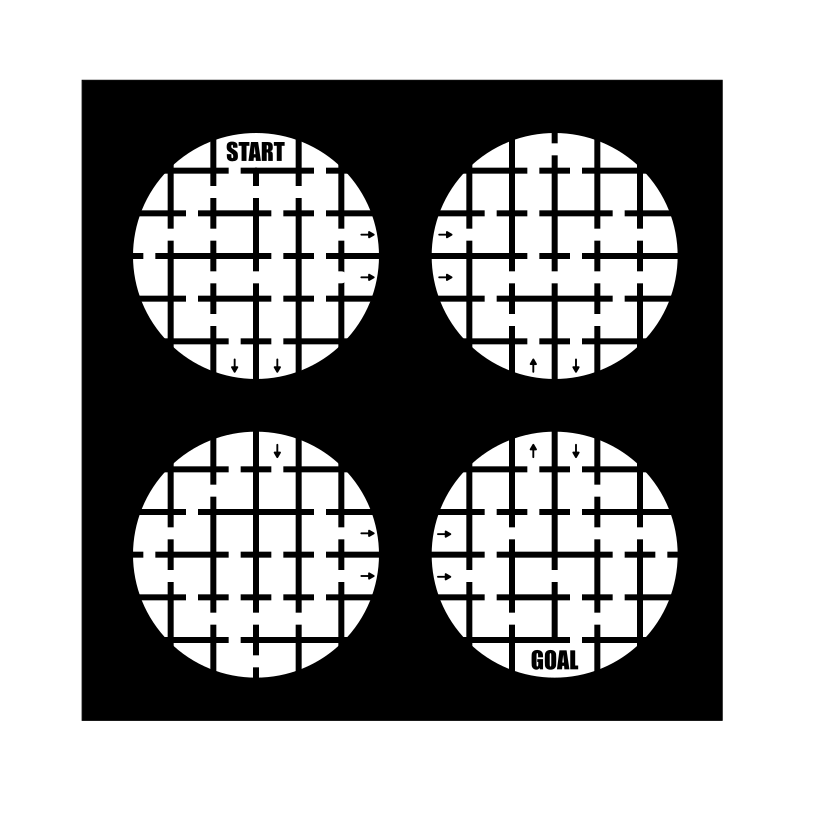
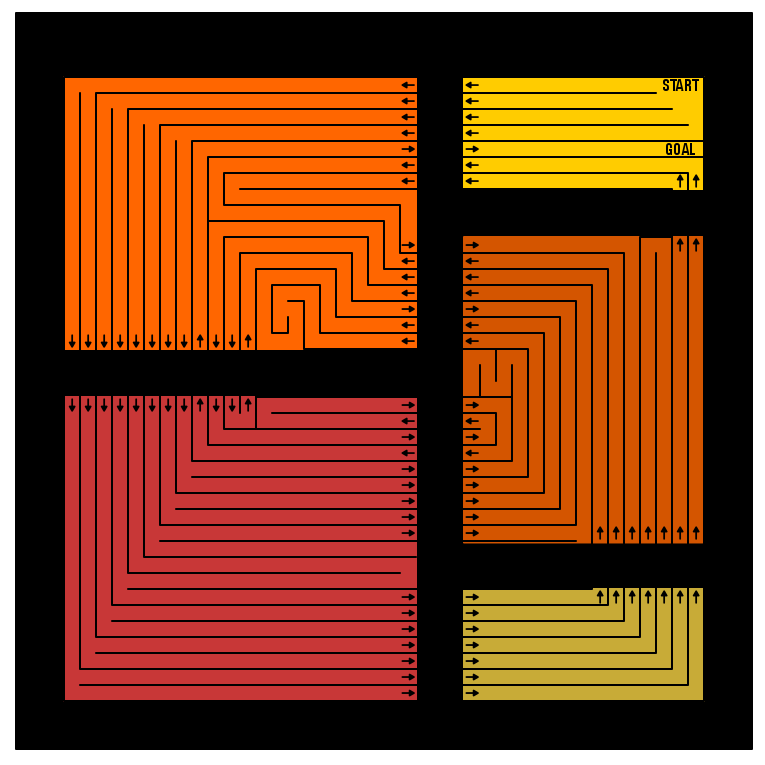
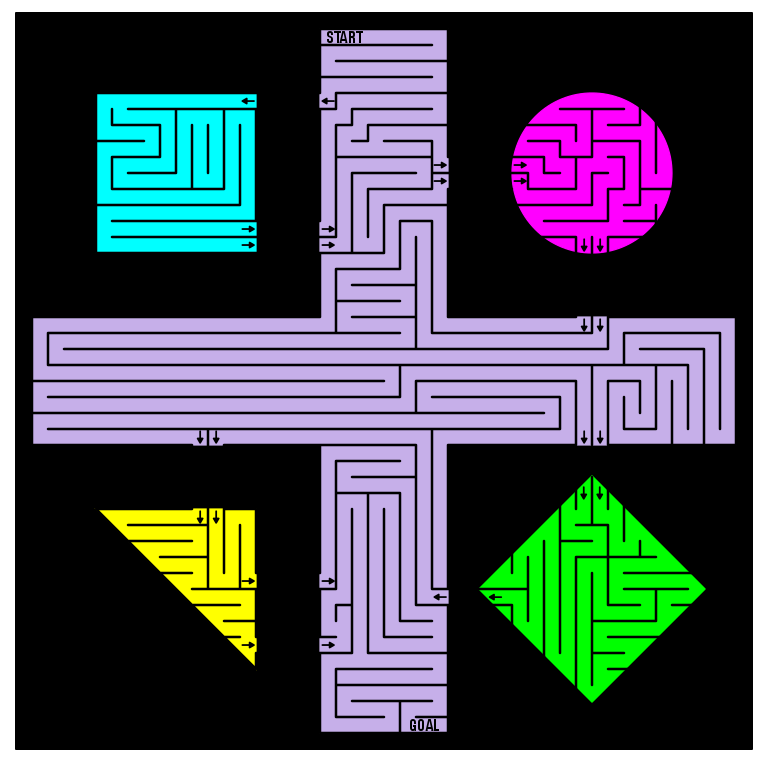
Here is an abbreviated “how to” for the relevant steps in creating this type of maze:
Step 1 - Draw the Background and Pods
Step 2 - While designing your maze, add arrows to each side when a pathway crosses between pods.
Otherwise, this is a relatively normal maze creation.
When would you use this ? For variety in a much larger book of mazes.
Free Book Download Available - I made a book of 32 pod mazes available in my free book section. I have a Spanish language version available also.
Free Drawn Mazes
Free Drawn Maze Definition:
Free Drawn Mazes - A maze where the walls are drawn by hand, or without a geometric structure.
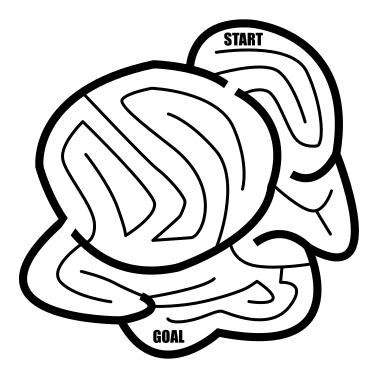
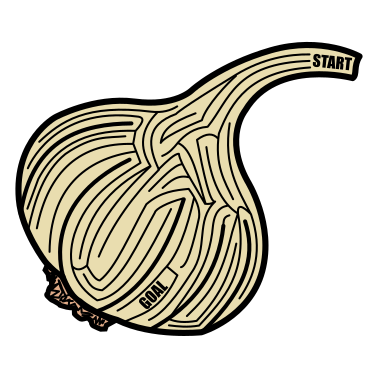
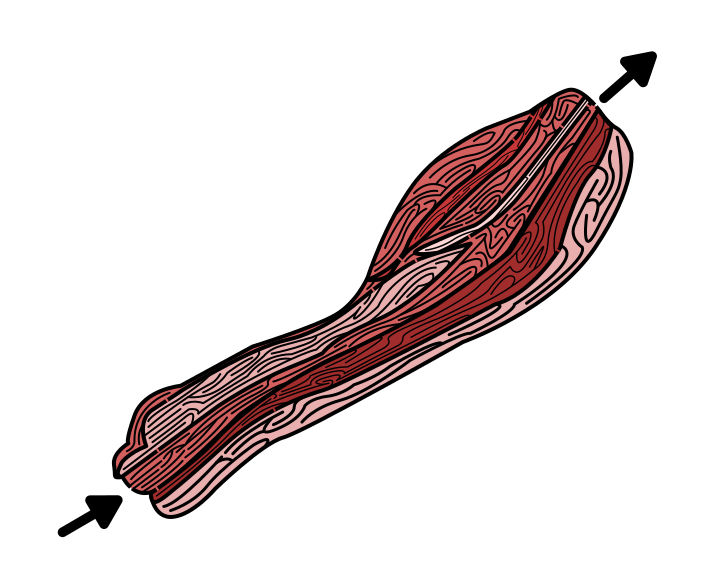
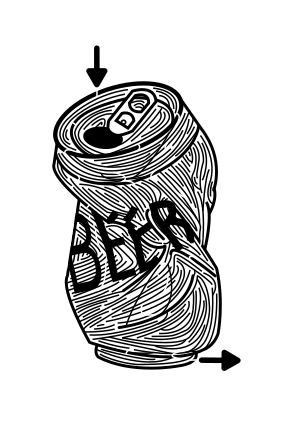
I think this is all about the process more than the maze construction. You can make a standard maze by hand (free drawn). You can make a horizontal maze a vertical maze free drawn also, and so on. I think you can make many maze walls without using grids. I use free drawn walls when filling in oddly shaped mazes.
Free Drawn Maze Examples: Food and drink have irregular shapes. I went with a popped kernel maze, a garlic maze, a bacon maze and a crushed beer can. Each uses internal walls that are free drawn.
Here is an abbreviated “how to” for the relevant steps in creating this type of maze:
Follow your normal how to make a maze preference, but when you make the walls, draw them free hand, without grids based on the shape of the object you are mazing.
Pattern Mazes
Pattern Maze Definition:
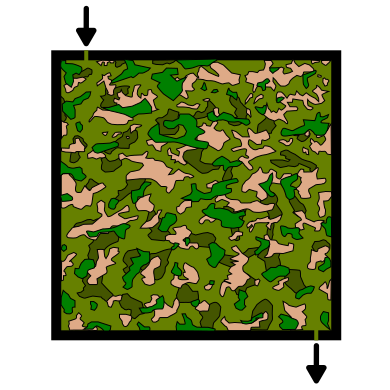
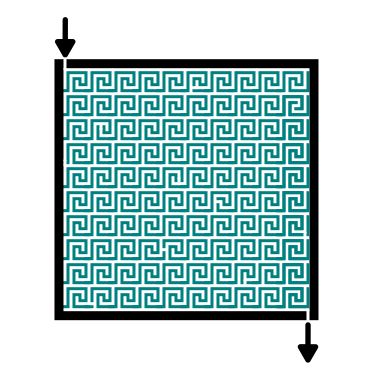
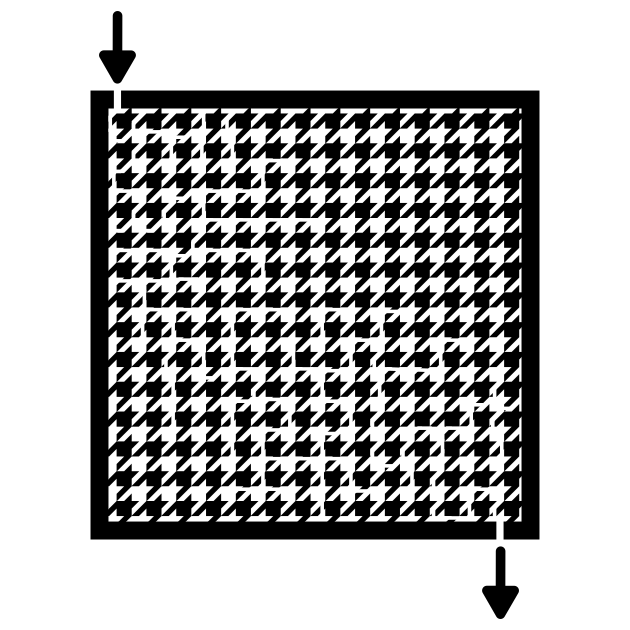
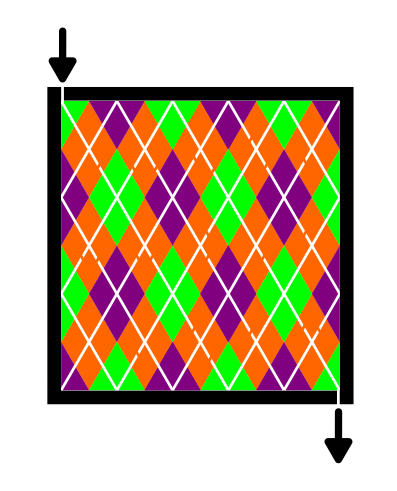
Pattern Maze - A Maze that uses a common pattern to create the walls and paths. Examples are a Greek Key, Plaid, Hounds-tooth, Herringbone or Argyle.
I am eliminating this as a type of maze because it is a design decision, not a maze construction. Creating an argyle maze uses a draw and cut method. A camo maze is an object maze. A herringbone is a draw and cut maze. I consider this similar to making circular mazes - you may use many techniques to create the maze, but they are all circular in shape. You can use many techniques to create a pattern maze.
Pattern Maze Examples: The subject matters are the same (recognizable patterns), but the maze construction techniques vary….so there is no standard how to for this type !
When would you use this ? Because you like the pattern !
Free Book Download Available - I made a book of 34 Box pattern mazes available in my free book section. I also made 2 similar books with patterns of 35 mazes each. Spanish language versions are available also.