I asked the audience which of the 4 maze solving options they used when they solved a maze. The overwhelming majority (in early results, but I do not expect them to change) use a writing utensil for standard physical mazes. If they are solving on a screen they use their eyes. Let’s review the 4 types I laid out:
4 Most Common maze solving options
With a writing utensil - probably the most common way to solve a drawn maze. You have a maze printed out or in a book in front of you and you grab a pen or pencil and solve using it. Makes the maze a one time use unless you have an eraser that does a good job and doesn’t harm the paper too much
With your finger - you use your finger as a guide to work your way through the maze and solve it. This method allows multiple people to solve the same maze
With your eyes - my personal most common maze solving method. Works for most maze types, although you need to add in a more comprehensive method for any spiral maze.
Reverse fill with a writing utensil - a method I used to use because I liked the way it looked. You use a pen / pencil and start at dead ends, filling each in until you reach a new branch. Eventually this leaves only the correct path NOT filled in, creating a reverse solve !
And now let’s look a a maze solved using the reverse fill method. The best type of maze to use this for is the hidden message maze, because what you are left with when it is solved is a fun message !
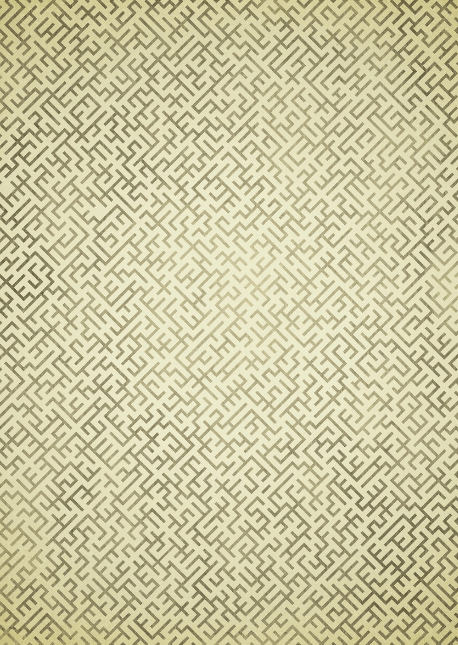
The big test for a maze maker is about to take place. I have made a hidden message maze. If I have made it well, you do not know what it says by looking at it…Take some time…Do you know what it says ?
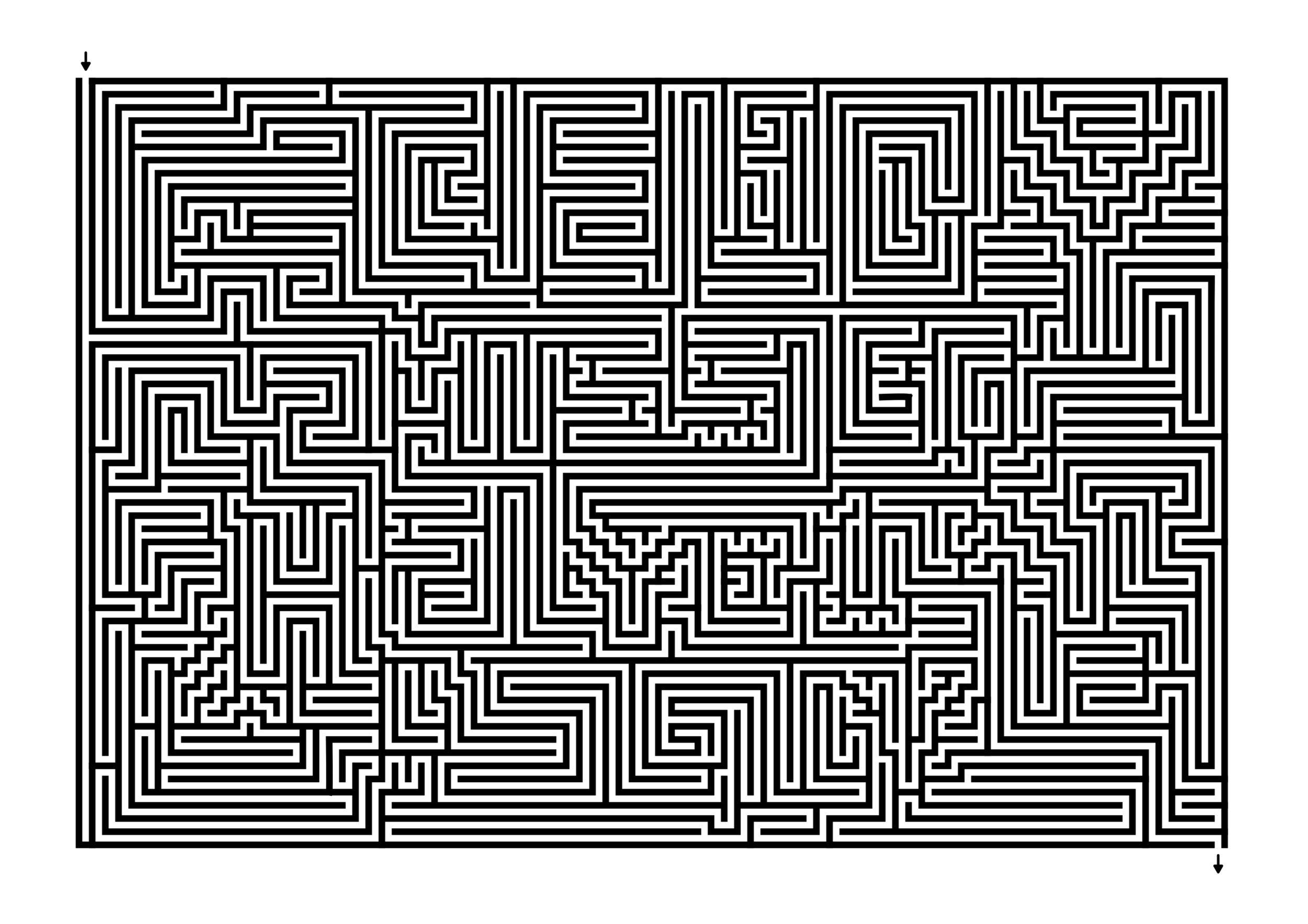
So, I am hoping you do not know what that says yet. Here is where I put in a large block so it is more difficult to get any hints from your eyes naturally looking ahead and seeing the answer. The first answer I will show is using the most common method of using a writing utensil to solve the maze (in this case it is actually done by a digital pencil).

So did you get it correct? Solving in the normal way gives us a hidden maze message of “MISS YOU”.
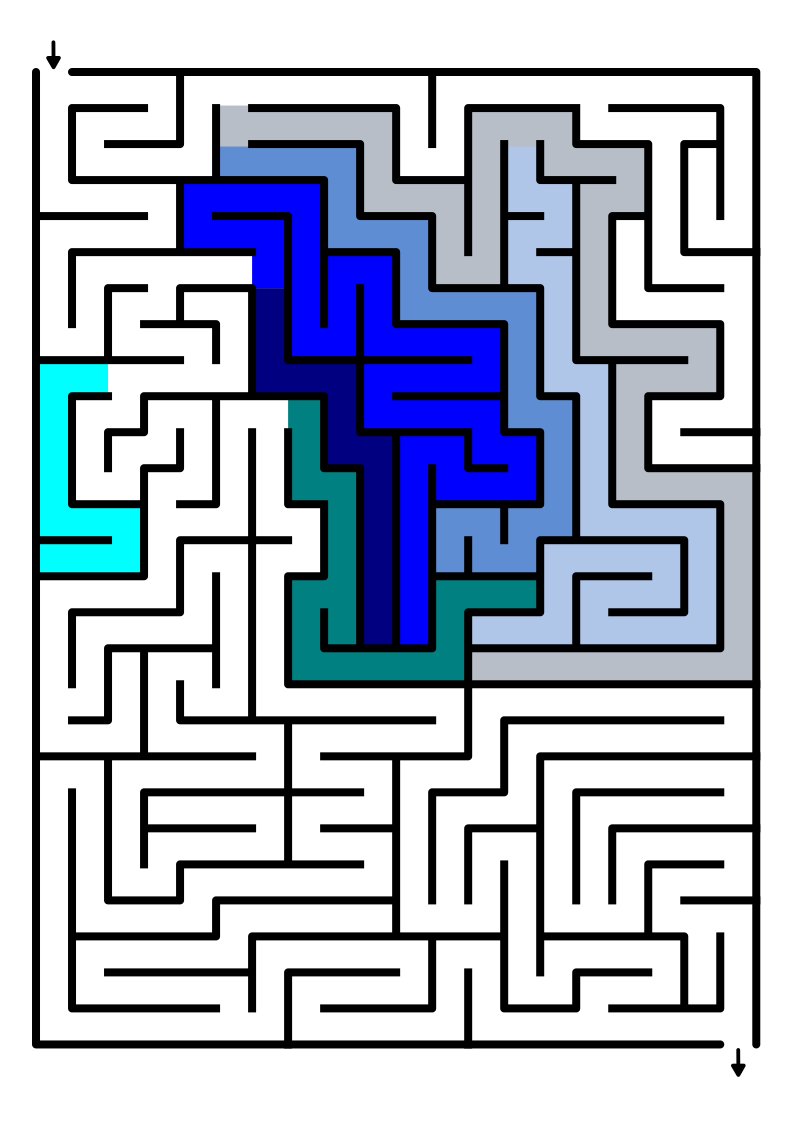
Now, let’s start with a reverse fill solve and see what it looks like. For my example I wanted to show you the start of the reverse solve, shown with each incorrect branch being a different color so you can more easily see what is happening. Starting in the bottom left corner of the maze, I found a dead end and began filling it in completely until I reached an intersection, where I stop. Then I find another dead end and do the same. If I come to an intersection and have filled in the other path that branches off from it, I have essentially created another dead end to fill in ! Here is what the first 15 dead ends look like filled in (each in a different color).

Using that dead end fill-in method will eventually leave you with the only paths left being those that are the solution ! This is a long process, but one that gives you a much different look when you finish solving the maze ! Here is what the hidden maze looks like reverse solved:

So, if you are bored, or have a new full ink pen and want to solve a maze in a new way….try the reverse fill method.
PRO TIP: How do you think you could use this solving method best ? Well, start in the middle of the page between the start and the goal. Now evaluate the shortest distance from wall to wall. In a square shaped maze this will not matter, but in this example, the rectangle, you will want to look for dead ends in the center moving from the north/south walls since they are the shortest distance from the center.
What are you trying to accomplish ? You are trying to break the maze into 2 sections, the east/west side of the maze, or the north/south. If you find the correct location of the center pathway, you have essentially now made the maze into 2 sections with a center checkpoint. This makes the maze much easier to solve. I used LONG dead ends in the hidden, message maze above, so let’s try an easier maze with this new knowledge:
Since it is a long rectangle we want to cut this in 2 mazes, north/south.
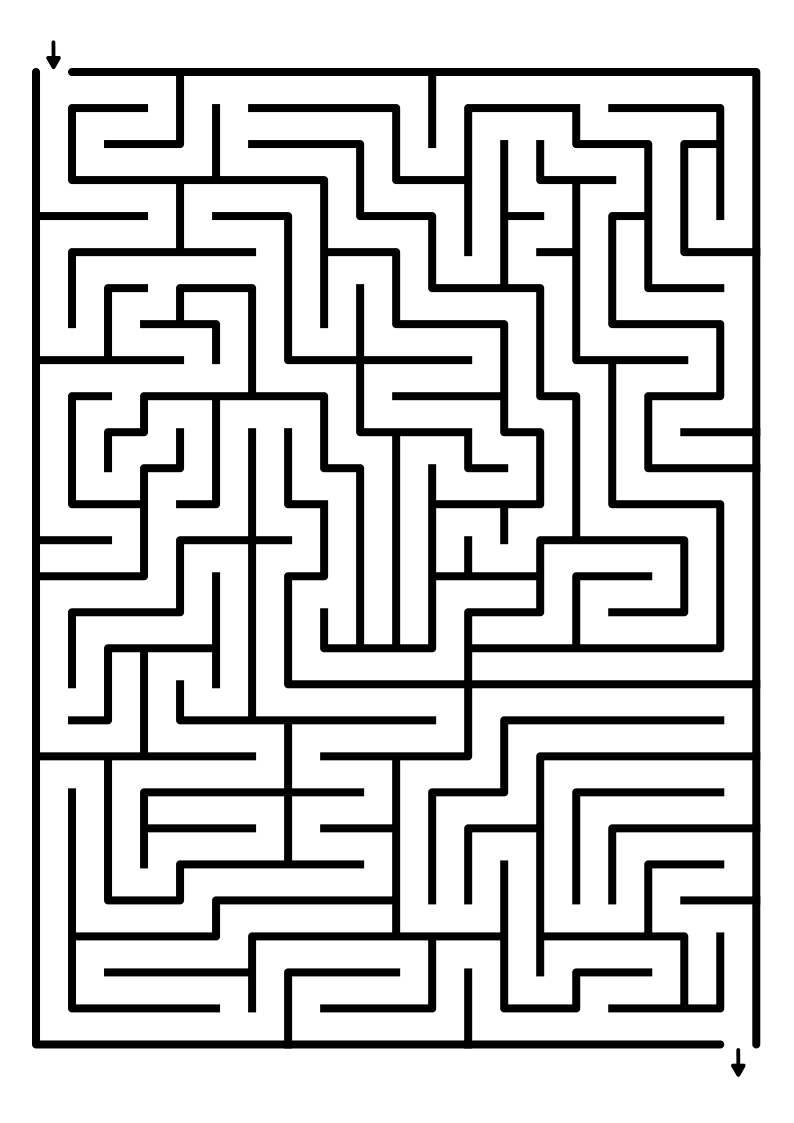
And here is what it looks like after a few dead ends are reverse solved:
Happy maze solving !
Maze design posts that may interest you:
How to Create Maze Art in 6 Easy Steps + Case Study