Mazes and Gender: What Do the Research Findings Tell Us?

Who is better at solving mazes men or women ? I was looking for scientific research on mazes to write my blog on brain health (The Surprising Benefits of Solving Mazes) and I stumbled upon this piece of research from 2007. The study aims to present a consensus statement based on the best available scientific evidence regarding sex differences in science and math achievement and ability. Basically how do we get more women into STEM fields, or why aren’t there more. The article concludes that sex differences in science and math achievement and ability are smaller for the mid-range of the distribution than they are for those with the highest levels of achievement and ability. So that is the overall conclusion, but part of the study looked at visuospatial abilities.

What are Visuospatial abilities ? They are the capacity to understand, reason, and remember the visual and spatial relations among objects or space. These abilities are used for everyday use from navigation, understanding or fixing equipment, understanding or estimating distance and measurement, and performing on a job. Spatial abilities are important for success in fields such as sports, technical aptitude, mathematics, natural sciences, and engineering.

The paper notes that males have consistently outperformed females on most measures of visuospatial abilities, including mazes. This difference is evident even when controlling for factors such as age, intelligence, and socioeconomic status.

The paper suggests that there are a number of possible explanations for the sex difference in maze performance. One possibility is that males have better spatial reasoning skills than females. Spatial reasoning is the ability to mentally manipulate objects and to visualize spatial relationships. Males may be better at spatial reasoning because they have more testosterone, a hormone that has been linked to spatial abilities.

Another possibility is that males are more interested in mazes than females. This could be due to cultural factors, such as the fact that mazes are often seen as a "male" activity (I did not realize this - are they ?). It could also be due to biological factors, such as the fact that males have a greater interest in objects and in exploring their environment.

Another interesting finding is that sex differences in spatial tasks are seen between the sexes by age 4.5 based on preschool testing (see page 8 of the study) !

So who is better at solving mazes ? Men are on average, but that doesn’t mean everyone can’t enjoy a great maze !

Here are some possible reasons why men and women might differ in maze solving ability:

  • Hormones: Testosterone has been shown to improve spatial ability in both men and women. However, men have higher levels of testosterone than women, so this could explain why men might be better at maze solving.

  • Brain structure: There are some differences in the brain structure of men and women. For example, the hippocampus, which is involved in spatial navigation, is larger in men than in women. This could also explain why men might be better at maze solving.

  • Socialization: Men and women are socialized differently. For example, boys are often encouraged to play with spatial toys, such as blocks and Legos, while girls are often encouraged to play with dolls and other non-spatial toys. This could also contribute to gender differences in maze solving ability.

Study used:

Title: The Science of Sex Differences in Science and Mathematics

  • Authors: Diane F. Halpern, Camilla P. Benbow, David C. Geary, Ruben C. Gur, Janet Shibley Hyde, Morton Ann Gernsbacher

  • Journal: Psychological Bulletin

  • Year: 2007

  • DOI: 10.1037/0033-2909.133.2.268

Here is a link to the pdf of the entire study (51 pages)

https://journals.sagepub.com/doi/pdf/10.1111/j.1529-1006.2007.00032.x

Male Female symbol maze

Arrow Mazes: A Comprehensive Guide to the Fun and Challenging Puzzles

I have written over 20 different blog posts about Arrow Mazes, including a 14 part design masterclass series on just about everything you imagine. But I have never written about why I love them so much, so let’s do that, and despite the long time between them let’s consider this Part 15 in the series. Below I will go through the series so far with some additional notes to guide you. First, let’s define what an Arrow Maze is:

ARROW MAZE - A MAZE THAT INVOLVES FOLLOWING ARROWS IN THE DIRECTION SHOWN WITH A FEW DECISIONS ALONG THE WAY TO CREATE THE MAZE SOLVING ASPECT. A WELL DESIGNED ARROW MAZE HAS NO DEAD ENDS, BUT RATHER LOOPS THAT RETURN YOU TO AN EARLIER PART OF THE MAZE.

If you want to make and design your own Arrow Mazes you should read to original blog post “How to Make an Arrow Maze” and also read Parts 1 - 4 below which take you through the main parts of an Arrow Maze and how they are used:

Arrow Maze Construction and Design:

  • Part 1 - Start Locations and Options

    • In this post I discuss the placement of the Start block and how it effects the solving and options for solving the maze.

  • Part 2 - Using Creative Shapes

    • I show how you can use blocks and some creativity to create some interesting shapes/themes. More on this below with examples.

  • Part 3 - Intersections

    • A discussion of how to make an Arrow Maze more difficult by using decision blocks.

  • Part 4 - Using Loops

    • An explanation of loops, which are used instead of dead ends in an Arrow Maze.

The second section of the series in Parts 5 - 12 explores the different types of Arrows that can be used (different Arrows allow different movements through the maze) and special blocks that can be placed in the Arrow Maze. For the most basic Arrow Mazes you would only need to read Part 5.

Arrow Maze Components:

Part 5 Regular Arrows
  • Part 5 - Regular Arrows

    • The core and most basic element of an arrow maze is the basic regular arrow. It points in 1 direction which you follow. Most Arrow Mazes are made of a majority of these arrows.

Part 6 Double Arrows
  • Part 6 - Double Arrows

    • An arrow that jumps you over the block or gap in the direction the double arrow is pointed. Great to get you out of tight spots as a solver and to hide “pathways” better as a maze creator.

Part 7 START GOAL.
  • Part 7 - Using the START GOAL

    • This block adds a new twist to solving the maze because the solver must determine which block is the START and which block is the GOAL. You must find a path between the 2 to solve it.

Part 8 Return to Start
  • Part 8 - Return to Start Block

    • Exactly what it says. If you land on this block you must return to the Start of the Arrow Maze.

Part 9 Warp
  • Part 9 - Using Warp Zones

    • Landing on the block allows you to Warp (or jump) to the same shaped Warp block across the maze. When you land on a Warp block you can warp across the maze OR you can choose not to warp and move in any direction off the block (like a Start block)

Part 10 Slide Arrow
  • Part 10 - Slide Arrows

    • Landing on a Slide Arrow means you can slide to ANY block it is pointing to (but you can not jump gaps). If you want to learn how to make a maze completely out of this type of arrow: How to Make a Slide Arrow Maze.

Part 11 All Ways Arrow
  • Part 11 - All Ways Arrow

    • When you land on this type of arrow, you may move off of it in any direction

Part 12  Long Arrow
  • Part 12 - Long Arrow Use

    • The Long Arrow is the name of an infinite number of arrows that are 2 or more blocks long. It replaces a series of regular arrows.

Long arrow maze use example

And the final part of the series shows how you can make Arrow Mazes more fun and challenging, typically by using an exaggerated number of special blocks Part 13, or making it very large Part 14. Not part of the original series, but a supplement to Part 14 was a 5 part series of hints to help people solve the Largest Arrow Maze in the World.

Extreme Arrow Maze examples:

And finally we have today where I attempt to pull everything together.

Overview:

  • Part 15 - Why I Love Arrow Mazes (this post)

While I seem to like Arrow mazes more than most people, I also feel like most people have never tried one. When I introduce them to new people I get a good response. They have never caught on, but I am hopeful some day they will.

7 Reasons Why I Love Arrow Mazes

1 - Arrow Mazes are for all Ages

Regular mazes come with varying levels of complexity and so do Arrow Mazes. However, even most complex Arrow Mazes are quicker to solve because the blocks take up more space on the page. So a complex Arrow Maze can be solved by a child more easily than a regular maze. You can trial and error your way to success because…

2 - There are no Dead Ends in an Arrow Maze

You can read more about the concept in Part 4 of the series - Using Loops. Instead of dead ends, wrong decisions lead you back to where you started…so you can course correct your direction the next time !

3 - No Writing Utensil is Needed to solve an Arrow Maze

Have you ever thought about buying a maze book for a kindle ? Of course not. How would you solve the maze on the screen…except there is a maze book for kindle for sale, of my Arrow Mazes ! You solve an Arrow maze using your eyes or finger. No pencils needed.

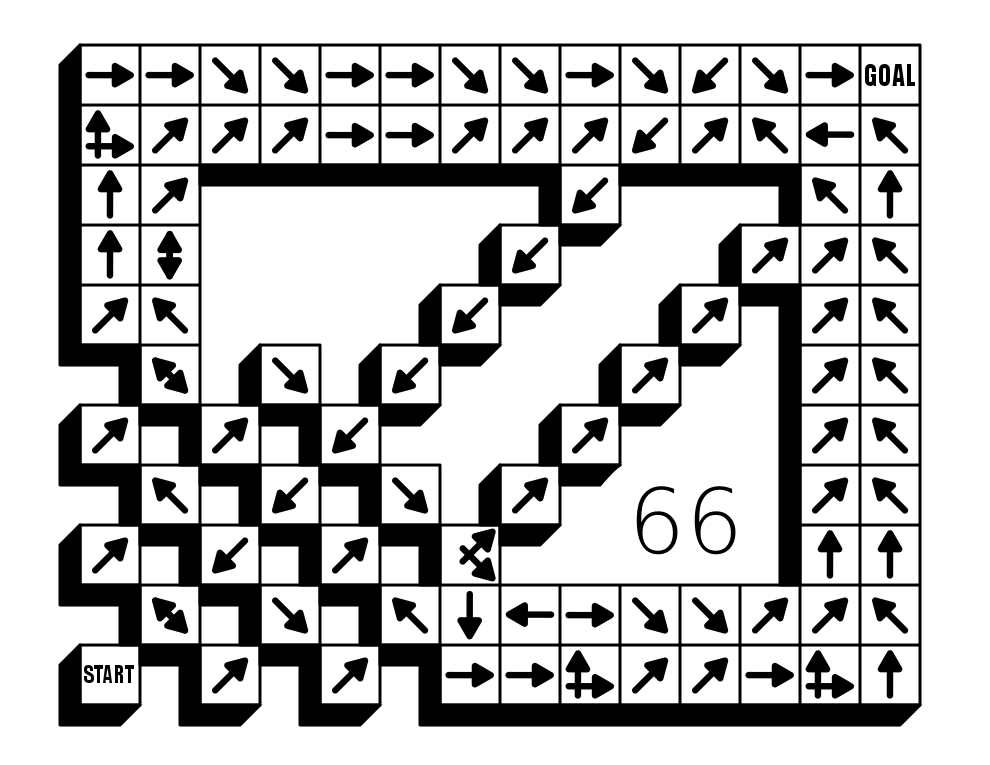
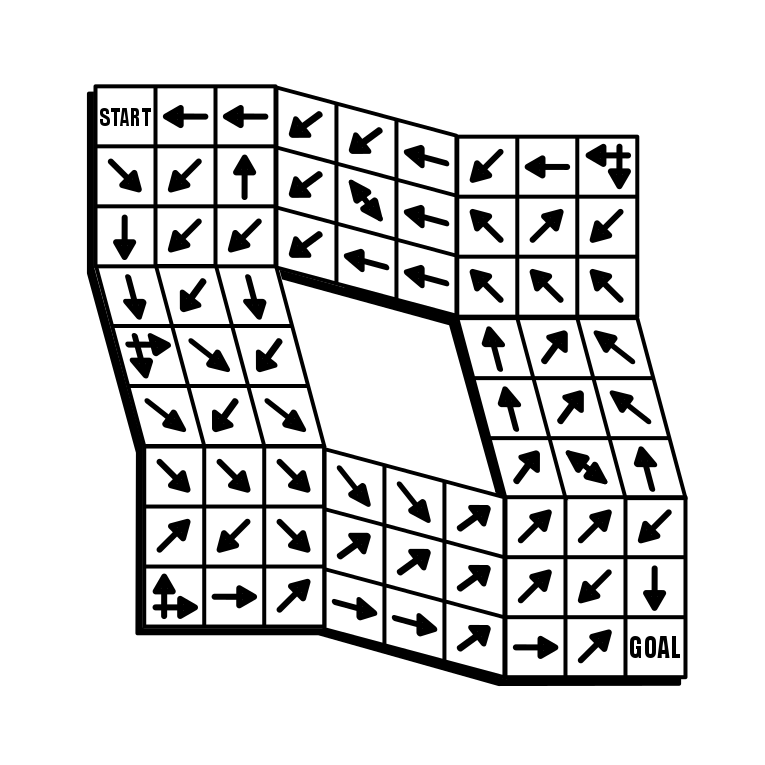
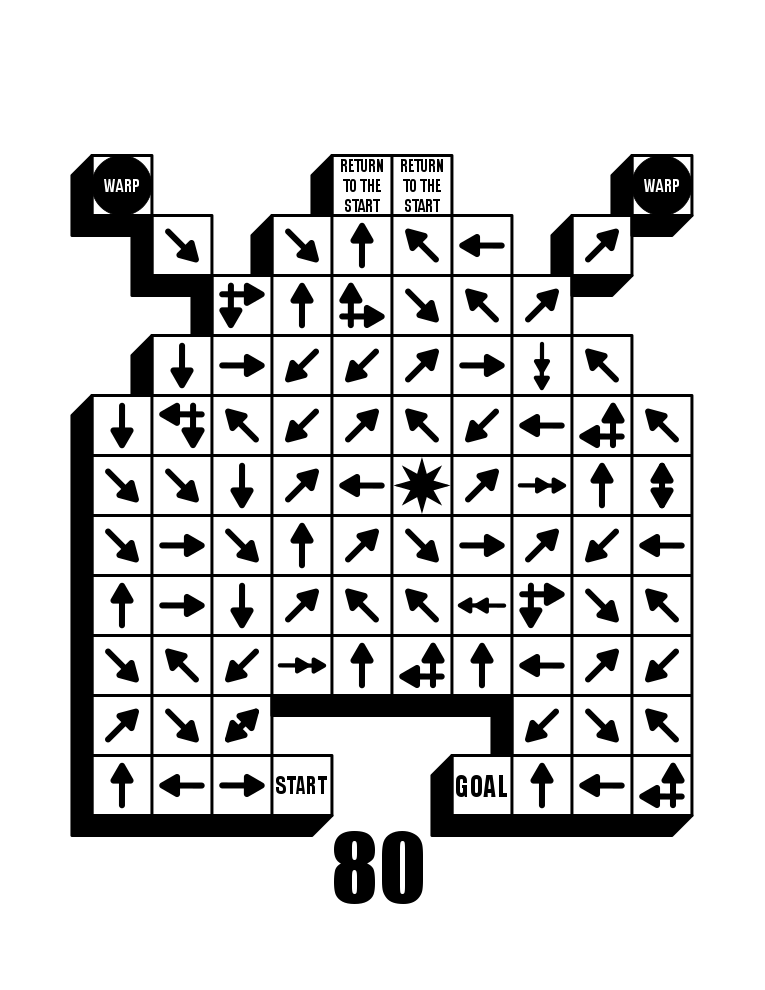
4 - Arrow Mazes have cool shapes

Not that regular mazes don’t, but making an arrow maze, built by blocks in interesting shapes helps keeps things fun and interesting ! Check out these 3 examples:

Arrow Maze #66
Arrow Maze Perspective
Arrow Maze #80

5 - Arrow Mazes are fun to create and solve

I really enjoy making them. I have personally made over 500 Arrow mazes over the years, including the aforementioned book for sale on Amazon. I have additional volumes ready for publishing should I want to launch them. As far as solving, the use of loops vs. dead ends enhances the enjoyment. The complexity that can be created with use of the advanced blocks (see Part 13) can make things very interesting. Good luck avoiding the “Return to the Star” blocks !!

Arrow Maze #99

6 - They can be themed !

I have made Arrow mazes for specific holidays. Here are a few basic Christmas examples for kids.

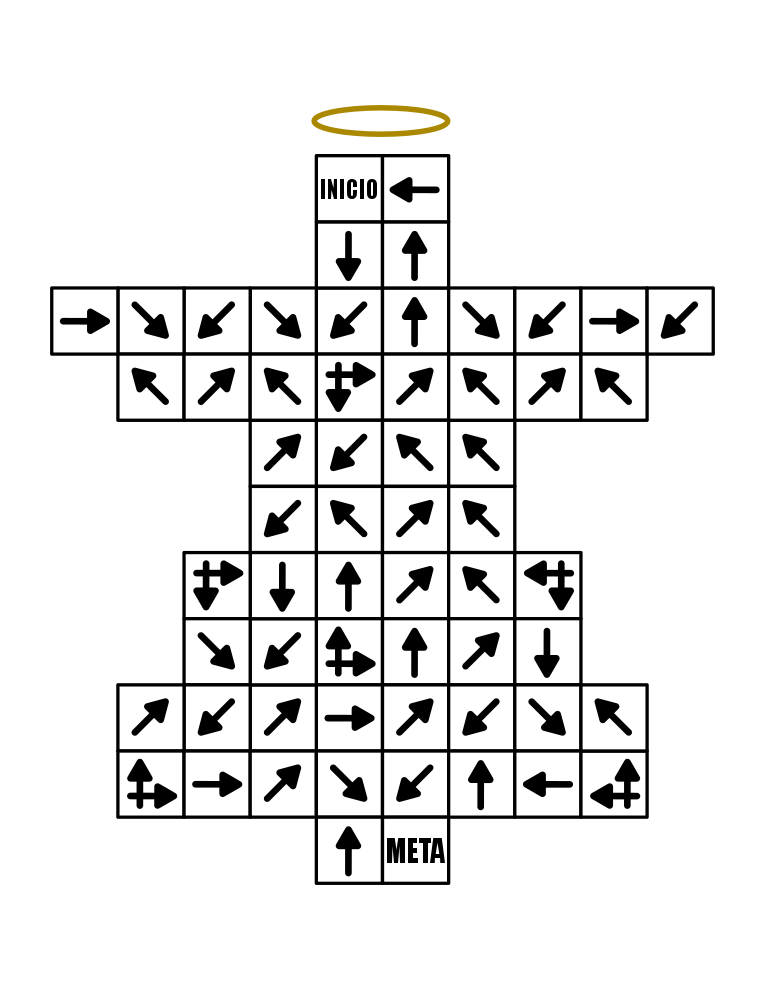
Angel Arrow Maze
Gingerbread Arrow Maze
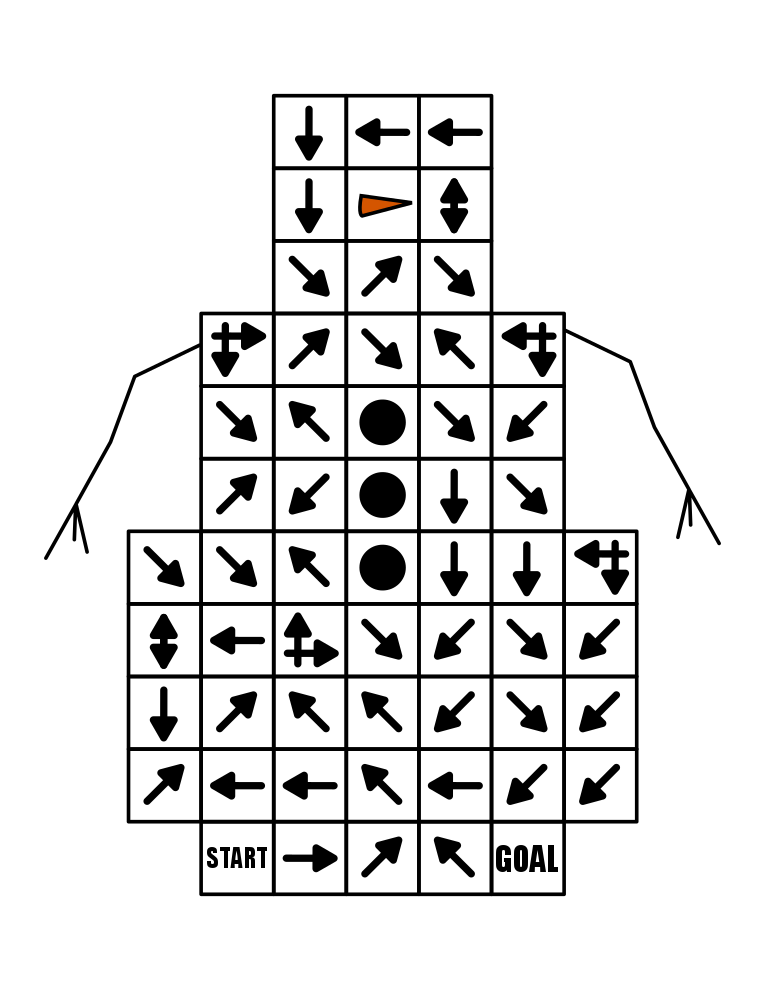
Snowman Arrow Maze
Candycane Arrow Maze

7 - They can be Optimized for Mobile !

Just make them skinny.

Mobile Arrow Maze

Additional Maze Arrow Examples:

Here are a few more mazes for you to try. Hopefully you find them enjoyable ! I have also included instructions that I made for my book to help you understand some of the moves you will be making !

Arrow maze Instructions
Arrow Maze #48
Arrow Maze #49
Arrow Maze #53
Arrow Maze #103

I have 4 volume series of books for sale on Amazon and multiple sections of free mazes on the site:

Book Review - Confessions of an Egyptologist

Book Review - Confessions of an Egyptologist 195 pages. AMZN.

by Erich von Däniken

Confessions of an Egyptologist book cover

Confessions of an Egyptologist by Erich von Däniken is a fascinating book that tells the story of Adel H., a 16-year-old boy who discovered a mysterious labyrinth of the old kings and was trapped for days under the Step Pyramid. The book is a mix of memoir and historical fiction, with von Däniken weaving together Adel's story with his own theories about ancient Egypt and the possibility of extraterrestrial influence.

The book is well-written and engaging, with von Däniken's signature style of blending fact and speculation. However, some readers may find his theories to be far-fetched and lacking in evidence. Additionally, the book has been criticized for its lack of academic rigor and reliance on anecdotal evidence.

Despite these criticisms, Confessions of an Egyptologist is an enjoyable read for anyone interested in ancient Egypt and the mysteries surrounding its history. Von Däniken's storytelling is compelling, and his passion for the subject matter is evident throughout the book. Whether or not you agree with his theories, the book is sure to spark your imagination and leave you with a newfound appreciation for the wonders of ancient Egypt.

What I learned in this book:

  • Was the Great Pyramid of Giza a huge library created for the people of the future ?

  • Are tomb raiders the real archeologists in Egypt ? It seems if a tomb raider uncovers a new place filled with valuable antiquities it is in their best interest to keep it to themselves and pillage it.

What this book does best: It weaves together a mix of memoir and historical fiction that includes aliens. I would say this opens your mind to new possibilities on what the pyramids were for and who built them.

I read this book as I have been seeing a lot of information recently saying that the lost Labyrinth has been found. Watch out for a future blog post on this as I continue my research.

The 10 Most Famous Labyrinths from Around the World

Labyrinths have been a part of human history for thousands of years, with their origins dating back to ancient times. These intricate structures have been used for various purposes, from religious rituals to entertainment. Today, labyrinths continue to fascinate people all over the world, with many visiting them for their beauty and meditative qualities. In this blog post, we will explore the 10 of the most famous labyrinths in the world. In no particular order:

1. Hawara Labyrinth, Egypt

One of the most famous labyrinths of the ancient world was housed in an Egyptian pyramid complex built in the 12th Dynasty at Hawara by Amenemhet III. This labyrinth was said to be so complex that no one who entered it could find their way out. The Greek historian Herodotus wrote about visiting the labyrinth in the 5th century. Unfortunately, the labyrinth no longer exists, but its legend lives on. Will the Lost Labyrinth be found (maybe it already has?)? There is currently a team working on a virtual reconstruction of the pyramid and labyrinth. I am excited to see their rendering !

Egypt Lost labyrinth

Lost Labyrinth of Egypt ?

2. Villa Pisani Labyrinth, Italy

Located in Stra, near Venice, the Villa Pisani Labyrinth is a romantic boxwood labyrinth with a tower in the middle holding a statue of the goddess Minerva. It was built in the 18th century and is considered one of the most beautiful labyrinths in the world. It is layered so that it is difficult to solve. The Villa Pisani was the residence of the Pisani family until Napoleon Bonaparte bought the villa in 1807 from the Pisani family for the sum of 1,901 Venetian liras. Today the villa houses a museum.

Villa Pisani Labyrinth, Italy

3. Hampton Court Palace Maze, England

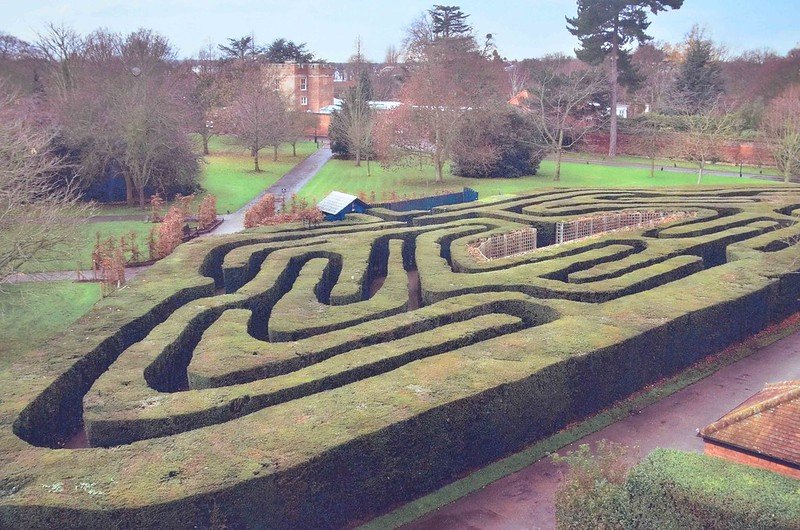
The Hampton Court Palace Maze is one of the most famous mazes in the world and the oldest surviving hedge maze in Britain. It was commissioned by William III in 1700 and is still the largest of its kind in England. The maze covers a third of an acre and has over half a mile of paths. You can plan a visit here.

Hampton Court

4. Chartres Cathedral Labyrinth, France

The Labyrinth of the Cathedral of Notre-Dame de Chartres is located in the nave of the Chartres Cathedral in France. It was constructed in the 13th century and is one of the most famous labyrinths in the world. The labyrinth is made of white marble and measures 42 feet in diameter. It is the subject of much mystery and surmise, with popular opinion being that the labyrinth represents the long and tortuous path that pilgrims would have needed to follow to reach the Cathedral of Chartres. The labyrinth is also thought to have once been graced by an image of the Minotaur at its center.

5. Ashcombe Maze, Australia

The Ashcombe Maze is located on the Mornington Peninsula in Victoria, Australia. It is the largest hedge maze in Australia and covers two hectares. The maze has over 1,000 cypress trees, was planted over 40 years ago and is a popular tourist attraction. You can plan a trip here. The maze is broken into 2 parts, a South Maze and a North Maze connected by a beautiful Centre Garden. Also on the property is a Rose Maze consisting of more than 1,200 rose bushes and 200 different types of rose.

6. Longleat Hedge Maze, England

The Longleat Hedge Maze is located in Wiltshire, England. Planted in 1978 and covers 1.48 acres and is made of over 16,000 English yew trees. With 1.69 miles of pathways it is the longest hedge maze int he world. In addition to the maze, the grounds contain a historic house, gardens, and a safari park. Check out the thumbnail on this video. That is one cool hedge maze !

7. The Labyrinth of the Reims Cathedral, France

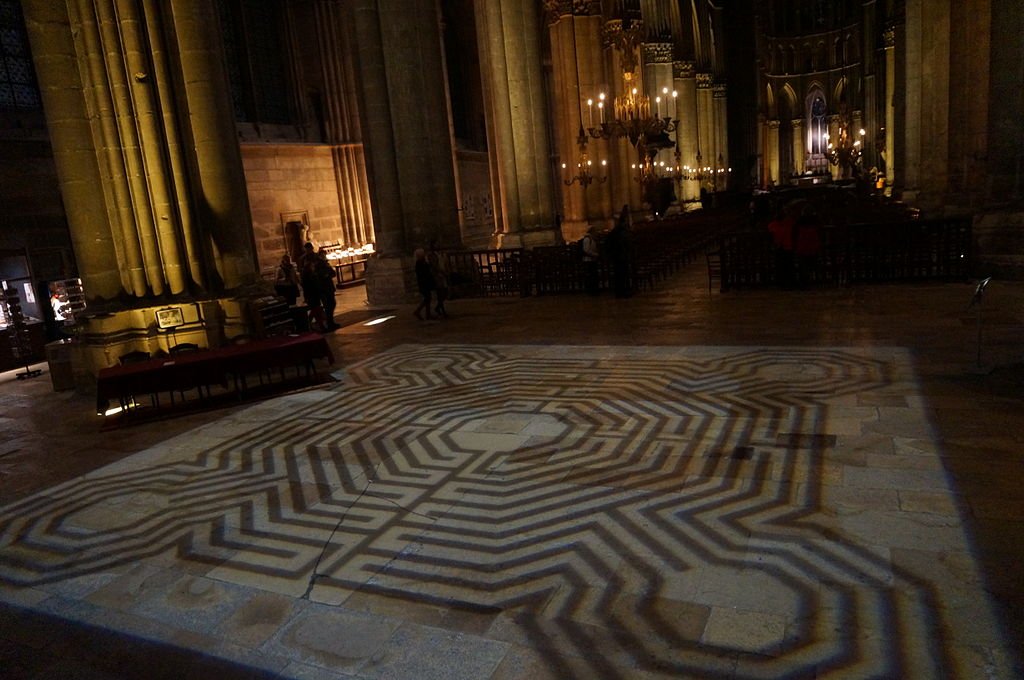
The Labyrinth of the Reims Cathedral was located in the nave of the Reims Cathedral in France. It was built in the 13th century, was made of stone and measured 40 feet in diameter. In 1779 in labyrinth was destroyed by the priests running the cathedral because children were playing on it during services and ceremonies. Today if you visit they have a light projection recreating the labyrinth on the floor during the evening. Despite no longer being physical, the labyrinth is the logo for all French historical monuments !

Labyrinth of the Reims Cathedral

from commons.wikimedia by G. Garitan

8. The Labyrinth of the Grace Cathedral, San Francisco

The Labyrinth of the Grace Cathedral, located in San Francisco, California, was built in 1991. The indoor labyrinth is made of limestone and measures 44 feet in diameter. I say indoor because the grounds also feature an outdoor labyrinth ! The church offers guided candlelit labyrinth walks the second Friday of each month from 6-8pm ! You can check their event page to find the next walk (and maybe even a labyrinth yoga class).

9. The Catacombs of Paris

The Catacombs of Paris are a 180-plus-mile maze of tunnels lying beneath the streets of Paris, France. Once a network of old limestone quarries, they served as a mass grave for the city's dead in the late 18th century. The catacombs are a real labyrinth of tunnels and galleries, with a depth of about 66 feet (equal to 5 floors of a building) and housing the skeletal remains of more than six million people. It is frighteningly easy to get lost in the catacombs if you are not a seasoned catacomb explorer, or 'cataphile', as the fearless adventurers are known.

10. Alice’s Curious Labyrinth, Disneyland Paris and Shanghai Disneyland Park

Not the most famous, but I wanted to include a modern example of a maze. Alice's Curious Labyrinth is a hedge maze-style attraction located at both Disneyland Paris and Shanghai Disneyland Park. The maze is themed around Disney's 1951 version of Alice in Wonderland and sees guests walking around a series of winding paths, as they attempt to reach the Queens of Hearts Castle at its center. The maze is split into two sections, with the first one featuring some of Alice's adventures prior to meeting the Queen of Hearts, and the second based on Alice's encounter with the Queen, who had a similar labyrinth in the film. The entire labyrinth is wheelchair accessible, with only the "Castle" section not wheelchair accessible due to a tight doorway.

If you have the time and money I hope you can plan a trip to see some of these wonderful labyrinths !